Overweening Generalist

Saturday, December 10, 2011

My Top 10 Rick Perry Ad Responses on You Tube

As of very early December 10, here are my Top 10. It appears a new response to Rick Perry's acutely stupid, homophobic and moronic christian fundamentalist idiotic TV ad - titled "Strong" and linked to below if you haven't seen it - (a new YT response) comes up every 15 minutes or so, most of them young people talking in their own homes (or bedrooms) about the ad.

Perry's ad was posted on You Tube sometime on December 6th. My colleague Annabel Lee had Perry nailed pretty well on her blog, Double Dip Politics, in a matter of hours, on December 7th.

But another form of rhetoric is the personal video response; it's difficult for me not to ponder the enormous implications of McLuhan's "the medium is the message" here, although I think Robert Anton Wilson hit on something when he wrote that McLuhan would've been more accurate to say "the medium shapes the message." At any rate, I think it completely marvelous that, via accelerated omniephemeralization of digital gadgets, anyone can make a "television" piece and, in effect, "converse" with TV and other media, both corporate and non. The potential in this, and the degree to which it might truly shape the electoral process, seems unknown. We will learn more as time goes on. Much has been written about social media and the Arab uprisings and the Occupy movement, but it still seems too early to see how powerful decentered, user-generated content can affect political change...

I'm a shade embarrassed I've spent so much time tonight watching this stuff, but I couldn't stop, it's so fascinating to see how democratic this sort of thing can be. And some of the responses are totally brilliant (also see below). I think this is the some of the best use of You Tube: talking back to power. I don't think I could do it - appear on camera and be witty or interesting - but I might be able to write some of the lines that had me laffing so much. (Watch as the list gets closer to my Numero Uno.)

There are all kinds of "remixes" and "mashups" but none of them seemed as acerbic or absurd or satirical or intelligent or godlessly irreverent as the ones I chose, which will necessarily reflect my esthetics. I heartily invite anyone to put a link in the comments to one or many Perry responses they think deserve to be seen.

My list favors the parodic over some really well-done and heartfelt and witty-intelligent personal reflections by hip young people. There's only one quasi-celebrity in my Top 10: a radio guy named Sam Seder. I just liked his style.

The Perry ad (which I link to first, so that we're all on the same page) has broken some sort of all-time You Tube record for the most "dislikes" ever, which I find comforting. (Hey, you have to enjoy the little things in dire days like these, eh?)


The original ad (31 secs)

Now (drumroll please), my Top 10:


#9: Sam Seder (5 mins)


#6: dinosaurs (22 secs)


#4 (36 secs)


#3 (35 secs)


#1: I want this one to go viral (1:03) (I catch myself hoping something like this could, on its own, make Perry go back to Texas forever.)


He's Rick Perry, and I don't give a crap if he would disapprove of ANY of this:

Thursday, December 8, 2011

On Obscure, Coded and Alchemical Texts: Part 4

Eleutherarchy
I mentioned Finnegans Wake ("FW" to Wakeans) in my last electro-broadside. There seems a very real sense in which Joyce and his High Modernist pals were engaging in writing that was so tricky, so puzzling, so absurdly-densely allusive, that their texts, by their very forms, experimentations and demands upon the reader, are a counter to the practice of Law. (Vico seems to hover over all this, too, but I refuse to digress any more than I already have here; NB I haven't even finished this first paragraph, Jeez! Oh wait...)

When you're a lawyer and, say, you get to argue before the Supreme Court, and a decision comes down, you have "made law," according to lawyer-speak. Poets and Bards of all stripe have spoken of Eleutherarchy: the making of freedom, or another reality.

In his 1976 book Investigative Poetry the poet Ed Sanders argued for poets reclaiming the writing of history. As an earlier example Sanders cites Ezra Pound's wild collage method, which was heavily influenced by Ernest Fenollosa's notebooks on Chinese writing and how it could act as a medium for poetry: the notorious ideogrammic method. "Purest Distillations from the Data-Midden: the essence of Investigative Poetry: Lines of lyric beauty descend from the data clusters. [...] The Cantos of Ezra Pound first gave us melodic blizzards of data-fragments. History as slime-sift for morality [...] And Pound was a skilled collagist: the lesson is this: that an Investigative Poet of any worth at all will have to become as skilled a collagist as the early Braque." (Investigative Poetry, pp.9-10)

                                                   Ezra Pound, not locked in a cage.

Modernist Investigative Poets Are Suspects (By Definition?)
I will have more to say on "by definition" when I address one James Jesus Angleton of the CIA, but suffice for now, this story about Pound. He was arrested by American military men in Italy, near the end of what is popularly called World War II. He was wanted because he he'd made broadcasts on behalf of Mussolini; the story of why quickly becomes intricate, but if the Reader is interested I strongly urge an investigation of why Pound did it. He made all kinds of broadcasts, and they are noted for an abhorrent and marked antisemitism. But he was also trying, in his own deranged way, to save the idea of Jeffersonian democracy in Unistat. I see no reason to disbelieve Mad 'Ol Ez's earnestness. The Allies suspected these radio broadcasts were of a treasonous nature. Pound was caught and kept at the Disciplinary Training Center near Pisa, in a cage fit for a large wild cat at a zoo, open to the sky. He wrote poetry while being held there, and seems to have had a nervous breakdown. The poems he wrote while caged are now referred to as The Pisan Cantos, and they later won the Bollingen Prize, something between a Pulitzer and a Nobel for poetry.

These poems passed through the hands of the censor at the DTS. He became very concerned. They were suspect due to overwhelming difficulty: they might be written in a secret code to some Axis spies! Pound was told of these suspicions and answered in a letter, trying to reassure the censor that he wasn't apt to pull a fast one:

The Cantos contain nothing in the nature of cipher or intended obscurity. The present Cantos do, naturally, contain a number of allusions and recalls, to matter in the earlier 71 cantos already published, and many of these cannot be made clear to readers unacquainted with the earlier parts of the poem. 
   There is also extreme condensation in the quotations, for example "Mine eyes have" (given as "mi-hine eyes hev") refers to the Battle Hymn of the Republic as heard from the loud speaker. 
   There is not time or place in the narrative to give the further remarks on seeing the glory of the lord.
   In like manner citations from Homer or Sophokles or Confucius are brief, and serve to remind the ready reader that we were not born yesterday.
   The Chinese ideograms are mainly translated, or commented in the English text. At any rate they contain nothing seditious.
   The form of the poem and main progress in conditioned by its own inner shape, but the life of the D.T.C. passing OUTSIDE the scheme cannot but impinge, or break into the main flow. The proper names given are mostly those of men on sick call seen passing my tent. A very brief allusion to further study of names, that is, I am interested to note the prevalence of early american names, either of whites of the old tradition (most of the early presidents for example) or of descendants of slaves who took the names of their masters. Interesting in contrast to the relative scarcity of melting-pot names. 
-written in 1945, first published in The Paris Review, vol. 7 no. 28 (Summer-Fall 1962)


The road to Eleutherarchy can prove a tough one to hoe.

Internal Immigration: A Brief Note
In meditating on the multifarious reasons why a text comes down to the adept reader as obscure: it seems difficult to doubt that, as I said in an earlier section on this topic, that at times the text simply represents the inner caste of mind of the heterodox writer; he's an odd egg, this one. Let us see if we can catch what he's on to. It seems that the poetic intellect who speaks to his colleagues in a baroque and ramshackle way, filled with archaisms and wild digressions and dense allusions and rhetorical flourishes of a surprisingly virtuoso bend...will end up writing in an obscure way.

Then again, the obscure texts may represent a migration in mind away from the immediate circumstances. Outwardly, the writer gets along in some social situation that is repressive. Inwardly, (s)he has moved into a cultivated world of symbols, often intensely personal and so inherently obscure to us.

So yes: we must also look at the socio-political milieu in which the writer operated. Was what (s)he seemed to get at, when unpacked, a possible threat to fascists or totalitarians of some sort? This may be a difficult problem - if there is one - to ascertain. A further problem, and one holding seemingly many more possible difficulties: what about the writer's immediate family and circle of friends and acquaintances? What might be threatened if not for an exceedingly odd act of writing?

I feel this subtopic of what I have called "internal immigration" veers too far away from the main thrusts here; nevertheless I find the questions brought up by the idea quite noticeably pregnant. If I recall correctly, I first saw the term "internal immigration" in a text by Noam Chomsky, and I would bet he was using it in a different sense than I have here. Nonetheless: Chomsky? Dankeschon!

Tuesday, December 6, 2011

On Obscure, Coded and Alchemical Texts: Part 3

More on Leo Strauss and...Me?
Clearly, if Wilhelm Reich's model of history in The Mass Psychology of Fascism is even close to being accurate, even "in the ballpark," then fascist systems are the default mode in all societies since roughly the rise of agriculture. There are short gains made, lots of reversions to the old class warfare of the Few against the Many, until the Many get pushed so far they revolt, and the Few make a concession or two...then work furiously to nullify it. This story runs all through Vico, too.

If something like this "is" right, then it makes sense that there has always been a need for some writers to write obscurely, in some sort of code that can cover for them if called in for questioning. Concomitant to this, there has probably always been some form of samizdat, probably going back to Chinese writing on rocks. (Anyone got the goods on that, by the way?)

[This seems like the perfect time to mention that I'm very much aware of Umberto Eco's idea about "paranoid overinterpretation." It doesn't worry me, but it does at times come in quietly and haunt me for a while, before leaving me alone. I jest, but slightly. Let me say there are times when I allow myself the indulgence of some scary-movie paranoia based on some reading of a text: they're - and you know how They can be - out to get me, but "get" seems the operative word here; it seems murky and a pinch lovecrafty. HERE's some interesting writing by a blogger on this sort of stuff, ya know, like...if you're into it.]

I brought up in Part 1 my personal dissonance vis a vis Isaiah Berlin disagreeing with Godfather of the NeoCons Leo Strauss in that Strauss thought writers write obscurely, sometimes 'cuz their minds work that way (even though he was a Mage, I can't help but feel the exceedingly odd Austin Osman Spare fits in here), but other times because writers fear Authority. Berlin thought that was basically wrong; I have long thought it was right, but find it uncomfortable agreeing with anything Strauss thought (the more I delved into him, the creepier he and his cabal looked to me); after vexing about this before sleep two nights ago, I awoke with my answer, and felt much better and kinda lame for not realizing and elucidating it earlier: Strauss picks which texts he thought one must "read between the lines" to understand in his own convoluted secret society of NeoCon hermeneutics; I assume almost all writers are saying what they're saying unless I have very good reason for thinking otherwise. I have my own hermeneutics, influenced by many a disparate thinker.

I assert Strauss's system is more about reading so that the texts will say what he wants them to say: that there's Good and Evil, relativism is wrong, almost every political philosopher after the Renaissance has it all wrong, and he and his acolytes know by reading the texts in a special way how to see this. HERE is a pretty good article on Strauss. Pay special attention to sections three and six, "esotericism" and "esotericism revisited." (But I still urge the interested reader to search out Xenos's Cloaked in Virtue. Saul Bellow's last big novel was a roman a clef called Ravelstein, centered around a character who was perhaps Strauss's most famous pupil for a long time, Allan Bloom - the same guy who wrote The Closing of the American Mind - who hated relativism of all sorts, hated rock 'n roll, and was a closeted homosexual who died of AIDS. Strauss appears in that book as "Felix Davarr.")

So: I think my bend is more toward writing and less toward reading, although obviously these two acts can never really be separated. I think any one of us would find reading and writing much more difficult to disentangle than we might have thought. I don't think it can be done, but I'm willing to be proven wrong.

James Joyce, Luigi Serafini, the OULIPO, and the Voynich Manuscript
And not all esoteric texts are about evading persecution, obviously. Most devotees of Finnegans Wake are well aware of Joyce's statement about hoping to keep the scholars busy for a thousand years and that he wrote for "an ideal reader suffering from an ideal insomnia." Joyce's dreambook used a template based on Vico's theories about rising and falling throughout history, and Vico appears on the first page of the..."novel"?

Luigi Serafini seems to not be hiding anything that will bring down the current order in his miraculous, marvelous work of surrealism replete with a writing system that has only been decoded maybe about 5%, the Codex Seraphinianus.

                                         a page from the exceedingly obscure Codex Seraphinianus

The wonderful - mostly French - writers in the OULIPO group write obscure texts, but this is mostly because they are interested in what can be yielded, textually, by utilizing a mathematics of constraint. Now, there may be something very radical politically going on among some of the OULIPO, but I have not seen it, nor have I read of anyone else finding something there. At this point, I'd like to say that the Italian writer Italo Calvino was the greatest oulipean yet (see especially his If On A Winter's Night A Traveller), and I'd also like to put in a good word for American oulipean Harry Matthews, especially his Singular Pleasures, which, even though he doesn't consider this work oulipean, still: 61 little vignettes about masturbation? You gotta hand it to him.

And what of the possibly eldritch, possibly forged, possibly dangerous Voynich Manuscript? It hasn't been cracked, but from the writing I've read about the problem of the text, it seems like the writers were trying to keep something from somebody...but who? And why? And what is going on there? (WARNING: If you have a certain caste of mind and have yet to look into the problem of the Voynich, it might suck you in. Please take this warning seriously! Be careful! The Voynich has claimed more than one victim! - the OG)

Religious Texts and Peoples Persecuted: A Few Melancholy Notes
Along the lines of books so powerful to Authority they must be hunted down and burnt due to their possible danger and threats to official Power, I will simply type the term Albigensian Crusade and the term Gnostic Gospels.

Clearly, some other times and places in which alternative visions of religious "truth" were more heavily frowned upon than persecuted with extreme prejudice. But eventually outright persecution devolved upon deeply pious mystics, from their own people and from the powerful, fearful and ignorant outsiders. An example of this would be the early mystical writings among the Jews, which eventually evolved into kabbalah. Perhaps the greatest scholar of kabbalah, Gershom Sholem says early on in his Kabbalah that early mystical writers in the Judaic tradition not only had very esoteric ideas, but they wrote under pseudonyms and stressed an ascetic life of contemplation and deep study of texts, but that "The clear tendency toward asceticism as a way of preparing for the reception of the mystical tradition, which is already attested to in the last chapter of the Book of Enoch, becomes a fundamental principle for the apocalyptics, the Essenes, and the circle of the Merkabah mystics who succeeded them." Unfortunately, the more orthodox, those outside the tradition, and others found this very pietistic asceticism threatening: "From the start, this pietist asceticism aroused active opposition entailing abuse and persecution, which later characterized practically the whole historical development of pietist tendencies (hasidut) in rabbinic Judaism." (page 11) Here the outward appearance of pietism and asceticism aroused hostilities towards these groups, and of course, their books. Which were "weird." (Even today, when someone professes to have studied the kabbalah, I listen and doubt quickly and seriously they've put the time in. 'Tis a rare devoted reader of kabbalah, it seems to me, even though it has possibly never been more "popular" on the world stage than right now...

Hermeticists
It could be that, for most of Joyce's "nightmare of history" magicians, hermeticists, and alchemists (are there really any differences between those?) feared persecution but also had other reasons for writing in obscure modes. One idea that seems intuitively "right" to me is that these people - at least they at times professed this - it could be because they knew they were going to be hounded. As Alexander Roob says in his Alchemy and Mysticism: The Hermetic Cabinet , "Many voices, even within their own ranks, were raised agains the 'obscure idioms' of the alchemists. And their own account of their communication technique hardly sounds more encouraging: 'Whenever we have spoken openly we have (actually) said nothing. But when we have written something in code and in pictures we have concealed the truth.'" - Rosarium Philosophorum.

Roob goes on:
"The tendency towards arcane language in 'obscure speeches,' in numbers and in enigmatic pictures, is explained by a profound skepticism about the expressive possibilities of literal language (my emphasis - OG), subjected to Babylonian corruption, which holds the Holy Spirit fettered in its grammatical bonds." (pp.8-9) This all might qualify as some species of group denial: but about what, why, on whose part? And how conscious was this denial that they are writing oddly because a skepticism about the possibilities of "literal" language, and not because they feared violent persecution by some Diocletian, some Shi Huang Ti, some model for King Ubu? You write so obscurely because of "a profound skepticism about the expressive possibilities of literal language"?

Yes, and I wonder what happened when they told that to the Judge?

But I jest. This subject is not all that filled with hilarity, I admit. But we have all had a bad cover story at one time or another, haven't we?

Or at least it must've appeared "bad" to Authority. "But dad...I was smoking pot only because it allows me to get closer to God."

Saturday, December 3, 2011

On Obscure, Coded and Alchemical Texts: Part 2

Vico: Writing Oddly to Deflect Attention?
Vico seems to be writing in an intellectual backwater (although his immediate social world seems fascinating, but perhaps beyond the scope of what my topic is now) of Naples under the Church and its Inquisition, which was everywhere around Naples. He seems to have been a humanist with desire to believe in Catholicism, but he had read Lucretius deeply as a budding scholar and this pagan idea of people evolving from more basic forms in an atomistic universe had a very deep hold on him. He seems to have been a strange, isolated genius far ahead of his time, which was probably dangerous. If he had allies - and he did - they kept quiet about what Vico was really getting at. Berlin writes in an essay on the "Divorce Between the Sciences and Humanities" (collected in The Proper Study of Mankind) that Vico's "mind was not analytical and scientific but literary and intuitive." Years later the scholar Anthony Grafton asserted that, despite Vico's wish to preserve scholastic metaphysics, he was steeped deeply in Descartes and Bacon, and indeed, his magnum opus looks like an attempt to do for social knowledge what Isaac Newton had recently done for scientific knowledge. Grafton avers, "Despite his dislike of the new natural philosophy, Vico learned a vast amount from its prophets."

Vico's Jews
One of the "funniest" (and I mean that in at least two semantic senses) of Vico's moves is his take on the place of Jews in human history. Early on in his great melange, under "Establishing Principles," Vico states:


The true God founded Judaism on the prohibition of divination. By contrast, all the pagan nations sprang from the practice of divination. This axiom is one of the principle reasons why the world of ancient nations was divided into Jews and pagans. 


This idea is found throughout The New Science. The Jews are directly under the dispensation of God; all the rest of us are descended from (get this) Giants, as found in the OT, after the Flood, and who are still around, sightings of Bigfoot being the proof. Jews are of smaller stature, which shows they are not descended from the postdiluvian story. The pagans, after the Flood, wandered the forests of the world, mute and stupid, shitting everywhere and having sex indiscriminately, until a few families with strong, heroic fathers, settled down and started farming and villages, which turned into cities. And every now and then savages would wander in from the jungle or forest and seek refuge from the solitary, nasty, brutish life in the wilderness. And they were basically slaves in the early city-states. But I leave so much out.

Vico's Non-Reception 
Okay, so this bit about the Jews and pagans: What did the Inquisition think? We don't know, because Vico published his first version on his Newtonian historical sociology in 1725 and they probably didn't know what to make of it. (As many modern readers in 2011?) He financed its printing by selling a ring, and it appears it fell dead from the press. Who read it then? Jean Le Clerc was a big-time journalist, so Vico sent a copy to him, hoping for a good review. Nothing. Same with the copy he sent to Sir Isaac Newton.  He revised his Great Book furiously - in great manic burst of energy - over the years, published it again in 1730, to no acclaim. I think he must have started to feel persecuted by oblivious, probably malign forces. He assumed other intellectuals in Naples thought he was a madman. The final version, in 1744, the year he died, is a sprawling mess of wonderful insight for the dedicated reader. He appears to have slowly sank into a madness, whether of poverty and neglect, paranoia and persecution, or maybe he slowly fell into High Weirdness due to the effects of a serious head wound he suffered when falling off a high ladder in his father's bookshop as a youngster. He'd written a letter brimming with bitterness near the end of his life in which he said he expected nothing from his native city except a complete isolation, which allowed him to work hard at putting his Great Work together.

A Gloss on Vico: Language and Law and Class Warfare Through the Ages
When the Fathers of large, settled families needed to keep their children in line they used religion and violence. It was harsh, but it worked. When stragglers from the forests or countryside asked for protection, they were put to hard work. The Fathers grew richer and found it useful to use religion and violence against the stragglers too. Soon previously isolated Fathers and their sons and extended families met other villages and Fathers. They found they had things in common, including private Law. As these families made common cause, their private law became public Law. Far more important than fighting each other, they knew they must fight the new class of refugee-straggler-outsider-slave-plebe. The private law of the Fathers became the public law of the Aristocrats. There was no "social contract;" Vico believed the development of reason was too far in the offing.

Much of what was private law seems still public law to this day: The Fathers were originally the priests, so they read the auspices and said what god had told them, in whatever the mode of communication. The priests were the Fathers were the Wise were the Kings were the Lawmakers. They were the Heroes who valiantly protected the family from Monsters. They said who was allowed to own the land and profit by it. For Vico, Law is a form of Severe Poetry. (Why "poetry"? The answer, like everything when discussing Vico, is complex.) In section #444, Vico says, "Generally speaking, metaphor makes up the bulk of vocabulary in all languages."And as Cognitive Neurosemantics is showing in studies done in our day, metaphors are the atoms of thought and language. If the Nobles were allowed to name (note what "noble" means to us, to this day) and to make the laws and to say what God really wants, what does this imply about political control?

For a brief sketch of how the banded plebes gained rights from the severe Noble Gentes, read Vico under "Establishing Principles," numbers 40-45, in which he courses from the Law of the Twelve Tables through the Second Punic War. From there, throughout the long book, one must read very carefully when Vico talks about changes in history, law and punishment. No wonder he has something for seemingly every political persuasion under the sun! He's crafty, diffuse, obtuse and vague just enough.


                                       Here's a painting of Vico, who though he died in 1744, 
                                                    seems to be coming into his own only now.


A Sufi Fits Here
Husayn ibn Mansur al-Hallaj the sufi-mystic was executed - crucified and dismembered - in Baghdad in 922 AD. "He propounded the principle of complementarity[...] as in the Ying Yang disc, black and white embrace and contain sparks of each other embedded within themselves. In one sense God is everything and Iblis (cognate with what we'd call "Satan"- OG) nothing; yet God cannot be realized as the Beloved without a lover, even and especially a tragic lover, one doomed to separation." Satan was required for divine unity, according to Hallaj. For proclaiming this openly - that "evil" needs its opposite, he was killed. Another sufi, Ahmad al-Ghazzali agreed with Hallaj, but avoided execution, and Peter Lamborn Wilson thinks it was because yes, Ahmad had a powerful orthodox sufi brother, but also: Ahmad avoided execution "by the very density of his mystical language."-p.89, Sacred Drift: Essays on the Margins of Islam

Esoteric Groups: According to Robert Anton Wilson
Wilson was interviewed in 1989 and David Jay Brown asked him this question, after Wilson said that secrecy impedes the flow of information and therefore slows the growth of real wealth, which is about know-how, know-what and not money:

DJB: Why do you think it is then, that it took so long for occult knowledge to come out of secrecy into the open?

RAW: Well, that's largely because of the Catholic Church. Anybody who spoke too frankly for many centuries was burned at the stake. So the alchemists, hermeticists, Illuminati and other groups learned to speak in codes.

DJB: So you think it was fear of persecution, rather than a feeling that most people weren't "ready" for the information quite yet?

RAW: Well, I think that's a rationalization. You can't find out who's ready, except by distributing the information. Then you find out who's ready. - p.113, Mavericks of the Mind: Conversations For The New Millenium


Evading Authorities: William S. Burroughs
One could blog day after day on just the subject of Burroughs and his ideas about language. But in an introduction to an omnibus edition of WSB's work, Ann Douglas writes that "Burroughs' early style was founded on drug lingo and jive talk; he was fascinated by their mutability, their fugitive quality, the result of the pressure their speakers were under to dodge authority and leave no records behind. His later work elaborates and complicates this principle. No one form of language can hold center stage for long. Fast-change artistry is all; sustained domination is impossible." - p. xxiv, Word Virus: The William S. Burroughs Reader


A Passage From Peter Dale Scott
And for what? Should we simply accept 
             that (as the court historian
     Nebrija wrote in his dedication


to Queen Isabella of Spain)
              language is the instrument of empire?
    I ask these questions


not out of hopelessness
             but pondering my own role
     and that of those I trusted


in today's cunning of reason
-p.179, Minding The Darkness: A Poem for the Year 2000


Question here: if language is the instrument of empire, how is/was it encoded? Why do so many Murrkins not even agree Unistat is, has been, an empire? When the evidence is stupendously overwhelming?

Magick and Philosophers in the Renaissance
Frances Yates reiterates over and over in her magisterial Giordano Bruno and the Hermetic Tradition that philosophers interested in magic must be careful: theirs is the "good magic" as distinguished from what the Ruling Class and the masses believed was a "bad" type. Furthermore, all the good types of magic emanated from the foreseers of Christianity, or even from Moses himself!

You could get away with this for only so long. Even John Dee, Elizabeth's court astrologer and one of the great Mages of all time, had his library ransacked by the mob. Bruno himself was "terribly burned" at the stake in February of 1600. Bruno wrote in code, but he spoke in perhaps too direct a manner, and to the wrong people, for too long. The Inquisition wiped him out, and Vico knew very well about this.
--------------------------------------------
I could go on and on and on with examples. Pushkin? Shostakovich? William Blake? Ovid? Shelley? Perhaps I will go on, but I will admit: it's not "fun" blog-reading...

Friday, December 2, 2011

On Obscure, Coded and Alchemical Texts: Part 1

Preliminary: Vico and Weirdness
There's an essay from 1974 by George Steiner called "On Difficulty" that I've often dipped into or just re-read. In it he provides a taxonomy of difficulties vis a vis the reading of certain texts. But he doesn't address an issue that has long fascinated me: the deliberate obscurantism by a writer out of necessity of not being persecuted by Authority.

As some of you know, I'm fascinated by the writing of Giambattista Vico (1668-1744), a quirky Neapolitan scholar who toiled largely unknown in Europe, but was rediscovered in the 19th century and has seen his academic stock rise ever since. He's been "claimed" by fascists, anarchists, liberals, Neo-Cons, and Karl Marx cited him in Kapital. He's now thought of by some as the founder of Anthropology. As a young thinker he, like much of Europe, got caught up in a love for Descartes, but then lost his religion and combatted "Renato"'s ideas for the rest of his life.

If you haven't yet checked in on Vico, his magnum opus is translated in English as The New Science. Vico reads like a Mad Scientist: he's totally brilliant and way ahead of his time and you're floored by the power of his ability to create new views of receiving ancient texts. A few pages later you're wincing as you read, his ideas are so crazy. Then he seems to repeat himself, oddly, because he's done the fashionable thing and tried to lay out a way of understanding an entire body of knowledge in the way that Euclid did, via the positing of axioms, and building from there.

Despite the ostensibly formal structure, Vico's great book is diffuse, tangential, discursive, baroque, and wonderfully nutty.

A more poetic take on Vico comes from the great scholar Anthony Grafton:
"Vico's history of the human race, in short, is less a fresco painted spontaneously than a Watts Tower of found objects, combined in dazzling new ways but often old and battered in themselves..."-p.xxix of the Intro to Dave Marsh's translation of the The New Science

I agree with Grafton. It's also so profound in its insight that I will never stop reading Vico, neither his New Science nor any of the other books that I'm so fortunate someone saw fit to translate from Italian.

I would like to use Vico as both a home base and a jumping off point for a series of essays on obscurity in texts throughout history. When I address the "nutty" and obscure and strange aspects of Vico, I am coming down on the side of those who say that Vico wrote in this obscure manner because he had a very real sense that what he was trying to say about history and language and class warfare, that the Inquisition would do him great harm if he wrote plainly. When I first encountered this idea it knocked me on my ass, and my fascination with this aspect of writing and reading texts throughout history has stayed with me.

                                     When you open a copy of Vico's New Science, you see this, so
                                                 overflowing with symbolism it's a veritable semiotic feast of codes!

The Strange Case of Isaiah Berlin and Leo Strauss
One of the greatest readers and commentators on Vico in the 20th century was Isaiah Berlin, an intellectual of magnificent scope and breadth, with an elegant prose style and a very creative, even playful way of dealing with Great Ideas. I am in awe of Berlin the intellectual. One of the things I have tried to learn from him is this: you get to know a book or author or thinker so well you can talk about his ideas as if you are an Adherent. And yet you are not a believer or hardcore fanatic of any one thinker. It's a sort of intellectual yoga: study a person or a book or a set of philosophical ideas so intensely that a reader or listener will mistake you for an acolyte. I think it's an aspect of love to be able to talk about someone's ideas in a way that makes the original thinker you talk about sound totally fascinating...even if you find some of the ideas personally distasteful.

It's not easy.

And I came upon this passage in Conversations With Isaiah Berlin, that the Iranian intellectual Ramin Jahanbegloo conducted in 1988 and 89, the book being published in 1991:

RJ: What do you think about Leo Strauss and his political philosophy?

Berlin: I knew Leo Strauss personally and liked him. He was a very learned man, a genuine classical and Talmudic scholar, who thought that political philosophy went gravely wrong with Machiavelli - "the teacher of evil" - and has never recovered since. For him, no political thinker since the Middle Ages has found the true path. Burke came nearest to it, but Hobbes and his followers had gone badly wrong and gravely misled others. [...] Objective Good and Evil, Right and Wrong, have been dethroned. [Now here's where it gets meaty- OG] Strauss was a careful, honest and deeply concerned thinker, who seemed to have taught his pupils to read between the lines of the classical philosophers - he had a theory that these thinkers had secret doctrines beneath the overt one - which could only be discovered by hints, allusions, and other symptoms, sometimes because such thinkers thought in this fashion, sometimes for fear of censorship, oppressive regimes and the like. This has been a great stimulus to ingenuity and all kinds of fanciful subtleties, but seems to me to be wrong-headed. Strauss's rejection of the post-Renaissance world as hopelessly corrupted by Positivism and empiricism seems to me to border on the absurd. - pp.31-32

Okay. Wow. First off: When I first happened upon this delightful book of transcribed conversations I had mired myself in a vast Straussian swamp, trying to understand this Godfather of NeoConservatism and how he became so influential. The more I read, the more occult he seemed, with his acolytes, who were largely behind the George W. Bush administration, and, by my way of assessing history, largely responsible for bringing Unistat to its knees, possibly (probably?) never to recover.

From my readings, Berlin's assessment that Strauss's rejection of positivism, empiricism and other, relatively SANE ways of modeling the world and reading political philosophy is not only "absurd," it borders on a systematized insanity. It's a fascinating story, and I wonder if Peter Dale Scott would call the whole Strauss nexus of conservative acolytes as part of Deep Politics or Deep History?

["If history is recorded, then deep history is the sum of events which tend to be officially obscured or even suppressed in traditional books and the media. important recent deep events include the political assassinations of the 1960s, Watergate, Iran-Contra and now 9/11. All these deep events involve what I call the deep state, that part of the state which is not publicly accountable, and pursues its goals by means which will not be approved by a public examination. The CIA (with its ongoing relationships to drug- traffickers) is an obvious aspect of the deep state, but not the only one, perhaps not the dirtiest."-PDS]

That Berlin knew Strauss and liked him! That Strauss tried to "convert" Berlin when Isaiah visited him in Chicago! (p.32, op.cit) That Berlin seems to think it "wrong-headed" that Vico's style is so baroque and weird because of "oppressive regimes"! That I seem to be on the side of Leo Strauss, who, if one gets into arcane critical texts about how Strauss taught his Inner Circle how to read people like Hobbes (see, for example the slim but truly excellent Cloaked In Virtue: Unveiling Leo Strauss and the Rhetoric of American Foreign Policy, by Nicholas Xenos)...I had to step away from the books.

I will say that reading Xenos's book and a few others (like The Rise of the Vulcans: The History of Bush's War Cabinet), led me to understand why Ron Suskind was told by a Bush person that Suskind lived in the "reality based community": the Bushies were so steeped in Straussian ideals (which seem to me to be profoundly antidemocratic and yea, I'll say it: fascistic) that their "reality" was being forced on the larger world...

I mean, think about it: they started a $3,000,000,000,000 war on Iraq (according to Nobel Prize economist Joseph Stiglitz) with ZERO proof Iraq had anything to do with 9/11...and they got away with it!!!

But I digress. I wanted to illustrate that I found a disagreement between me and Isaiah Berlin, and I do think outside influences can warp the writing and style of a writer. This idea is thought of as paranoid by some people. I will argue my point largely by giving examples as the main ballast for my rhetoric. I think it's related to the long Nightmare of History, and ought more properly be thought of as part of the history of censorship and another of our favorite topics at the Overweening Generalist: book burning.

As I go on with this topic in later installments, I hope to score some points against one of my heroes, Isaiah Berlin, and in so doing make some of you think maybe I'm some seriously Smart Dude who really ought to be paid more attention, if only for the unmitigated brilliant sheen of his thought. <cough>

Here's a 10 minute video on Isaiah and his ideas of Negative vs. Positive liberty. Throw it in at the end here because I think it covers some Hidden History, etc:

Thursday, December 1, 2011

Surveillance and Privacy in late 2011 Unistat: Where to Begin???

New Sub-Rosa "Information Sharing" Bill
The Electronic Frontier Foundation put out an alert today, found HERE, and I spent the last couple hours trying to get a handle on what it's "really" for and what's the rush? It's interesting. This bill comes from two guys in the House (see this article, which appears to be their own justification for it) and they may have tunnel vision, being bombarded by the people who gave them the money to get elected: giant corporations who are sick of being hacked by foreigners, their intellectual property rights violated, etc.

I hope you read the EFF's link I gave above, though.

[This is a different bill than the Hollywood/US Chamber of Commerce-backed Senate-loving SOPA, or Stop Online Piracy Act. Read something recent on that HERE.]

Then it appears that, within the last 24 hours, some websites with corporate interests only in mind seem to parrot the official line, or some PR guys wrote all their copy. Some examples are found HERE, HERE (<---at least they quoted Michelle Richardson of the ACLU!), HERE, HERE, and HERE.

Note: "security" "cyber attack""terrorism" and "sharing" all act to divert us from what looks like, from another, quite oblique but Patriot Act-ish scary Orwellian angle, as the very thing that right wing conspiracy theorists were sure Obama was going for, roughly from January to May of this year: an Internet KILLSWITCH, like the gummint had in Egypt! (And I remember reading that stuff and thinking, "If you wingnuts would turn off the TV and stop thinking that 'If I can imagine it and it's just horrible it's probably true!,' you'd be better off." This just plays right into that paranoia. HERE is an example of an earnest debunking from earlier this year, and lawd help us if this new bill goes through...)

In June of 2010 an Internet killswitch appears to have been sponsored by one of the biggest jackasses in the Senate, Joe Liebermann. HERE was a story on that, so maybe the wingnuts have had a point all along? <sigh>

Hell, I'm paranoid! (Deep breaths...)

Here are a couple of sites that seem to have the 99% in mind, and doubt this bill is wise. When you do harried research on this stuff, serendipity: you find out who more of your friends are:
TechCrunch
Blogger Centennial Man
and...I'm sure there are more, but...

Every other website critical of the Bill basically just used Kevin Bankston and Lee Tien's write-up for EFF. Reuters and the Washington Post's first takes on it are here, for those with too much time on their hands. I just went to the ACLU and couldn't find a thing pertaining to this latest blunderbuss attack on our personal privacy. Let's all keep an eye on this. Overkill, anyone? O! The onslaught!

                                 A massive pile of old cell phones. It's a lot of circuitry...but is it art?

Hackers Are Getting Hacked Back
In a recent article I found in the San Francisco Chronicle, a cybersecurity company has been successful in counteracting SQL injections (of which I have no idea what that means), by finding hackers attempting to do what they do and hacking them back, "steering them into tar pits." It's all par for the course in cyber counterespionage, it appears. This stuff reminds me of those books on OSS operations during WWII or a wonderful book, Masterman's The Double-Cross System.

We find this quote from a Google security mucky-muck, Heather Adkins, "This is an area where a lot of us are uncomfortable. [...] I see an arms race building..."

Yes, but I'd rather you guys hire more of these cybercounterespionage experts then see a pass of the "information sharing" overkill bill I discuss rather heatedly above. Let's have more of what's called in the article "aggressive defense." But leave us non-(malevolent) hackers out, por favor.

Closed-Circuit Cameras in Taxis
Charles Farrier recently penned a hair-raising privacy article in Disinformation, but the issue about your freedom from security cameras in taxis was only a jumping-off point for Farrier. I'll let the article speak for itself.

It seems that if you ask anyone about their personal privacy, they want as much of it as they can get and they feel in some rather vague ways they're losing ground. This gets really interesting when you ask them if they're on Facebook and do they know about privacy issues and FB? Or what about cellphone hacks? GPS monitoring? What the Patriot Act allows? What about that closed-circuit camera right there five feet above your left shoulder? On and on.

Okay, there are some folks who seem totally oblivious to any of these issues. Most seem to want "security" but don't know much of what that entails. (On the other hand, are there benefits from a loss of privacy? I can't think of one right now, but you'd think there'd be one, or how could They get away with all this?)

There is a small, rather increasingly vigilant group that I like to call Haters of Big Brother. They seem diffuse, not really a "group" except for my own rhetorical flourish. Most of them make me look like a lobotomized troll compared to them when it comes to issues of privacy and security and surveillance. I've learned a lot reading and talking to these people. They know that hi-tech security is here to stay, but also know the history of the corporate-state abuse of security data. They seem to all but admit they're fighting an uphill battle. There are fundamental issues of...trust. There are basic issues of greed and a deplorable acquiescence to inevitable disparities in income and crime. There are political and philosophical issues about liberty, individuality, freedom.

Charles Farrier is one of these Haters of Big Brother. I see something heroic in their endeavors. The issues they're dealing with are ones that, believe me when you get into this (and you probably already have), you rapidly get to the point where you feel like, "Jeez...I already know too much! This shit is creepin' me out!" But they (or you) continue on. If They/Big Brother can look into seemingly every aspect of your "reality" at least...at least...we know they're doing it! Somehow, at some point, this may help gain back some privacy. But not for now. In the current epoch, this stuff only seems to be getting started. We are firmly ensconced in the Age of Surveillance.

The Panopticon thrives and grows more powerful every day...

In 2011, Studying Privacy/Surveillance/Open Government Quickly Gets Absurd
The 1st-2nd century Latin poet Juvenal asked, "Quis custodiet ipsos custodes?," or something like, "Who will watch the watchers?" or "Who will guard the guards?" It's a favored quote among intellectual conspiracy theorists, to whatever degree their implementation of irony. The very question leads to a logical problem of the infinite-regress.

Which leads to a recent article on the Freedom of Information Act (FOIA). If this goes into effect, and I ask if there are CIA records on Q, Z, or X, the government is allowed to say No, even if those records do exist. This has nothing to do with whether I would be able to access those records at "this" time or not. It seems to call into question the very idea of Freedom of Information.

Okay, I've already used up my one reference to Orwell in this article, so I'll end it right here by invoking Kafka.

SEE ya sQQn!

I'm not sure who Dr. Murra is - if he took this picture of a colonoscopy or if it's Murra's colon we're looking in/at - but I wonder how long before we hear that someone's colonoscopy was hacked by some third party. I'll go with next Tuesday after lunch. Oh, and I'm no proctologist, but Dr. Murra, if this is "you," you look okay to me. Go ahead and book that trip to the Maldives!

Tuesday, November 29, 2011

The Drug Report: November 2011

[The OG had previously blogged on/about drugs HERE.]

When Dale Pendell, Andrew Weil, Ronald K. Siegel and a whole bunch of other doctors and PhDs and intelligentsia argue, at different times in different books in their own contexts, that the need to change our state of consciousness should be considered a primary "drive," it makes sense to me. I thought it so before I even read or heard anyone say it. Kids (including me) love to spin around until they get dizzy and fall down, laughing. For no good reason; it was just something we had to do. I always noticed how "special" I felt just after I went for a vigorous swim or bicycle ride. When I discovered masturbation it was like finding the Golden Ticket. As a 13 year old I stole a couple of my mom's cigarettes and smoked them in a secluded place behind our swimming pool. I felt a giddy strangeness from the tobacco, but the knowledge of what cigarette smoke could do to me outweighed the advantages.

I well remember getting very sick from food poisoning at age 16. I was hospitalized for nine days, three in the ICU. I hadn't known it, but there were a few days when the doctors told my dad I might not make it. I had been very very sick with the "flu" for four days before my dad took me to the doctor and doc said, "Get him to the hospital now!" I rebounded and was discharged at 79 pounds, looking like a concentration camp survivor. Non-stop diarrhea and only an IV drip for 13 days would leave you somewhat less than "in the pink" too. I guess I was about 5 feet 10 then. But recovering from being sick had some sort of euphoric component to it; I've never seen an adequate description of it in "the literature;" only repeated assertions that recovery from illness has mind-altering effects that are often considered quite pleasant. Maybe the knowledge I wasn't going to die affected my dopamine system? 

And then there's listening to music, being in love, doing good deeds, accomplishing a goal hard-won, winning a competition, entering an altered state and world of a movie or novel...Any one of us could list many other "natural highs." We must be hard-wired for dopamine and its analogues and accomplices, because evolutionarily we were "paid" for doing something that would further the species, or our own genes. Like orgasm...

Then there are drugs. 

Because I have blogged long enough to assume I have a pretty hip audience, I won't go into the problem of "drugs" semantically. Suffice: I will consider ANYTHING material that we take into our nervous systems, with conscious intent to alter consciousness (at first, at least) as drugs. (A caveat: I must add that it appears we also ingest something that we don't know at first to have mind-altering effects, only finding out later. This seems a relatively rare case, but an interesting one. Consider the person who consciously seeks "comfort food" when under stress as an example. Many coffee addicts started by ingesting a culturally-sanctioned and refreshing "breakfast" drink.)

Possibly every drug I mention has some upside, some a considerable downside. There seem to be some drugs that have awesome powers, when acting synergistically with a human mind. Others you just wish folks would eschew forever. And because I'm a monist when it comes to body/mind - my main model of Mind is that it needs Bodies, and therefore any drug, any pill that affects the Body affects the Mind in some sense - I will consider pharmaceuticals too, maybe not in this month's Drug Report, but surely in future ones. It's just drugs, drugs, drugs all the way down, once I get knee-deep into this schtuff...

I'll start with some that seem pretty nasty to me, although I confess I've never tried them!

For the Reptile in All of Us?: Krokodil
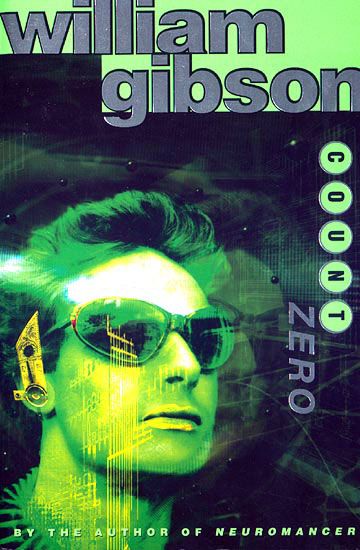
Have you read the latest William Gibson novel? In it there are some outcastes near the Arctic Circle, living in areas that were once part of the Gulag Archipelago, where people cook up a mixture of codeine, paint thinner, gasoline, iodine, hydrochloric acid, and the red stuff you strike a match with from a matchbook: red phosphorus. Which they then inject into what veins they can still locate. It's their ultra-cheap version of heroin, and they cook it with little stoves, using syringes and vials. You get high for about 90 minutes, then you NEED to take it again. Gibson is so marvelous with these garish inventions; he rivals one of his main influences, William S. Burroughs, in this regard. Get this next bit:

At the injection site, your skin turns green and scaly. That's why it's called krokodil. It's supposed to be something called desomorphine, but no one really cares what you call it. It's a designer drug, but the designer should've never been accepted to Design School in the first place.

There are some drawbacks. Besides the scaly green skin, your face swells up, the rest of your skin turns grey and peels away, exposing bones, literally. The muscles rot and hang in bags of skin from the body. There goes your dream of a modeling career. This stuff makes meth addiction look like a Pez addiction.

Okay, it's not really in Gibson's latest book. It's really happening in Russia, right now. From 2007-2011, roughly 30,000 people have died from this stuff, which is mostly used in rural, remote places in Russia, where there are no jobs, no hope. Death comes from stroke, internal hemorrhaging, gangrene untreated, and meningitis. The state is quite ill-equipped to act, so who takes up the slack to help those who want to kick? Pentecostal Christians!

So: if you find a detox place and you successfully kick, you're lucky. One estimate has the life expectancy of the typical krokodil user at one year. Three at the very "luckiest." A user in a detox home operated by Pentecostals, once the immediate withdrawals and sleeplessness/nausea/pain subside, is susceptible to Hepatitis C, their teeth falling out from rotten gums, disfiguring sores everywhere, a lobotomized-like vacant stare, speech impediments and herky-jerky body movements because the motor cortex is permanently damaged. 

I've given it a lot of thought, I've talked it over with my family and my zen master and I've decided to pass on this one. For the exceedingly morbid-minded, the sorts that take Halloween ultra-seriously, there's some video HERE. One final word: YIKES! I had to turn away at around 2:05.

Jeez, I remember thinking when crack cocaine arrived, that was the nadir. Nothing worse could come along that got brewed up in a batch in a shack in the Bad part of town. What's next? You mix 12 ounces of cough syrup with three ounces of gasoline, chug it, then practice fire-swallowing for the intense buzz it brings on until you literally explode in giggling, sick laughter? I figure by next April, the Cruelist Month...

There's Gotta Be A Better Way
This story is a second cousin to the krokodil story. Ever heard of suboxone? I hadn't until I read about the problem of prison smuggling of suboxone in the NYT

This one reminds me of the scene in Woody Allen's Annie Hall, when Woody goes back in time to grade school, and the little kids say who they are as an adult now, and one cute little boy, about eight years old, says, "I used to be a heroin addict, now I'm a methadone addict." Suboxone is supposed to treat opiate addiction. It's sold on the streets. Why? Yep, that's the question. Once we get into this it's sheer craziness. 

It turns out methadone can only be dispensed by a federally-licensed clinic. Okay, I've never understood how heroin is terrible and illegal, but methadone is legal and about "trying to get your act together." Methadone is addicting too! When I first tried to understand this, it was part of my overarching realization that the State has it's head up its collective ass when we're talking about drugs.

When you read the story about the ingenious ways suboxone is smuggled into prison, including drying onto paper and then having a child do a crayon drawing over it, one marvels at the lengths people will go to get high, or help others get high. Prison officials throw into the "burn barrel" anything in the incoming mail with stickers, glitter glue, crayon, "or any foreign substance." It's found in the seams of clothes, in shoes, spines of magazines, and of course, in the glue behind the stamps used to mail the letters.

Why not just let it go? The drug has a ceiling. You take it a tad too often and it doesn't work. What if your kid was sending you an honest crayon drawing, with glitter glue? You're in for five years because you got caught selling pot to make your mortgage and couldn't afford a decent attorney. When I read this kind of stuff I just want to brain some judge or lawmaker who thought it was a good idea, and when the law against suboxone passed, he went out and got wasted drunk with his rich asshole lawyer buddies. And drove home.

A final layer of idiocy here: if you're gonna smuggle opiates for your buddies, why not just go for some good heroin? Some crushed-up Vicodin or Oxycontin? Jeez...

                                                      Who knows WHAT this stuff is?

Some Vital Alcohol Studies
A study done in Denmark showed that no, you can't get drunk by standing in vodka for three hours, and please find something better to do with your time. Transcutaneous alcohol absorption is a non-starter. Mom and I thought you had so much promise! Learn some guitar licks or begin that novel you've always wanted to write. Or fer crissake, call your mother. Read the Bhagvad-Gita, something!

Here's another vodka story, even more preposterous. What is it about vodka?:
"Butt-chugging" is bunk and won't work, so please don't try it. It'll only cause you pain. I first saw this on The Colbert Report: some school cop in Arizona claimed that girls inserting vodka-soaked tampons into their vaginas to get drunk at school was an epidemic. It seems widely believed - by some adults - that this is happening all over Unistat. Kids are trying to avoid the Bowery Breath by jamming this stuff into their own sacred orifices, boys using their rectums and who knows what delivery system. HERE's a story on it. Since this story, Snopes has recently come down with the verdict: hokum. Not physically easy to do. The logistics aren't right. And a Huffington Post writer tried it herself and felt intense, unremitting pain, and almost zero buzz. This story follows the idiotic pour-alcohol-into-your-eyes and my favorite: brush your teeth so hard your gums bleed, then pour alcohol onto your gums. 

Hey kids: what's wrong with smoking a little pot? Would it kill you to just spark up a jay? 

As If Beer Wasn't Doing Fine on Its Own...
I haven't followed up on this story, but the micro brewery Brew Dog earlier this year came up with an IPA of 7.5%, which is around normal for an IPA. But this IPA - produced in very limited supply - was called Royal Virility Performance, and appears to have tried to capitalize on some sort of wedding last Spring between in-bred "royals" somewhere...the UK if I recall from reading the report. 

The thing about this brew was that it contained the alleged aphrodisiac horny goat weed, and one that's not classified as an aphrodisiac but has a proven track record of sexual enhancement: Viagra. Yes, beer laced with Viagra. Crass? I think so. But I applaud the attempt to be creative in cashing in on a wedding between filthy rich people who did nothing to deserve their riches, except to be a modern throwback to the old Neolithic Sun King game: "I am your King! I have dominion over all of you...the Sun sez so!" This game still putters on, but was played quite seriously up the beginning of the 20th century, even a bit after 1900. (Why?)

Or something like that. We are a wonderfully odd species, eh?

The thing that gets me: you had to drink three bottles of the IPA to get the equivalent of one dose of Viagra, but they would only sell you one bottle, due to its "potency." 

Sounds sorta impotent to me. Best to cruise to the city park around 2AM, pick up some suboxone to mail to Uncle Freddie, who got busted trying to smuggle krokodil back from Russia into JFK, score some street Viagra there, jam it up my butt until I get home safe to my stash of wonderful vodka...Oh hell: I think I'll just smoke a joint instead. I'm conservative that way.