One of my favorite academic philosophers is Richard Rorty, who died in 2007. As I read him, he's a sort of radical small "d" democrat who seemed a lot like some of my favorite anarchist characters of personal acquaintance, but Rorty called himself a "bourgeois liberal." His essay on Orwell in Contingency, Irony and Solidarity was marvelous in fleshing out what he thought was the number one value among liberals: cruelty is the worst thing we can do. He was heavily influenced by Judith Shklar in this.
philosopher Judith Shklar
I recently re-read a bunch of Rorty (and the Shklar essay I linked to above, which I highly recommend) and, while I think we make up our own hierarchy of values and they are not dictated to us from some transcendent being, I subscribe to Shklar's idea. (I wonder about more esoteric readings of Machiavelli, but that's for some other blogspew.) I've been thinking and worrying this topic of treating others cruelly quite a lot lately, for reasons most of you may guess.
In delving into the library of the history of cruelty, I can't help but be cheered by some substantial gains over the centuries. Then again, I'm reminded we have a long way to go. Just today I read THIS.
The human running on the Republican ticket looks at this information and thinks - I'm guessing - "I can be more cruel than that." I have good reason to think the human on the Democratic side knows about this stuff, pretends to not know, and would privately give her assent to its continual practice.
In reading on the history of cruelty: my gawd! There's just so goddamned much, and I have (presumably) finite minutes left before I shuffle off my mortal coil so why don't I do something - anything - less depressing? I guess I get obsessed by certain ideas, even if some of them activate neural circuitry that seems to take a metaphorical machete to anything close to "euphoria."
Montaigne's (d.1592) essay, "Of Cruelty" shows him at his most proto-Modern Humanist. Get a load of this passage:
I do not lament the dead, and should envy them rather; but I very much lament the dying. The savages do not so much offend me, in roasting and eating the bodies of the dead, as they do who torment and persecute the living. Nay, I cannot look so much as upon the ordinary executions of justice, how reasonable soever, with a steady eye. Some one having to give testimony of Julius Caesar's clemency: "he was," says he, "mild in his revenges. Having compelled the pirates to yield by whom he had before been taken prisoner and put to ransom; forasmuch as he had threatened them with the cross, he indeed condemned them to it, but it was after they had first been strangled. He punished his secretary Philemon, who had attempted to poison him, with no greater severity than mere death." Without naming that Latin author, [I tracked it to Suetonius, in my Robert Graves translation of The Twelve Caesars, chapter on Julius, section 74. - OG] who thus dares to allege as a testimony of mercy the killing only of those by whom we have been offended, it is easy to guess that he was struck with the horrid and inhuman examples of cruelty practices by the Roman tyrants.
I'll say it's "easy to guess," aye. Yea, ya gotta wonder about Suetonius ("mild in his revenges"?), but then I guess he'd seen quite enough. And, you know, something very much on the cruelty level as strangling pirates before nailing 'em to a cross as "merciful" has probably happened somewhere on our planet in the last year, but who knows? CIA torturers? Some Third World dictator (backed by the CIA?); who knows whiskey tango foxtrot goes on in No. Korea...Vladimir Putin, like his presumed ally and/or dupe Trump, merely has journalists killed. It's safe to say Suetonius would consider it almost "right neighborly" to kill a journalist by bashing his head in with a hammer, using contract killers, etc.
Russia's Anna Politkovskaya, human rights activist
likened to Unistat's
investigative journalist Seymour Hersh
It may not be about making Russia or Unistat "great again" but you can be damned sure a lot of journalists will not look too closely at what might bring on bodily troubles for themselves, or - as Ari Fleischer said after 9/11 in response to a quote from comedian Bill Maher - that it's "a reminder to all Americans that they need to watch what they say, watch what they do...." (See 98% of the way down on that transcript.)
As far as I know, Maher has not been strangled or nailed to a cross: Now that's progress!
(So far...)
Russian Journalist Murdered: Is Russia's Press Freedom Dead?
искусство Бобом Кемпбелл
The Overweening Generalist is largely about people who like to read fat, weighty "difficult" books - or thin, profound ones - and how I/They/We stand in relation to the hyper-acceleration of digital social-media-tized culture. It is not a neo-Luddite attack on digital media; it is an attempt to negotiate with it, and to subtly make claims for the role of generalist intellectual types in the scheme of things.
Overweening Generalist
Showing posts with label fascism. Show all posts
Thursday, July 28, 2016
Wednesday, March 9, 2016
Donald Trump...POTUS? (Vol.1)
I've had a nasty rhinovirus lately, and I've been resting, drinking lots of fluids, looking at porn. But many of the "experts" say, due to the psychosomatic synergy of mind/body, the unwell ought to convalesce with happy, humorous, less stressful mind-stuff.
And yet: I found myself spinning out into a YUGE pileup of "what does it mean to have Trump doing so well?" articles. It's the atavistic need for a bad time when there's a bad time to be had, I guess. Or: my masochism takes on ever-odd hues.
Anyway: I will link articles with my comments and, because I found while reading these articles (and what follows is merely a handful; please feel free to link to ones I didn't in the comments and say why you thought the opinion was interesting) that I was interested in the epistemologies used, and how they resonated with my idiosyncratic take on this Horror Show. Furthermore, I will act the schoolmarm and give pissy "grades" to each opinion piece.
Here goes...
----------------------------------------------------------------
Scott Adams of the famous "Dilbert" comic strip, from his blog way back on 13 August, 2015
Comment: In what will become fairly standard in these articles, Trump is a "narcissistic blowhard" without any political credentials. I'm guessing, were Trump to confront Adams he'd say, "Damn straight, but I'm the best narcissistic blowhard you've ever seen and I get things done...I've got a lot of money my friend. A lot of money." Just a guess.
The meat of Adams's analysis is that Trump is using classic hypnosis techniques, like "intentional exaggeration" and "brand management" and "taking the high ground" (when accused of being a whiner, Trump said he was the "best whiner of all time").
And then there's deflection: when called out on his misogynistic remarks, Trump said yea, I've said some nasty things about Rosie O'Donnell, knowing his pathetic sans culottes universally revile Ms. O'Donnell. And hey, those chicks had it comin'. Adams sees Trump making a deal with Fox honcho Ailes over ratings: hey Rog, you don't like me, but your ratings go up when I appear on your network, so let's make a deal.
As of last August, Adams didn't know Trump didn't write The Art of the Deal. It was written by Tony Schwartz, who has since said Trump only "read it."
Adams seems to genuinely think Trump is so adept with his hypnotic billionaire's business ju-ju that he could make Mexico build a wall and pay for it.
Scott Adams has studied hypnosis himself, so he's spotted it. To me, it's soooo missing the point. Nassim Nicholas Taleb might call this a petty case of "tunneling," which is the neglect of sources of uncertainty outside the plan itself. Others use the term "cherry picking." I will settle with "missing the point."
There's no need to invoke hypnotic techniques; Trump seems to be obviously (to me) saying things with a certain style that appeals to downtrodden, uneducated whites who feel like they're losing.
Grade: C-
--------------------------------------------------------------------------
Freddie Gray in The Spectator, 5 March, 2016
Comment: For Gray, Trump is a "fulminating demagogue with more than a whiff of mad dictator about him." Articles about Trump are your chance to really let your high-minded invective riffs out. And who can blame the writers? It's appropriate, no?
Gray calls Trump a "foreign policy moron," which I think is true. There's no way he could find Aleppo on an unmarked map. A true Murrkin, that Trump. Gray says Trump is "narcissistic and nihilistic," and I think the first term is obviously true and hope to hell the second one is not. It's an easy riff. He gets in the requisite allusion to fascism: Mussolini and the KKK. Gray also says Trump "tramples all over the corpse" of W43: the failed wars, the financial crisis. I have no problem with anyone raking W43 over the coals.
Also: Trump attracts millions "precisely because he is a rude thug." Aye, too true. Or at least Trump's playing the rude thug. (This will get complicated.) We know politics has been about bluster for a long time, but Trump takes it up a notch - hell: 23 notches! - and it makes the more sensitive among us who have read history a bit unnerved. Believe it or not, there are some of us Ordinary Unistatians who have never bought any of the lines about American exceptionalism, and do fear that It Can Happen Here. (Book recommendation from the OG: The Mass Psychology of Fascism, by Wilhelm Reich.)
Here's where the conservative Freddie Gray loses me:
Unistat with Trump is seeing "the most benevolent superpower in history turning nasty." My gawd, you need to actually read outside your dipshit reality tunnel, Gray. Tell the people of Hiroshima about our benevolence. Tell everyone in Latin America. Tell the East Timorese. Show the Vietnamese peasant burned with napalm about "nasty." I could literally go on for days here.
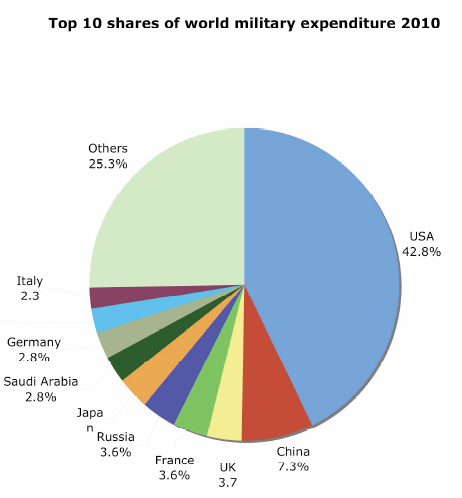
Also, Gray apparently thinks our garrison state economy is just ducky. What an asshole. He seems to actually admire our military expenditures. And here's a line that seems ripped out of a rich kid's 7th grade essay:
"America has always tried to do the right thing." How do you get a job writing..? Ahh...conservative. Probably favors Rubio and his more foreign wars/tax cuts for the rich brilliance. Trump's ideas about protectionism are like "national socialism" and what about "free enterprise"?
Finally, Gray had to do it: he ends his piece by asserting that Trump is the "logical consequence of Obama" who "swept into power on a wave of demented hope."
Grade: F
---------------------------------------------------------------------------
Andrew Bacevich from Tom Dispatch, 1st of March, 2016
Comment: The intro by Nick Turse, about Trump's "Trumpiso" and his "xenophobia, political bromides, and so-light-it-floats policy proposals" are well-taken by me. Tonight I watched Trump talk about how he'd handle ISIS: he'd find a really really tough guy like Gen. George Patton. That's pretty light. Politically speaking, it's roughly the equivalence in density of a neutrino.
I liked Turse's memory of his 1980s and the commercial for Trump's Atlantic City gaudy pleasure palace. It gave me a minor bad-trip flashback to the time I got stoned and watched Robin Leach on "Lifestyles of the Rich and Famous," which put me off pot for a long time. Like maybe even a week. But to Bacevich.
Andrew Bacevich has been on my radar since the Awful Years of Cheney, W43 and that entire cadre of NeoCon war criminals. Bacevich is an American historian who retired as a career US Army officer. His son died fighting in Iraq in 2007. He specializes in diplomacy, military history and foreign policy and said W43's "preventative wars" in Iraq and Afghanistan were "immoral, illicit and imprudent."
About Trump: he's not a big fan. Trump is to American politics what Martin Shkreli is to Big Pharma, and that Trump as POTUS will "demolish the structural underpinnings" of what we've called "democracy." So: Trump as POTUS = no more constitutional democracy, with Trump playing a Juan Peron character, with Melania as Eva. And even if things don't get better for Trump's desperate supporters, at least he'll be more fun to watch on the teevee.
Bacevich understands the public anger, but he has some insights on Trump's use of that anger: that Trump understands that the difference between the ostensibly serious and the self-evidently frivolous has collapsed, and that "celebrity confers authority" at this stage.
Thinking is a sacred disease and sight is deceptive. - Heraclitus
Trumpism "is an attitude or pose that feeds off of and then reinforces, widespread anger and alienation." In addition, his followers like the fact that Trump knows all about the bullshit corporate "news" journalists and gatekeepers and other "reality show" producers and calls them out on their bullshit, because apparently it takes one to know one.
For Bacevich, Trump is a carnival barker selling magical potions to fix health care, immigration, the economy and war.
Then it gets dark. By which I mean I think Bacevich is right: Trump, Cruz and Rubio (this last guy will now have to drop out as of his showing in primaries within the past eight hours, as of the moment I'm writing this) all say - and maybe even believe - that things were great until Obama got in, so on "day one" they'll reverse...all...that. - Playing to the childish electorate who apparently think the Prez is a guy with a Big Dick who is OMNIPOTENT. Cruz, Trump and Rubio look at the rest of the world, and Unistat's place in it and see nothing but military solutions. (Not that Obama is all that different!)
(Suddenly I'm reminded of a George Carlin bit about campaigns and telling the truth. Carlin would have run on this slogan:
The People Suck
Fuck Hope)
Finally, Bacevich predicts - and he's not the only one - that this means the Republican Party as we've known it is gone. Even if Cruz or Trump don't win.
Which brings me to my next guy, but first a grade for Bacevich:
Grade: A-
-----------------------------------------------------------------------------
Bruce Bartlett in Politico, July 27, 2015
Comment: A supply-sider and former Reagan advisor who worked in the Treasury under Bush41 and who is a longtime Republican party apparatchik, Bartlett thought W43 and his NeoCons had dangerously departed from true conservatism and has been vocal about the increasingly disastrous path his beloved party has taken. Bartlett voted for Trump in order to speed the demolition of the Republican party. This seems almost mythic to me. If not mythic, it's at minimum chock-full of pathos.
I've seen Bartlett talk recently. Let's lose this one, big, so we can start over with Adults in the room, and get away from the racists, borderline fascists, religious nutjobs and know-nothings in the party.
Fat chance, Bartlett. But I feel for ya, man.
(NB: Bacevich thinks the Trump/Cruz run means the end of the Republicans. Maybe. But we'll see how/if they reorganize. But I can picture Bartlett in his mansion, reading Bacevich's piece with glee. Maybe he even pushes away from his 250 year old cherry oak desk and dances a little jig, late at night, alone, with some vodka in his system.)
"Trump's nomination would give what's left of the sane wing of the GOP a chance to reassert control in the wake of inevitable defeat..." Ummm...how many "sane" ones are there? I can count 'em on one hand, right?
Bartlett seems somewhat comforted in that he thinks Trump would lose big like Goldwater did in 1964, which seems his model for restructuring. (Bartlett thinks it's good Goldwater lost in '64 because it paved the way for Nixon!) Methinks times have changed, especially with Citizens United and people like the Koch Bros. But hey: good luck on this one, Bruce.
Bartlett thinks: When the Republicans get trounced in November, we'll have someone running in 2020 who is less right-wing than either McCain on Romney were. Really? I don't see it. As a matter of fact, I think guys like Bacevich and others are right: there will be more Trumps and Cruzes in 2020, unless something is done to staunch the flow of jobs overseas, the falling wages, the shitty jobs, the hopelessness of much of the country. About this Bartlett, the Party Man, has nothing to say.
He does make an interesting point when talking about the 1960s and the history of the Republican party: that conservatives and country club Republican Party members "have always been uncomfortable allies." That's my favorite line in Bartlett's piece.
But then Bartlett tries to paint Wm. F. Buckley as for civil rights (he opposed the 1964 Civil Rights Act, but to his credit, later said it was a mistake to oppose) and that Buckley tried to purify the party by distancing it from Birchers and Randroids, which I find equivocal. Buckley wanted to appear to distance the party from extremists, but he knew they needed as many factions as possible. And Bartlett goes on with this louse-ridden history lesson by reminding us that Irving Kristol and his NeoCons were a way of getting moderate Jews into the party. How did that work out for you, 2000-2008?
Bartlett mentions nothing about the sort of anger that would give rise to Trump. I think he's been too well-fed and protected and privileged to even think about this.
Bruce says some true things about his political god, Ronald Reagan, who "raised taxes 11 times, gave amnesty to illegal aliens, pulled American troops out of the Middle East, supported environmental regulations (not so much- OG), raised the debt limit, and appointed many moderates to key positions, including the Supreme Court."
I hope Bartlett doesn't think Scalia was a "moderate."
Grade: C
-------------------------------------------------------------------------
Well, that's all for today 'cuz I'm weak with bronchitis, but I'll go over some more of these tomorrow, if only get all this this off my chest. (<----did you catch the lurking pun?)
a graphic depiction of my inner state after watching footage of
U. of Louisville student Shiya Nwanguma surrounded by white
supremacists at a Trump rally a week ago
And yet: I found myself spinning out into a YUGE pileup of "what does it mean to have Trump doing so well?" articles. It's the atavistic need for a bad time when there's a bad time to be had, I guess. Or: my masochism takes on ever-odd hues.
Anyway: I will link articles with my comments and, because I found while reading these articles (and what follows is merely a handful; please feel free to link to ones I didn't in the comments and say why you thought the opinion was interesting) that I was interested in the epistemologies used, and how they resonated with my idiosyncratic take on this Horror Show. Furthermore, I will act the schoolmarm and give pissy "grades" to each opinion piece.
Here goes...
----------------------------------------------------------------
Scott Adams of the famous "Dilbert" comic strip, from his blog way back on 13 August, 2015
Comment: In what will become fairly standard in these articles, Trump is a "narcissistic blowhard" without any political credentials. I'm guessing, were Trump to confront Adams he'd say, "Damn straight, but I'm the best narcissistic blowhard you've ever seen and I get things done...I've got a lot of money my friend. A lot of money." Just a guess.
The meat of Adams's analysis is that Trump is using classic hypnosis techniques, like "intentional exaggeration" and "brand management" and "taking the high ground" (when accused of being a whiner, Trump said he was the "best whiner of all time").
And then there's deflection: when called out on his misogynistic remarks, Trump said yea, I've said some nasty things about Rosie O'Donnell, knowing his pathetic sans culottes universally revile Ms. O'Donnell. And hey, those chicks had it comin'. Adams sees Trump making a deal with Fox honcho Ailes over ratings: hey Rog, you don't like me, but your ratings go up when I appear on your network, so let's make a deal.
As of last August, Adams didn't know Trump didn't write The Art of the Deal. It was written by Tony Schwartz, who has since said Trump only "read it."
Adams seems to genuinely think Trump is so adept with his hypnotic billionaire's business ju-ju that he could make Mexico build a wall and pay for it.
Scott Adams has studied hypnosis himself, so he's spotted it. To me, it's soooo missing the point. Nassim Nicholas Taleb might call this a petty case of "tunneling," which is the neglect of sources of uncertainty outside the plan itself. Others use the term "cherry picking." I will settle with "missing the point."
There's no need to invoke hypnotic techniques; Trump seems to be obviously (to me) saying things with a certain style that appeals to downtrodden, uneducated whites who feel like they're losing.
Grade: C-
--------------------------------------------------------------------------
Freddie Gray in The Spectator, 5 March, 2016
Comment: For Gray, Trump is a "fulminating demagogue with more than a whiff of mad dictator about him." Articles about Trump are your chance to really let your high-minded invective riffs out. And who can blame the writers? It's appropriate, no?
Gray calls Trump a "foreign policy moron," which I think is true. There's no way he could find Aleppo on an unmarked map. A true Murrkin, that Trump. Gray says Trump is "narcissistic and nihilistic," and I think the first term is obviously true and hope to hell the second one is not. It's an easy riff. He gets in the requisite allusion to fascism: Mussolini and the KKK. Gray also says Trump "tramples all over the corpse" of W43: the failed wars, the financial crisis. I have no problem with anyone raking W43 over the coals.
Also: Trump attracts millions "precisely because he is a rude thug." Aye, too true. Or at least Trump's playing the rude thug. (This will get complicated.) We know politics has been about bluster for a long time, but Trump takes it up a notch - hell: 23 notches! - and it makes the more sensitive among us who have read history a bit unnerved. Believe it or not, there are some of us Ordinary Unistatians who have never bought any of the lines about American exceptionalism, and do fear that It Can Happen Here. (Book recommendation from the OG: The Mass Psychology of Fascism, by Wilhelm Reich.)
Here's where the conservative Freddie Gray loses me:
Unistat with Trump is seeing "the most benevolent superpower in history turning nasty." My gawd, you need to actually read outside your dipshit reality tunnel, Gray. Tell the people of Hiroshima about our benevolence. Tell everyone in Latin America. Tell the East Timorese. Show the Vietnamese peasant burned with napalm about "nasty." I could literally go on for days here.
Also, Gray apparently thinks our garrison state economy is just ducky. What an asshole. He seems to actually admire our military expenditures. And here's a line that seems ripped out of a rich kid's 7th grade essay:
"America has always tried to do the right thing." How do you get a job writing..? Ahh...conservative. Probably favors Rubio and his more foreign wars/tax cuts for the rich brilliance. Trump's ideas about protectionism are like "national socialism" and what about "free enterprise"?
Finally, Gray had to do it: he ends his piece by asserting that Trump is the "logical consequence of Obama" who "swept into power on a wave of demented hope."
Grade: F
---------------------------------------------------------------------------
Andrew Bacevich from Tom Dispatch, 1st of March, 2016
Comment: The intro by Nick Turse, about Trump's "Trumpiso" and his "xenophobia, political bromides, and so-light-it-floats policy proposals" are well-taken by me. Tonight I watched Trump talk about how he'd handle ISIS: he'd find a really really tough guy like Gen. George Patton. That's pretty light. Politically speaking, it's roughly the equivalence in density of a neutrino.
I liked Turse's memory of his 1980s and the commercial for Trump's Atlantic City gaudy pleasure palace. It gave me a minor bad-trip flashback to the time I got stoned and watched Robin Leach on "Lifestyles of the Rich and Famous," which put me off pot for a long time. Like maybe even a week. But to Bacevich.
Andrew Bacevich has been on my radar since the Awful Years of Cheney, W43 and that entire cadre of NeoCon war criminals. Bacevich is an American historian who retired as a career US Army officer. His son died fighting in Iraq in 2007. He specializes in diplomacy, military history and foreign policy and said W43's "preventative wars" in Iraq and Afghanistan were "immoral, illicit and imprudent."
About Trump: he's not a big fan. Trump is to American politics what Martin Shkreli is to Big Pharma, and that Trump as POTUS will "demolish the structural underpinnings" of what we've called "democracy." So: Trump as POTUS = no more constitutional democracy, with Trump playing a Juan Peron character, with Melania as Eva. And even if things don't get better for Trump's desperate supporters, at least he'll be more fun to watch on the teevee.
Bacevich understands the public anger, but he has some insights on Trump's use of that anger: that Trump understands that the difference between the ostensibly serious and the self-evidently frivolous has collapsed, and that "celebrity confers authority" at this stage.
Thinking is a sacred disease and sight is deceptive. - Heraclitus
Trumpism "is an attitude or pose that feeds off of and then reinforces, widespread anger and alienation." In addition, his followers like the fact that Trump knows all about the bullshit corporate "news" journalists and gatekeepers and other "reality show" producers and calls them out on their bullshit, because apparently it takes one to know one.
For Bacevich, Trump is a carnival barker selling magical potions to fix health care, immigration, the economy and war.
Then it gets dark. By which I mean I think Bacevich is right: Trump, Cruz and Rubio (this last guy will now have to drop out as of his showing in primaries within the past eight hours, as of the moment I'm writing this) all say - and maybe even believe - that things were great until Obama got in, so on "day one" they'll reverse...all...that. - Playing to the childish electorate who apparently think the Prez is a guy with a Big Dick who is OMNIPOTENT. Cruz, Trump and Rubio look at the rest of the world, and Unistat's place in it and see nothing but military solutions. (Not that Obama is all that different!)
(Suddenly I'm reminded of a George Carlin bit about campaigns and telling the truth. Carlin would have run on this slogan:
The People Suck
Fuck Hope)
Finally, Bacevich predicts - and he's not the only one - that this means the Republican Party as we've known it is gone. Even if Cruz or Trump don't win.
Which brings me to my next guy, but first a grade for Bacevich:
Grade: A-
-----------------------------------------------------------------------------
Bruce Bartlett in Politico, July 27, 2015
Comment: A supply-sider and former Reagan advisor who worked in the Treasury under Bush41 and who is a longtime Republican party apparatchik, Bartlett thought W43 and his NeoCons had dangerously departed from true conservatism and has been vocal about the increasingly disastrous path his beloved party has taken. Bartlett voted for Trump in order to speed the demolition of the Republican party. This seems almost mythic to me. If not mythic, it's at minimum chock-full of pathos.
I've seen Bartlett talk recently. Let's lose this one, big, so we can start over with Adults in the room, and get away from the racists, borderline fascists, religious nutjobs and know-nothings in the party.
Fat chance, Bartlett. But I feel for ya, man.
(NB: Bacevich thinks the Trump/Cruz run means the end of the Republicans. Maybe. But we'll see how/if they reorganize. But I can picture Bartlett in his mansion, reading Bacevich's piece with glee. Maybe he even pushes away from his 250 year old cherry oak desk and dances a little jig, late at night, alone, with some vodka in his system.)
"Trump's nomination would give what's left of the sane wing of the GOP a chance to reassert control in the wake of inevitable defeat..." Ummm...how many "sane" ones are there? I can count 'em on one hand, right?
Bartlett seems somewhat comforted in that he thinks Trump would lose big like Goldwater did in 1964, which seems his model for restructuring. (Bartlett thinks it's good Goldwater lost in '64 because it paved the way for Nixon!) Methinks times have changed, especially with Citizens United and people like the Koch Bros. But hey: good luck on this one, Bruce.
Bartlett thinks: When the Republicans get trounced in November, we'll have someone running in 2020 who is less right-wing than either McCain on Romney were. Really? I don't see it. As a matter of fact, I think guys like Bacevich and others are right: there will be more Trumps and Cruzes in 2020, unless something is done to staunch the flow of jobs overseas, the falling wages, the shitty jobs, the hopelessness of much of the country. About this Bartlett, the Party Man, has nothing to say.
He does make an interesting point when talking about the 1960s and the history of the Republican party: that conservatives and country club Republican Party members "have always been uncomfortable allies." That's my favorite line in Bartlett's piece.
But then Bartlett tries to paint Wm. F. Buckley as for civil rights (he opposed the 1964 Civil Rights Act, but to his credit, later said it was a mistake to oppose) and that Buckley tried to purify the party by distancing it from Birchers and Randroids, which I find equivocal. Buckley wanted to appear to distance the party from extremists, but he knew they needed as many factions as possible. And Bartlett goes on with this louse-ridden history lesson by reminding us that Irving Kristol and his NeoCons were a way of getting moderate Jews into the party. How did that work out for you, 2000-2008?
Bartlett mentions nothing about the sort of anger that would give rise to Trump. I think he's been too well-fed and protected and privileged to even think about this.
Bruce says some true things about his political god, Ronald Reagan, who "raised taxes 11 times, gave amnesty to illegal aliens, pulled American troops out of the Middle East, supported environmental regulations (not so much- OG), raised the debt limit, and appointed many moderates to key positions, including the Supreme Court."
I hope Bartlett doesn't think Scalia was a "moderate."
Grade: C
-------------------------------------------------------------------------
Well, that's all for today 'cuz I'm weak with bronchitis, but I'll go over some more of these tomorrow, if only get all this this off my chest. (<----did you catch the lurking pun?)
a graphic depiction of my inner state after watching footage of
U. of Louisville student Shiya Nwanguma surrounded by white
supremacists at a Trump rally a week ago
Saturday, January 16, 2016
Stranger Than We Can Imagine, by John Higgs: A Review
A magisterial "alternative" Tale of the Tribe-like history of the 20th century, and something that was desperately needed. Higgs has produced a book that somehow manages to function as a page-turner and to speak to three different classes of readers:
1. Those quite well-read folks over 30 who perhaps need to view the century they were born in from such an "alternative" angle Higgs provides.
2. Those of us over 30 who have tended to assemble a narrative of the 20th century from the occasional history book, TV, radio, newspapers, and now Internet. Like water to fish, we all lived in a world where individualism was one of the primary values. Higgs shows us how vital the movement toward individualism was in that chaotic century, and how we must learn to see how the downside of individualism as a primary value has led us homo saps into the quandary we're in now. This is a real eye-opener for many of us.
3. Those born after 1990, who probably feel "how odd" that people lived in a world without massive digital connectivity. Higgs shows them how uncanny, how weird, how what we found out about ourselves in the 20th century was indeed "stranger than we can imagine," and Higgs reminds us where he got this phrase. After a brief discussion about HG Wells and how, around 1900, Wells was able to predict many seemingly amazing things that did indeed come true, proving Wells as one of the great forecasters of all time, "But there was a lot Wells wasn't able to predict: relativity, nuclear weapons, quantum mechanics, microchips, postmodernism and so forth. These were not so much unforeseen as unforeseeable. His predications had much in common with the expectations of the scientific world, in that he extrapolated from what was then known. In the words commonly assigned to the English astrophysicist Sir Arthur Eddington, the universe would prove to be not just stranger than we imagine, but, 'stranger than we can imagine.'" While I read this book, I thought of young, smart artistically-minded people I know, and how I wanted to press this book into their hands and say, "You will really love this one. Trust me on this."
Stranger Than We Can Imagine is written from the standpoint of the generalist intellectual who is not beholden to a larger institution, and I see Higgs as a good example of the type of intellectual Karl Mannheim wrote about in his Ideology and Utopia, still the ur-text in the sociology of knowledge. Mannheim wrote of a "relatively classless stratum" of "free-floating"thinkers who, because they were not beholden to institutions, probably had the most valid overview of social life and current ideas. Higgs's erudition is quite great and yet he wears it lightly, and I found the book difficult to put down once I started it. Whether he's discussing Einstein and how artists contemporary with him who couldn't understand Einstein's math yet were still projecting a worldview that demanded a relativistic /multi-perspectivalist view, or a stirring encapsulation of the horrible irony of the space race (Jack Parsons, Werner von Braun and Sergei Korolev were visionaries who ended up beholden to nations who demanded their research be used to develop killingry, or hi-tech nuclear missiles)...there are no dull moments in this book.
There are chapters on chaos mathematics (Higgs makes it understandable to the most math-phobic among us), the advent of "teenagers" (a word that wasn't coined until 1940!), feminism and the rise of "free sex" with its misunderstandings and missed opportunities, post-Hiroshima nihilism and existentialism, how quantum mechanics showed that uncertainty is baked into the human condition, and the function of Freud's metaphor of the "Id" as it relates to fascism, advertising, individualism and alienation. The author manages to thread together all of these disparate ideas, which I find marvelous.
Higgs's work is vital in a world filled with paramilitary death squads answering to corporations, nuclear weapons, and banks/corporations that behave like psychopathic individuals and are in many cases more powerful than many countries and not subject to criminal law to boot. In a world of ISIS and the prospect of someone like Donald Trump as leader of the free world, we citizens in 2016, bombarded by information about our comparatively "little worlds," need broad overviews of How We Got Here. In a very substantive sense, this book can function as a map that will help us avert catastrophe. Higgs cites climate change and that the 21st century appears to be the penultimate century "in terms of Western civilisation." Id est, it's curtains for humanity in the 22nd c. But: "That's certainly the position if we look at current trends and project forward. We can be sure, though, that there will be unpredictable events and discoveries ahead, and that may give us hope."
Most of the books I've read on 20th century history address relativity, cubism, Godel's Incompleteness Theorem, cultural anthropology, quantum mechanics, postmodernism (which Higgs compares to New Age thought in a provocative section), neuroscience and perception, and the "linguistic turn" in philosophy as a world that found itself foundation-less. Or, as Stephen Dedalus thinks in Joyce's 1922 Ulysses, we can never be certain about our big ideas, because they are "ineluctably constructed upon the incertitude of the void." Higgs uses the metaphor of the omphalos. Is the ultimate Source for our normative claims the Church? Our "selves"? Our money? Our country and our ways? Logic? Rationality and science? All of these were severely undermined during the Roaring 20th century, some moreso than others.
The deepest structure of Higgs's argument about what just happened to all of us in the 20th century, and where we might be going seems of the utmost importance in our understanding of our prospects as a species. With the demise of at least 30 centuries of rigid hierarchical institutions that governed every aspect of our lives falling apart at the start of the 20th century, individualism reigned. But an overweening individualist ethos turned out to cause more problems than it was worth. What arose at the end of the century was something to combat it: massively networked sociality and constant feedback and accountability, and those who grew up in this digital world seem to intuitively understand game theory: the zero-sum games we're running (especially with banks/corporations and politics) are no longer sustainable: the generation born after 1990 implicitly understands that we must all come together, under no hierarchy, to solve problems, then disperse back to our own lives. The only semblance of omphalos we have is the articulation of our own values and the idea that all of us are in this together. This younger generation - certainly younger than me - may be the best card history has dealt us. Let's hope Higgs is right, 'cuz if he isn't, we probably are living in the penultimate century for human Being.
It has shimmering prose, luminous details, and a rhythm I can dance to. Oh yea: it could also help save our species, and I'm only about 1/3 joking. You can't afford NOT to read it. 23 stars out of a possible 20.
1. Those quite well-read folks over 30 who perhaps need to view the century they were born in from such an "alternative" angle Higgs provides.
2. Those of us over 30 who have tended to assemble a narrative of the 20th century from the occasional history book, TV, radio, newspapers, and now Internet. Like water to fish, we all lived in a world where individualism was one of the primary values. Higgs shows us how vital the movement toward individualism was in that chaotic century, and how we must learn to see how the downside of individualism as a primary value has led us homo saps into the quandary we're in now. This is a real eye-opener for many of us.
3. Those born after 1990, who probably feel "how odd" that people lived in a world without massive digital connectivity. Higgs shows them how uncanny, how weird, how what we found out about ourselves in the 20th century was indeed "stranger than we can imagine," and Higgs reminds us where he got this phrase. After a brief discussion about HG Wells and how, around 1900, Wells was able to predict many seemingly amazing things that did indeed come true, proving Wells as one of the great forecasters of all time, "But there was a lot Wells wasn't able to predict: relativity, nuclear weapons, quantum mechanics, microchips, postmodernism and so forth. These were not so much unforeseen as unforeseeable. His predications had much in common with the expectations of the scientific world, in that he extrapolated from what was then known. In the words commonly assigned to the English astrophysicist Sir Arthur Eddington, the universe would prove to be not just stranger than we imagine, but, 'stranger than we can imagine.'" While I read this book, I thought of young, smart artistically-minded people I know, and how I wanted to press this book into their hands and say, "You will really love this one. Trust me on this."
Stranger Than We Can Imagine is written from the standpoint of the generalist intellectual who is not beholden to a larger institution, and I see Higgs as a good example of the type of intellectual Karl Mannheim wrote about in his Ideology and Utopia, still the ur-text in the sociology of knowledge. Mannheim wrote of a "relatively classless stratum" of "free-floating"thinkers who, because they were not beholden to institutions, probably had the most valid overview of social life and current ideas. Higgs's erudition is quite great and yet he wears it lightly, and I found the book difficult to put down once I started it. Whether he's discussing Einstein and how artists contemporary with him who couldn't understand Einstein's math yet were still projecting a worldview that demanded a relativistic /multi-perspectivalist view, or a stirring encapsulation of the horrible irony of the space race (Jack Parsons, Werner von Braun and Sergei Korolev were visionaries who ended up beholden to nations who demanded their research be used to develop killingry, or hi-tech nuclear missiles)...there are no dull moments in this book.
There are chapters on chaos mathematics (Higgs makes it understandable to the most math-phobic among us), the advent of "teenagers" (a word that wasn't coined until 1940!), feminism and the rise of "free sex" with its misunderstandings and missed opportunities, post-Hiroshima nihilism and existentialism, how quantum mechanics showed that uncertainty is baked into the human condition, and the function of Freud's metaphor of the "Id" as it relates to fascism, advertising, individualism and alienation. The author manages to thread together all of these disparate ideas, which I find marvelous.
Higgs's work is vital in a world filled with paramilitary death squads answering to corporations, nuclear weapons, and banks/corporations that behave like psychopathic individuals and are in many cases more powerful than many countries and not subject to criminal law to boot. In a world of ISIS and the prospect of someone like Donald Trump as leader of the free world, we citizens in 2016, bombarded by information about our comparatively "little worlds," need broad overviews of How We Got Here. In a very substantive sense, this book can function as a map that will help us avert catastrophe. Higgs cites climate change and that the 21st century appears to be the penultimate century "in terms of Western civilisation." Id est, it's curtains for humanity in the 22nd c. But: "That's certainly the position if we look at current trends and project forward. We can be sure, though, that there will be unpredictable events and discoveries ahead, and that may give us hope."
Most of the books I've read on 20th century history address relativity, cubism, Godel's Incompleteness Theorem, cultural anthropology, quantum mechanics, postmodernism (which Higgs compares to New Age thought in a provocative section), neuroscience and perception, and the "linguistic turn" in philosophy as a world that found itself foundation-less. Or, as Stephen Dedalus thinks in Joyce's 1922 Ulysses, we can never be certain about our big ideas, because they are "ineluctably constructed upon the incertitude of the void." Higgs uses the metaphor of the omphalos. Is the ultimate Source for our normative claims the Church? Our "selves"? Our money? Our country and our ways? Logic? Rationality and science? All of these were severely undermined during the Roaring 20th century, some moreso than others.
The deepest structure of Higgs's argument about what just happened to all of us in the 20th century, and where we might be going seems of the utmost importance in our understanding of our prospects as a species. With the demise of at least 30 centuries of rigid hierarchical institutions that governed every aspect of our lives falling apart at the start of the 20th century, individualism reigned. But an overweening individualist ethos turned out to cause more problems than it was worth. What arose at the end of the century was something to combat it: massively networked sociality and constant feedback and accountability, and those who grew up in this digital world seem to intuitively understand game theory: the zero-sum games we're running (especially with banks/corporations and politics) are no longer sustainable: the generation born after 1990 implicitly understands that we must all come together, under no hierarchy, to solve problems, then disperse back to our own lives. The only semblance of omphalos we have is the articulation of our own values and the idea that all of us are in this together. This younger generation - certainly younger than me - may be the best card history has dealt us. Let's hope Higgs is right, 'cuz if he isn't, we probably are living in the penultimate century for human Being.
It has shimmering prose, luminous details, and a rhythm I can dance to. Oh yea: it could also help save our species, and I'm only about 1/3 joking. You can't afford NOT to read it. 23 stars out of a possible 20.
Labels:
20th century,
books,
climate change,
Einstein,
fascism,
history,
history of science,
Internet history,
John Higgs,
postmodernism,
reading,
Sigmund Freud,
sociology of knowledge,
Tale of the Tribe,
uncertainty
Wednesday, February 4, 2015
The Brief Wondrous Life of Oscar Wao, by Junot Diaz (2007)
I finished reading this novel a week ago, and it's haunting me. It was Diaz's first novel and he won the Pulitzer for it, now teaches at M.I.T. Won a MacArthur "Genius" award. Deserved it. I arrived eight years late, but I'm glad I came. (Just why I'm glad I came seems roughly the same answer you'd get when someone says she "enjoyed" Hamlet. q.v. the following.)
Diaz was born in the Dominican Republic, but moved to New Jersey as a youngster. His prose dazzles and reminded me of David Foster Wallace: not so much the style or voice or syntactical ju-ju, but overall Brilliant Mind, mixing a staggering number of allusions to history, pop kulch, esp. science fiction, gaming, and movies. The anthropological intricacies of ideas and language involved with how Hispanics and Latinos from one society think about Hispanics and Latinos based on their relative degrees of melanin turned up my sociology nobs to 11. (I'm not saying I think this is the major criterion for snap-judgements or valuations, but it seems far more complex than my white-boy milieux, from one who grew up in the Los Angeles 'burbs.) I also think Diaz writes on the subjects of desire, beauty and sex in particularly compelling ways.
Oscar is that fat, hopeless kid in school who gets picked on by everyone, and worries about ever getting laid. He loves women, but he's a Dominican non-macho gargantuan nerd. As a freshman in college, he's described as "307 pounds." It's some dark stuff. In college he constantly fools himself that finally some girl will love him. He attempts suicide. Still, a lot of him is in many of us, even us skinny folk. I'm haunted by Oscar, because we know this guy. And we wish we'd been nicer to him. And sometimes we were, but...and we sorta "get" why he speaks "like a Star Trek computer" and is so profoundly nerdy and clueless about social interactions, especially with the opposite sex. And still we wonder: is there more to why he's like this? The novel's - Diaz's main posit? - the family is under a curse: the fuku.
Diaz woke up the Joyce (or, Pynchon)-reader in me in that many of his sentences are larded with references to obscure-to-me fantasy characters and there are citations to Dominican and other Hispanic and Latino histories and figures, Japanese pop culture, nerd culture, more than enough obscurities to delight my inner Wao, etc. The difficulties mount: Diaz writes in Spanglish, including many varieties of Spanish idioms and slang, and my copy was not an annotated version, so dictionaries helped, and so did the Net, of course. Finally, by page 40 or so, I stumbled onto one person's online annotations, which are a work-in-progress and "Kim" of San Francisco is crowdsourcing it. (Or is it sorta Wiki-ish?)
Diaz plays it coy with who the narrator of the story is, but eventually gives it away about halfway through. It wasn't who I thought it was...because I found I'd been prejudiced and didn't think the character in novel could be as thoughtful and compassionate as he had been drawn...but drawn by...who? Ahh, the pomo jukes of Diaz!
One of my favorite artists, Bob Campbell, did this for me as a
surprise gift. Check him out!
Okay, the novel's about the story of Oscar's family as lived in the 20th century, mostly in the Dominican Republic. I confess that I'd heard this was a tremendous literary work, but someone in my book group picked it (egged on by me), even though I didn't know anything about what goes on in the book. Immediately we are informed about the Dominican Republic, a place I'd read a bit about, and it was all horrifying. I had read enough about Trujillo (dictator from 1930-61) that I hoped the novel wouldn't stay on the subject. It didn't. It went on and on about Oscar and his sexy feminist sister, and his workaholic, cancerous, and psychologically traumatized mother. There are no cardboard characters in the book. It's compelling on every goddamned page.
I said it didn't stay on Trujillo. But then He came back. And that's what's stayed with me.
Brief sort-of tangent: On at least three occasions I've had talks with friends about the old TV show The Twilight Zone. Usually someone brings up an episode and then we all chime in, then mention another episode and talk about our impressions and ideas about that one, usw. The show had me in a sort of Oscar Wao-ish way between the ages of 13 and 20. I was a total geek for that show, and watched some episodes over and over. I studied Marc Scott Zicree's book on the show. My favorite Twilight Zone episode is called "Walking Distance" but that has nothing to do with this. Another episode, "It's A Good Life," , which features a King-Ubu/Kim-Jong-il-like monstrous little boy with supernatural powers, has everything to do with Diaz's novel, so I'll return and try to get to the crux...
In going back to the life and times of Oscar's grandfather Abelard, the accomplished medical doctor and center of intellectual activity in the DR, a man I'd have liked to have known, it's bluntly stated that living in the DR under Trujillo was like living in "It's A Good Life" (see p.224, ff forward and backward), which I have always thought was one of the most horrifying stories I'd ever seen. It continues to creep me out, after (easily) more than ten viewings. (See above link.)
Combine that with the most brutal banana republic fascist regime - where about half the population is a snitch or a cop or part of the secret police and the dictator doesn't wish you into the cornfield, but has goons waylay you in city traffic, kidnap you, then beat you with rifle butts until you're almost dead, then leave your body in the sugar cane fields. There's the wealthy class on the island, who own everything, there's the dictator and his goons, who can take that away from you and literally erase everything about your existence, even your signature. And then pretty much everyone else is in squalor and lives in a state of constant anxiety. And oh yea: the dictator has his goons monitor the populace for every beautiful girl, apparently the younger the better, and he gets to fuck her, or your family is ruined. No daddy can say no to Trujillo, or not for long. Torture of the Gitmo variety was commonplace. ("At least he was anticommunist!" - Unistat)
Just one of many delights from the Trujillo regime: when the price of sugar dropped - he'd stolen 80% of the sugar plantations for himself - he blamed the Haitian slaves who worked those fields, and had 20,000 of them massacred.
Unistat backed Trujillo for a long time, simply because he was anti-Communist. Eventually the CIA saw for themselves what a horror show the entire island was, and were vexed: yea, but he's anti-Commie! What do we do? JFK-lovers need to read up on his way of handling it. (This story will have to be told later. Or better yet: check into it fer yer own self?)
Throughout the book and the footnotes, Diaz sticks with the fuku narrative about why such horrific things happened to Oscar and his family and ancestors. In interviews he talks about Trujillo and how his family reacted when he brought up the topic. It's completely repressed.
So, the haunting has to do with my own silly neuroses about vast income inequality and the militarization of the police, a massive surveillance State, and sham political elections. Because I've read about these histories throughout my life. Because, when I read Wilhelm Reich's The Mass Psychology of Fascism and he showed that fascistic configurations of political life has been the default mode throughout most of what we call "history," it made sense to me, I hate to say. And because Reich and Orwell and other writers have suggested the psychological horrors of brutal regimes can last for generations.
And Oscar wanted to live in Akira. Or Middle-Earth. He just wanted a kiss from a beautiful girl and to fondle a breast, maybe even get laid.
I get it.
Diaz was born in the Dominican Republic, but moved to New Jersey as a youngster. His prose dazzles and reminded me of David Foster Wallace: not so much the style or voice or syntactical ju-ju, but overall Brilliant Mind, mixing a staggering number of allusions to history, pop kulch, esp. science fiction, gaming, and movies. The anthropological intricacies of ideas and language involved with how Hispanics and Latinos from one society think about Hispanics and Latinos based on their relative degrees of melanin turned up my sociology nobs to 11. (I'm not saying I think this is the major criterion for snap-judgements or valuations, but it seems far more complex than my white-boy milieux, from one who grew up in the Los Angeles 'burbs.) I also think Diaz writes on the subjects of desire, beauty and sex in particularly compelling ways.
Oscar is that fat, hopeless kid in school who gets picked on by everyone, and worries about ever getting laid. He loves women, but he's a Dominican non-macho gargantuan nerd. As a freshman in college, he's described as "307 pounds." It's some dark stuff. In college he constantly fools himself that finally some girl will love him. He attempts suicide. Still, a lot of him is in many of us, even us skinny folk. I'm haunted by Oscar, because we know this guy. And we wish we'd been nicer to him. And sometimes we were, but...and we sorta "get" why he speaks "like a Star Trek computer" and is so profoundly nerdy and clueless about social interactions, especially with the opposite sex. And still we wonder: is there more to why he's like this? The novel's - Diaz's main posit? - the family is under a curse: the fuku.
Diaz woke up the Joyce (or, Pynchon)-reader in me in that many of his sentences are larded with references to obscure-to-me fantasy characters and there are citations to Dominican and other Hispanic and Latino histories and figures, Japanese pop culture, nerd culture, more than enough obscurities to delight my inner Wao, etc. The difficulties mount: Diaz writes in Spanglish, including many varieties of Spanish idioms and slang, and my copy was not an annotated version, so dictionaries helped, and so did the Net, of course. Finally, by page 40 or so, I stumbled onto one person's online annotations, which are a work-in-progress and "Kim" of San Francisco is crowdsourcing it. (Or is it sorta Wiki-ish?)
Diaz plays it coy with who the narrator of the story is, but eventually gives it away about halfway through. It wasn't who I thought it was...because I found I'd been prejudiced and didn't think the character in novel could be as thoughtful and compassionate as he had been drawn...but drawn by...who? Ahh, the pomo jukes of Diaz!
One of my favorite artists, Bob Campbell, did this for me as a
surprise gift. Check him out!
Okay, the novel's about the story of Oscar's family as lived in the 20th century, mostly in the Dominican Republic. I confess that I'd heard this was a tremendous literary work, but someone in my book group picked it (egged on by me), even though I didn't know anything about what goes on in the book. Immediately we are informed about the Dominican Republic, a place I'd read a bit about, and it was all horrifying. I had read enough about Trujillo (dictator from 1930-61) that I hoped the novel wouldn't stay on the subject. It didn't. It went on and on about Oscar and his sexy feminist sister, and his workaholic, cancerous, and psychologically traumatized mother. There are no cardboard characters in the book. It's compelling on every goddamned page.
I said it didn't stay on Trujillo. But then He came back. And that's what's stayed with me.
Brief sort-of tangent: On at least three occasions I've had talks with friends about the old TV show The Twilight Zone. Usually someone brings up an episode and then we all chime in, then mention another episode and talk about our impressions and ideas about that one, usw. The show had me in a sort of Oscar Wao-ish way between the ages of 13 and 20. I was a total geek for that show, and watched some episodes over and over. I studied Marc Scott Zicree's book on the show. My favorite Twilight Zone episode is called "Walking Distance" but that has nothing to do with this. Another episode, "It's A Good Life," , which features a King-Ubu/Kim-Jong-il-like monstrous little boy with supernatural powers, has everything to do with Diaz's novel, so I'll return and try to get to the crux...
In going back to the life and times of Oscar's grandfather Abelard, the accomplished medical doctor and center of intellectual activity in the DR, a man I'd have liked to have known, it's bluntly stated that living in the DR under Trujillo was like living in "It's A Good Life" (see p.224, ff forward and backward), which I have always thought was one of the most horrifying stories I'd ever seen. It continues to creep me out, after (easily) more than ten viewings. (See above link.)
Combine that with the most brutal banana republic fascist regime - where about half the population is a snitch or a cop or part of the secret police and the dictator doesn't wish you into the cornfield, but has goons waylay you in city traffic, kidnap you, then beat you with rifle butts until you're almost dead, then leave your body in the sugar cane fields. There's the wealthy class on the island, who own everything, there's the dictator and his goons, who can take that away from you and literally erase everything about your existence, even your signature. And then pretty much everyone else is in squalor and lives in a state of constant anxiety. And oh yea: the dictator has his goons monitor the populace for every beautiful girl, apparently the younger the better, and he gets to fuck her, or your family is ruined. No daddy can say no to Trujillo, or not for long. Torture of the Gitmo variety was commonplace. ("At least he was anticommunist!" - Unistat)
Just one of many delights from the Trujillo regime: when the price of sugar dropped - he'd stolen 80% of the sugar plantations for himself - he blamed the Haitian slaves who worked those fields, and had 20,000 of them massacred.
Unistat backed Trujillo for a long time, simply because he was anti-Communist. Eventually the CIA saw for themselves what a horror show the entire island was, and were vexed: yea, but he's anti-Commie! What do we do? JFK-lovers need to read up on his way of handling it. (This story will have to be told later. Or better yet: check into it fer yer own self?)
Throughout the book and the footnotes, Diaz sticks with the fuku narrative about why such horrific things happened to Oscar and his family and ancestors. In interviews he talks about Trujillo and how his family reacted when he brought up the topic. It's completely repressed.
So, the haunting has to do with my own silly neuroses about vast income inequality and the militarization of the police, a massive surveillance State, and sham political elections. Because I've read about these histories throughout my life. Because, when I read Wilhelm Reich's The Mass Psychology of Fascism and he showed that fascistic configurations of political life has been the default mode throughout most of what we call "history," it made sense to me, I hate to say. And because Reich and Orwell and other writers have suggested the psychological horrors of brutal regimes can last for generations.
And Oscar wanted to live in Akira. Or Middle-Earth. He just wanted a kiss from a beautiful girl and to fondle a breast, maybe even get laid.
I get it.
Wednesday, January 21, 2015
Garrison State: POTUS's SOTU Speech and the Semantic Unconscious
Around a minute into Obama's 2015 State of the Union speech we heard these words:
Yeaaa...Nope. Unistat is strung out on policing the world on behalf of its owners and the other wealthy states in the world. It's pretty much Our Thing.
Get a load of what Nick Turse has say about what ZERO of our "news" outlets has mentioned, then feel free to tell us why "the shadow of crisis has passed and the State of the Union is strong."
"Tonight, for the first time since 9/11, our combat mission in Afghanistan is over. Six years ago, nearly 180,000 American troops served in Iraq and Afghanistan. Today, fewer than 15,000 remain. And we salute the courage and sacrifice of every man and woman in this 9/11 Generation who has served to keep us safe. We are humbled and grateful for your service.
America, for all that we've endured; for all the grit and hard work required to come back; for all the tasks that lie ahead, know this:
The shadow of crisis has passed, and the State of the Union is strong."
Yeaaa...Nope. Unistat is strung out on policing the world on behalf of its owners and the other wealthy states in the world. It's pretty much Our Thing.
Get a load of what Nick Turse has say about what ZERO of our "news" outlets has mentioned, then feel free to tell us why "the shadow of crisis has passed and the State of the Union is strong."
Here's my favorite neologism - hey, 'tis new to me! - in 2015: "surrealpolitick"
Monday, July 21, 2014
On Archives: Personal and Public; Powerful and Perilous
"One's file, you know, is never quite complete; a case is never really closed, even after a century, when all the participants are dead." - Graham Greene, The Third Man
I've just finished reading a piece about how Stanley Kubrick amassed a personal archive - now housed in a climate-controlled wing of the University of Arts London - but intrepid journalist Jon Ronson somehow managed to peruse the extremely well-labeled and organized boxes upon boxes when they were still at Childwick Green, where Kubrick had lived in a rambling house in which Ronson had to drive past at least three electric gates to get to.
"There are boxes everywhere - shelves of boxes in the stable block, rooms full of boxes in the main house. In the fields, where racehorses once stood and grazed, are half a dozen Portakabins, each packed with boxes. I notice that many of the boxes are sealed. Some have, in fact, remained unopened for decades." There are letters to and from Nabokov. There are fan letters from all over the world, filed by city of origin. There's an entire room devoted to Napoleon, with seemingly every book ever written about him, and 25,000 3x5 library cards filled with notes on Napoleon compiled by Kubrick and some assistants.
About the Napoleon note cards:
"How long did it take?" I ask.
"Years," says Tony. "The late sixties."
The Kubrick Napoleon film was never made. He ended up making A Clockwork Orange instead. (Napoleon will show up later, below, in the case of Giordano Bruno.)
It's a typically fine journalistic piece by Ronson, and it fed into my lifelong fascination with personal archives, and what they mean, or might mean, both to the collector and to others. To State power.
(see Lost At Sea: The Jon Ronson Mysteries, pp.149-172, "Stanley Kubrick's Boxes")
Nachlass
Nowadays famous writers see bidding wars for their Nachlass, and it's made some writers ponder what their lives would be like once they sold their personal archives to an institution. Does it make you act "nicer" in all your emails? (The deal is: you get a sizeable sum, but must keep every scrap of writing from then on for the Institution.) What about love letters or writing that might hurt someone you love? How about what one might find embarrassing? If you opened a separate, secret email account, you are cheating the Institution and violating your agreement. You think to yourself, "Damn them! I have a life. And what sort of creep would want to go over my grocery lists?" Aye, but the Institution is backing you now; it's in their interests to play up how great you are...
Most of us who keep files about subjects we're interested in, or have built small personal libraries will not have to worry about this. Sometimes accidents happen. I remember when Kareem Abdul-Jabbar's house in the hills of Los Angeles burnt down. He had built a famously large jazz record collection: all gone. He also lost priceless Korans, Asian and Middle Eastern rugs. A gentle giant of intellectual bend and perhaps the greatest NBA player ever, he always felt misunderstood and that fans loved him for helping the Lakers win games, but they thought he was a freak. The story of his house was all over the news, and for years afterwards strangers came up to him to give him rare jazz albums, which surprised him and altered his emotional assumptions about some "fans."
But Kareem's lost archives couldn't represent a threat to the State or other vested interests.
Some Countercultural Losses
I'd become aware of Terence McKenna's stupendously cool book collection. He seemed to be interested in everything that I was, but he knew more and could talk about what he knew in a way I could never dream. I thought how great it would be to meet him and be allowed to go through his library. But an accident happened at a Quizno's sandwich shop in Monterey, California, and all his rare books and personal notes were burned.
Aldous Huxley's incredible book collection, his letters, notes...all burned in the famous 1961 Bel-Air fire near Los Angeles. I've read various versions of this. Seared into memory: local TV news people were on the scene and found the Famous Man and asked him how he felt. Aldous said he felt "remarkably clean." I've yet to see if anyone had catalogued what was lost; I doubt if there was even a decent bibliography of what he'd had. Somewhat oddly, Huxley had published a piece in Vogue in 1947: "If My Library Burned Tonight." A passage: "To enter the shell of a well-loved room and to find it empty except for a thick carpet of ashes that were once one's favorite literature - the very thought of it is depressing."
Dr. Andrew Weil, involved with Dr. Timothy Leary at Harvard, lost a large collection of "books, records, papers and other items" in the flooding of his Arizona house in 2006.
Peter Dale Scott, UC Berkeley professor emeritus, poet and originator of the concept of "deep politics," which I take to be conspiracy research by people with PhDs or people who are intellectuals of some sort who question power, had all his books and notes and research burned in the famous 1991 Berkeley-Oakland Hills fire:
Now my best files from two decades
are ashes on a hillside.
-Minding The Darkness p.15
I can feel no loss
that my best political files
have all burned
if their message is too complex
even for close Harvard-educated
friends with PhDs
Minding, p.8
In 1990 Genesis P-Orridge was in Kathmandu when right wing xtians raided his house in England and stole two tons of his personal belongings, convinced he was one of Satan's great minions and out to harm children, etc. Of course Genesis is something of a magickian and musician, and very weird and very intelligent, but would never harm anyone. The police and the yellow British press had a field day with this supposed satanic cult leader. As Genesis told Richard Metzger:
And it was a Right Wing, Christian lawyer who accessed the illegal files. But they never printed an apology, they never gave me back my archive, and in that archive are many hours of Brion Gysin being interviewed, talking about his notebooks, showing things, paintings, drawings, explaining all kinds of incredible things. He's dead now. That's gone. There was a movie that Derek Jarman made when we brought William Burroughs to London. Derek filmed William all the time, went around with me and filmed everything. There was only one print of that movie and it's gone. There are Throbbing Gristle concerts that there were only one master of, gone. Just incredible stuff. All the photo albums of the children, growing up, gone. A stuffed dolphin toy, gone. The girls' Carebears videos, gone...I mean it's just incredible and it's still missing. The department of Scotland Yard was disbanded not long after, two of the detectives died within a year and now it's just impossible to find anyone who says they know anything about where everything is. Of course, we were never charged with anything, because we hadn't done anything. - see pp. 162-166 of Disinformation: The Interviews, R. Metzger. Genesis has a lot to say about personal archives.
Ed Sanders - poet-historian, disciple of Charles Olson and one of my favorite living archivists - famously did exhaustive research on the Manson murders, attending the trials, etc. He interviewed E.J. Gold, who was calling himself Morloch the Warlock in Los Angeles, August, 1970. A note from Sanders on E.J. Gold: "He speaks well, although too didactically. He is wonderful." Anyway, Gold told Sanders that some weirdos at a commune in Indio, California, where a 6 year old boy had burned down a house that "destroyed priceless unpublished Crowley manuscripts that the commune had ripped off from Israel Regardie, a well-known publisher, occultist, and Crowley scholar. He said that his group was recently robbed; among the magical addiddimenta ripped off was a polished copper mirror once belonging to Aleister Crowley." - p. 409, The Family
A word about this last: E.J. Gold was something of a prankster and may have taken Sanders for a ride here. Does anyone know more about this supposedly missing Crowleyania?
Libraries
Take a gander: HERE's a Wiki for famous destroyed libraries, some done in the name of "cultural cleansing." As a pre-teen holed up in a library, I first read about deliberate burning of libraries in H.G. Wells's Outline of History, which I read all the way through three times before age 20. The case was the first one mentioned in the chart in the linked Wiki page:
While Alexander was overrunning Western Asia, China, under the last priest-emperors of the Chow Dynasty, was sinking into a state of great disorder. Each province clung to its separate nationality and traditions, and the Huns spread from province to province. The King of T'sin (who lived about eighty years before Alexander the Great), impressed by the mischief tradition was doing in the land, resolved to destroy the entire Chinese literature, and his son, Shi-Hwang-ti, the "first universal Emperor," made a strenuous attempt to seek out and destroy the existing classics. They vanished while he ruled, and he ruled without tradition, and welded China into a unity that endured for some centuries; but when he had passed, the hidden books crept in again. - p.182 of volume 1 in the 2-volume set.
A more recent take is HERE.
In the Afterlife, I imagine Plato coming up to the Emperor, now known in the West as "Qin Shi Huang," and saying, "Jeez man! I thought maybe I had some extreme ideas about controlling thought in my Republic, but you? You didn't even blink an eye, did you?"
These book-burners and book-haters and knowledge deniers are my mortal enemies yet I know they will always be with us. One wonders what a Ted Cruz/Sarah Palin Administration has in store for us. Just a couple weeks ago: "Singapore Library Will Destroy LGBT-Friendly Kids' Books at Behest of Bigot".
"Who Firebombed London's Oldest Anarchist Book Shop?"
"City Settles Lawsuit Over the Destruction of the Occupy Wall Street Library"
And so it goes...
Brief Idiosyncratic History of Authority/The Fearful vs. Mind and Books
The story of the Nag Hammadi Library is, for my purposes, the Ur-story. The Gnostic texts were ruthlessly hunted down and burned; the Church wouldn't allow any deviations from its carefully-assembled God Story. But someone collected as many of those texts as she/he could find and buried them...until they were found in Egypt in 1945. I love reading my copy of The Nag Hammadi Library, edited by James M. Robinson. It's amazing how many xtians I've met who 1.) have not heard of the gnostic texts; 2.) heard of 'em but ain't never read a one of 'em and won't be lookin' out fer 'em; or 3.) haven't heard of the texts but assume I've been duped by Satan.
We jump to the 1500s, conveniently for moi. From John Higgs's book on Timothy Leary, I Have America Surrounded: John Dee's library:
Dr. Dee was one of the leading scholars of his day, and a man who played a leading role in the development of the science of navigation. He was also court astrologer to Queen Elizabeth I, and he used her horoscope to choose the day of her coronation in 1558. He possessed what was believed to be the largest library in Britain, until the local townsfolk, believing him to be an evil sorcerer, burned it down. He was also a spy for the Crown, and was sent on intelligence missions in various other European countries. It seems fitting, therefore, that he used to sign his documents with the code "007."
-p.140
1600: The Venetian Inquisition confiscated the great Renaissance mystic, humanist, magician-scholar Giordano Bruno's works. He was ratted out as a heretic. The Vatican bureaucracy compiled a large processo arguing for a mass of evidence that Bruno was a dangerous heretic. There were eight heretical propositions taken from Bruno's works that he needed to recant in order to save his neck. One of them may have been his wild idea that there may be an infinity of other worlds in the universe. (We now know this is virtually true.) Bruno at first said he'd retract his wild statements, but then changed his mind, "obstinately maintaining that he had never written or said anything heretical and that the minsters of the Holy Office had wrongly interpreted his views. He was therefore sentenced as an impenitent heretic and handed over to the secular arm for punishment. He was burned alive on the Campo de' Fiori in Rome on February 17th, 1600." Bruno's works and the Inquistion's case against him were "lost forever, having formed part of a mass of archives which were transported to Paris by the order of Napoleon, where they were eventually sold as pulp to a cardboard factory." - both quoted passages from p.349 of Frances Yates's Giordano Bruno and the Hermetic Tradition
1786: Filippo Michele Buonarruti, a most interesting figure, possibly aligned with the Bavarian Illuminati, which had been recently forced underground. Some sources refer to him as the "first professional revoutionary." Florentine police raided his library and confiscated all of his Masonic and anticlerical books. (see Music of Pythagoras, Ferguson, p.287) In the same year, in the Bavarian town of Landshut, police raided Xavier Zwack's house and a "considerable number of books and papers were discovered, the latter containing more than two hundred letters that had passed between Weishaupt and the Areopagites, dealing with the most intimate affairs of the order, together with tables containing the secret symbols, calendar, and geographical terms belonging to the system, imprints of its insignia, a partial roster of its membership, the statutes, instruction for recruiters, the primary ceremony of initiation, etc." (see The Bavarian Illuminati In America: The New England Conspiracy Scare, 1798, Stauffer, pp.180-182; 211)
1917: The Unistat government seized five tons of written material by the Wobblies (Industrial Workers of the World/IWW) on September 5th. A Grand Jury indicted 161 IWW leaders "for conspiracy to hinder the draft, encourage desertion, and intimidate others in connection with labor disputes."
1975: Michael Horowitz, keeper of Timothy Leary's archives, on the "Archival Catastrophe of 1975."
Once again, this blog spew has run overtime, and if I started in on the Leary case I'd go on for another 2000 words, so maybe another day.
Final Word for Archivists
Your work has consequences. After Ellsberg, the COINTELPRO findings, continued revelations about Hoover's FBI, Assange and Snowden, do we need more proof that there will always be certain elements of the State apparatus who see free thinkers as a threat? Your work is not "neutral." It cannot be: knowledge has a social origin with social uses. There is more than enough kowtowing for The State and monied interests. Howard Zinn, who shares my fascination with Karl Mannheim's book Ideology and Utopia - the grounding text in the sociology of knowledge - says that knowledge:
Comes out of a divided, embattled world, and is poured into such a world. It is not neutral either in origin or effect. It reflects the biases of a diverse social order, but with one important qualification: that those with the most power and wealth in society will dominate the field of knowledge, so that it serves their interests. The scholar may swear to his neutrality on the job, but whether he be physicist, historian, or archivist, his work will tend, in this theory, to maintain the existing social order by perpetuating its values, by justifying its wars, perpetuating its prejudices, contributing to its xenophobia, and apologizing for its class order. Thus Aristotle, behind that enormous body of philosophical wisdom, justifies slavery, and Plato, underneath that dazzling set of dialogues, justifies obedience to the state, and Machiavelli, respected as one of the great intellectual figures of history, urges our concentration on means rather than ends. -p. 520, The Zinn Reader, "Secrecy, Archives, and the Public Interest," originally a talk given in 1970.
So: you collectors of weird books, file-stuffer of articles on Those Things That Few Seem To Notice, those modern-day Thomas Paines out there, you who care about injustice of a thousand stripes: carry on! Your work matters and has consequences, as we have seen. It's possibly powerful. I have touched on perhaps 1/30th of the "archives in trouble" notes from my own archives/research/files. I'd like to read your notes on the subject, if'n ya got any.
Other Articles and Books Consulted
"My Life, Their Archive," by Tim Parks
"In the Sontag Archives"
"Timbuktu Libraries in Exile"
Buckminster Fuller: Anthology For a New Millenium: pp.319-325, "The R. Buckminster Fuller Archives"
Huxley In Hollywood, by David King Dunaway
Investigative Poetry, by Ed Sanders
Harvard Psychedelic Club, by Don Lattin
Wilhelm Reich In Hell, by Robert Anton Wilson
My Life In Garbology, by A.J. Weberman (too many JFK assassination researchers/archivists to mention here, but sources on Mae Brussell's files and a few others are mindblowing)
Wobblies!, ed. by Paul Buhl
-at minimum five books about Philip K. Dick: theories about the break-in of his house.
The New Inquisition, by Robert Anton Wilson: see pp.83-84, about Jacques Vallee's records of UFO sightings destroyed
The Cultural Cold War, by Frances Stonor Saunders
Birth of a Psychedelic Culture, ed by Bravo: Allen Ginsberg's files on the CIA, drug busts, and sexual persecution
-at minimum four sources on how James Jesus Angleton of the CIA got hold of Mary Pinchot Meyer's diary immediately after she was murdered
Double Fold, by Nicholson Baker, a secret history of microfilm lobbyists, "former" CIA agents, and warehouses where priceless archives were destroyed
I've just finished reading a piece about how Stanley Kubrick amassed a personal archive - now housed in a climate-controlled wing of the University of Arts London - but intrepid journalist Jon Ronson somehow managed to peruse the extremely well-labeled and organized boxes upon boxes when they were still at Childwick Green, where Kubrick had lived in a rambling house in which Ronson had to drive past at least three electric gates to get to.
"There are boxes everywhere - shelves of boxes in the stable block, rooms full of boxes in the main house. In the fields, where racehorses once stood and grazed, are half a dozen Portakabins, each packed with boxes. I notice that many of the boxes are sealed. Some have, in fact, remained unopened for decades." There are letters to and from Nabokov. There are fan letters from all over the world, filed by city of origin. There's an entire room devoted to Napoleon, with seemingly every book ever written about him, and 25,000 3x5 library cards filled with notes on Napoleon compiled by Kubrick and some assistants.
About the Napoleon note cards:
"How long did it take?" I ask.
"Years," says Tony. "The late sixties."
The Kubrick Napoleon film was never made. He ended up making A Clockwork Orange instead. (Napoleon will show up later, below, in the case of Giordano Bruno.)
It's a typically fine journalistic piece by Ronson, and it fed into my lifelong fascination with personal archives, and what they mean, or might mean, both to the collector and to others. To State power.
(see Lost At Sea: The Jon Ronson Mysteries, pp.149-172, "Stanley Kubrick's Boxes")
Nachlass
Nowadays famous writers see bidding wars for their Nachlass, and it's made some writers ponder what their lives would be like once they sold their personal archives to an institution. Does it make you act "nicer" in all your emails? (The deal is: you get a sizeable sum, but must keep every scrap of writing from then on for the Institution.) What about love letters or writing that might hurt someone you love? How about what one might find embarrassing? If you opened a separate, secret email account, you are cheating the Institution and violating your agreement. You think to yourself, "Damn them! I have a life. And what sort of creep would want to go over my grocery lists?" Aye, but the Institution is backing you now; it's in their interests to play up how great you are...
Most of us who keep files about subjects we're interested in, or have built small personal libraries will not have to worry about this. Sometimes accidents happen. I remember when Kareem Abdul-Jabbar's house in the hills of Los Angeles burnt down. He had built a famously large jazz record collection: all gone. He also lost priceless Korans, Asian and Middle Eastern rugs. A gentle giant of intellectual bend and perhaps the greatest NBA player ever, he always felt misunderstood and that fans loved him for helping the Lakers win games, but they thought he was a freak. The story of his house was all over the news, and for years afterwards strangers came up to him to give him rare jazz albums, which surprised him and altered his emotional assumptions about some "fans."
But Kareem's lost archives couldn't represent a threat to the State or other vested interests.
Some Countercultural Losses
I'd become aware of Terence McKenna's stupendously cool book collection. He seemed to be interested in everything that I was, but he knew more and could talk about what he knew in a way I could never dream. I thought how great it would be to meet him and be allowed to go through his library. But an accident happened at a Quizno's sandwich shop in Monterey, California, and all his rare books and personal notes were burned.
Aldous Huxley's incredible book collection, his letters, notes...all burned in the famous 1961 Bel-Air fire near Los Angeles. I've read various versions of this. Seared into memory: local TV news people were on the scene and found the Famous Man and asked him how he felt. Aldous said he felt "remarkably clean." I've yet to see if anyone had catalogued what was lost; I doubt if there was even a decent bibliography of what he'd had. Somewhat oddly, Huxley had published a piece in Vogue in 1947: "If My Library Burned Tonight." A passage: "To enter the shell of a well-loved room and to find it empty except for a thick carpet of ashes that were once one's favorite literature - the very thought of it is depressing."
Dr. Andrew Weil, involved with Dr. Timothy Leary at Harvard, lost a large collection of "books, records, papers and other items" in the flooding of his Arizona house in 2006.
Peter Dale Scott, UC Berkeley professor emeritus, poet and originator of the concept of "deep politics," which I take to be conspiracy research by people with PhDs or people who are intellectuals of some sort who question power, had all his books and notes and research burned in the famous 1991 Berkeley-Oakland Hills fire:
Now my best files from two decades
are ashes on a hillside.
-Minding The Darkness p.15
I can feel no loss
that my best political files
have all burned
if their message is too complex
even for close Harvard-educated
friends with PhDs
Minding, p.8
In 1990 Genesis P-Orridge was in Kathmandu when right wing xtians raided his house in England and stole two tons of his personal belongings, convinced he was one of Satan's great minions and out to harm children, etc. Of course Genesis is something of a magickian and musician, and very weird and very intelligent, but would never harm anyone. The police and the yellow British press had a field day with this supposed satanic cult leader. As Genesis told Richard Metzger:
And it was a Right Wing, Christian lawyer who accessed the illegal files. But they never printed an apology, they never gave me back my archive, and in that archive are many hours of Brion Gysin being interviewed, talking about his notebooks, showing things, paintings, drawings, explaining all kinds of incredible things. He's dead now. That's gone. There was a movie that Derek Jarman made when we brought William Burroughs to London. Derek filmed William all the time, went around with me and filmed everything. There was only one print of that movie and it's gone. There are Throbbing Gristle concerts that there were only one master of, gone. Just incredible stuff. All the photo albums of the children, growing up, gone. A stuffed dolphin toy, gone. The girls' Carebears videos, gone...I mean it's just incredible and it's still missing. The department of Scotland Yard was disbanded not long after, two of the detectives died within a year and now it's just impossible to find anyone who says they know anything about where everything is. Of course, we were never charged with anything, because we hadn't done anything. - see pp. 162-166 of Disinformation: The Interviews, R. Metzger. Genesis has a lot to say about personal archives.
Ed Sanders - poet-historian, disciple of Charles Olson and one of my favorite living archivists - famously did exhaustive research on the Manson murders, attending the trials, etc. He interviewed E.J. Gold, who was calling himself Morloch the Warlock in Los Angeles, August, 1970. A note from Sanders on E.J. Gold: "He speaks well, although too didactically. He is wonderful." Anyway, Gold told Sanders that some weirdos at a commune in Indio, California, where a 6 year old boy had burned down a house that "destroyed priceless unpublished Crowley manuscripts that the commune had ripped off from Israel Regardie, a well-known publisher, occultist, and Crowley scholar. He said that his group was recently robbed; among the magical addiddimenta ripped off was a polished copper mirror once belonging to Aleister Crowley." - p. 409, The Family
A word about this last: E.J. Gold was something of a prankster and may have taken Sanders for a ride here. Does anyone know more about this supposedly missing Crowleyania?
Libraries
Take a gander: HERE's a Wiki for famous destroyed libraries, some done in the name of "cultural cleansing." As a pre-teen holed up in a library, I first read about deliberate burning of libraries in H.G. Wells's Outline of History, which I read all the way through three times before age 20. The case was the first one mentioned in the chart in the linked Wiki page:
While Alexander was overrunning Western Asia, China, under the last priest-emperors of the Chow Dynasty, was sinking into a state of great disorder. Each province clung to its separate nationality and traditions, and the Huns spread from province to province. The King of T'sin (who lived about eighty years before Alexander the Great), impressed by the mischief tradition was doing in the land, resolved to destroy the entire Chinese literature, and his son, Shi-Hwang-ti, the "first universal Emperor," made a strenuous attempt to seek out and destroy the existing classics. They vanished while he ruled, and he ruled without tradition, and welded China into a unity that endured for some centuries; but when he had passed, the hidden books crept in again. - p.182 of volume 1 in the 2-volume set.
A more recent take is HERE.
In the Afterlife, I imagine Plato coming up to the Emperor, now known in the West as "Qin Shi Huang," and saying, "Jeez man! I thought maybe I had some extreme ideas about controlling thought in my Republic, but you? You didn't even blink an eye, did you?"
These book-burners and book-haters and knowledge deniers are my mortal enemies yet I know they will always be with us. One wonders what a Ted Cruz/Sarah Palin Administration has in store for us. Just a couple weeks ago: "Singapore Library Will Destroy LGBT-Friendly Kids' Books at Behest of Bigot".
"Who Firebombed London's Oldest Anarchist Book Shop?"
"City Settles Lawsuit Over the Destruction of the Occupy Wall Street Library"
And so it goes...
Brief Idiosyncratic History of Authority/The Fearful vs. Mind and Books
The story of the Nag Hammadi Library is, for my purposes, the Ur-story. The Gnostic texts were ruthlessly hunted down and burned; the Church wouldn't allow any deviations from its carefully-assembled God Story. But someone collected as many of those texts as she/he could find and buried them...until they were found in Egypt in 1945. I love reading my copy of The Nag Hammadi Library, edited by James M. Robinson. It's amazing how many xtians I've met who 1.) have not heard of the gnostic texts; 2.) heard of 'em but ain't never read a one of 'em and won't be lookin' out fer 'em; or 3.) haven't heard of the texts but assume I've been duped by Satan.
We jump to the 1500s, conveniently for moi. From John Higgs's book on Timothy Leary, I Have America Surrounded: John Dee's library:
Dr. Dee was one of the leading scholars of his day, and a man who played a leading role in the development of the science of navigation. He was also court astrologer to Queen Elizabeth I, and he used her horoscope to choose the day of her coronation in 1558. He possessed what was believed to be the largest library in Britain, until the local townsfolk, believing him to be an evil sorcerer, burned it down. He was also a spy for the Crown, and was sent on intelligence missions in various other European countries. It seems fitting, therefore, that he used to sign his documents with the code "007."
-p.140
1600: The Venetian Inquisition confiscated the great Renaissance mystic, humanist, magician-scholar Giordano Bruno's works. He was ratted out as a heretic. The Vatican bureaucracy compiled a large processo arguing for a mass of evidence that Bruno was a dangerous heretic. There were eight heretical propositions taken from Bruno's works that he needed to recant in order to save his neck. One of them may have been his wild idea that there may be an infinity of other worlds in the universe. (We now know this is virtually true.) Bruno at first said he'd retract his wild statements, but then changed his mind, "obstinately maintaining that he had never written or said anything heretical and that the minsters of the Holy Office had wrongly interpreted his views. He was therefore sentenced as an impenitent heretic and handed over to the secular arm for punishment. He was burned alive on the Campo de' Fiori in Rome on February 17th, 1600." Bruno's works and the Inquistion's case against him were "lost forever, having formed part of a mass of archives which were transported to Paris by the order of Napoleon, where they were eventually sold as pulp to a cardboard factory." - both quoted passages from p.349 of Frances Yates's Giordano Bruno and the Hermetic Tradition
1786: Filippo Michele Buonarruti, a most interesting figure, possibly aligned with the Bavarian Illuminati, which had been recently forced underground. Some sources refer to him as the "first professional revoutionary." Florentine police raided his library and confiscated all of his Masonic and anticlerical books. (see Music of Pythagoras, Ferguson, p.287) In the same year, in the Bavarian town of Landshut, police raided Xavier Zwack's house and a "considerable number of books and papers were discovered, the latter containing more than two hundred letters that had passed between Weishaupt and the Areopagites, dealing with the most intimate affairs of the order, together with tables containing the secret symbols, calendar, and geographical terms belonging to the system, imprints of its insignia, a partial roster of its membership, the statutes, instruction for recruiters, the primary ceremony of initiation, etc." (see The Bavarian Illuminati In America: The New England Conspiracy Scare, 1798, Stauffer, pp.180-182; 211)
1917: The Unistat government seized five tons of written material by the Wobblies (Industrial Workers of the World/IWW) on September 5th. A Grand Jury indicted 161 IWW leaders "for conspiracy to hinder the draft, encourage desertion, and intimidate others in connection with labor disputes."
1975: Michael Horowitz, keeper of Timothy Leary's archives, on the "Archival Catastrophe of 1975."
Once again, this blog spew has run overtime, and if I started in on the Leary case I'd go on for another 2000 words, so maybe another day.
Final Word for Archivists
Your work has consequences. After Ellsberg, the COINTELPRO findings, continued revelations about Hoover's FBI, Assange and Snowden, do we need more proof that there will always be certain elements of the State apparatus who see free thinkers as a threat? Your work is not "neutral." It cannot be: knowledge has a social origin with social uses. There is more than enough kowtowing for The State and monied interests. Howard Zinn, who shares my fascination with Karl Mannheim's book Ideology and Utopia - the grounding text in the sociology of knowledge - says that knowledge:
Comes out of a divided, embattled world, and is poured into such a world. It is not neutral either in origin or effect. It reflects the biases of a diverse social order, but with one important qualification: that those with the most power and wealth in society will dominate the field of knowledge, so that it serves their interests. The scholar may swear to his neutrality on the job, but whether he be physicist, historian, or archivist, his work will tend, in this theory, to maintain the existing social order by perpetuating its values, by justifying its wars, perpetuating its prejudices, contributing to its xenophobia, and apologizing for its class order. Thus Aristotle, behind that enormous body of philosophical wisdom, justifies slavery, and Plato, underneath that dazzling set of dialogues, justifies obedience to the state, and Machiavelli, respected as one of the great intellectual figures of history, urges our concentration on means rather than ends. -p. 520, The Zinn Reader, "Secrecy, Archives, and the Public Interest," originally a talk given in 1970.
So: you collectors of weird books, file-stuffer of articles on Those Things That Few Seem To Notice, those modern-day Thomas Paines out there, you who care about injustice of a thousand stripes: carry on! Your work matters and has consequences, as we have seen. It's possibly powerful. I have touched on perhaps 1/30th of the "archives in trouble" notes from my own archives/research/files. I'd like to read your notes on the subject, if'n ya got any.
Other Articles and Books Consulted
"My Life, Their Archive," by Tim Parks
"In the Sontag Archives"
"Timbuktu Libraries in Exile"
Buckminster Fuller: Anthology For a New Millenium: pp.319-325, "The R. Buckminster Fuller Archives"
Huxley In Hollywood, by David King Dunaway
Investigative Poetry, by Ed Sanders
Harvard Psychedelic Club, by Don Lattin
Wilhelm Reich In Hell, by Robert Anton Wilson
My Life In Garbology, by A.J. Weberman (too many JFK assassination researchers/archivists to mention here, but sources on Mae Brussell's files and a few others are mindblowing)
Wobblies!, ed. by Paul Buhl
-at minimum five books about Philip K. Dick: theories about the break-in of his house.
The New Inquisition, by Robert Anton Wilson: see pp.83-84, about Jacques Vallee's records of UFO sightings destroyed
The Cultural Cold War, by Frances Stonor Saunders
Birth of a Psychedelic Culture, ed by Bravo: Allen Ginsberg's files on the CIA, drug busts, and sexual persecution
-at minimum four sources on how James Jesus Angleton of the CIA got hold of Mary Pinchot Meyer's diary immediately after she was murdered
Double Fold, by Nicholson Baker, a secret history of microfilm lobbyists, "former" CIA agents, and warehouses where priceless archives were destroyed
Labels:
Aldous Huxley,
archives,
books,
Ed Sanders,
fascism,
Genesis P-Orridge,
Giordano Bruno,
history,
Jon Ronson,
libraries,
Peter Dale Scott,
sociology of knowledge,
Stanley Kubrick,
surveillance,
Timothy Leary
Thursday, June 19, 2014
On Sports Fandom
Being a True Murrkin I'm only pretending to care about the World Cup. The US could win the World Cup this year, and then again four years from now, and still, "football" would probably only attain the status in Unistat of "slightly less popular than the NHL." It's the fucked-up way we Murrrkins roll, rest of the world. Sorry about that. No offense. Don't get me wrong: anyone can see your "football" is beautiful; we're not talkin' aesthetics here, man. We're talkin' sports! Slapshots, slam dunks, 3-run homers, going for it on 4th and 4, after the Two Minute Warning. Sports is a drug, and we're mainlining it, baby. Have been since The Shot Heard 'Round The World. (<----To anyone who wonders about the psyche of Unistat: you can learn a lot from studying this 2-minute clip!)
Currently, my fave comment on YouTube about the above clip is this:

Let this be a warning to any readers not in Unistat. I chose/was brainwashed to follow Los Angeles area pro sports teams (Dodgers/Angels/Lakers/Kings) at an early age. I see sports fandom as a sort of disease. And yet I still "follow" my teams. Maybe I should have written it as "dis-ease."
I've been wanting to vent - or "come out of the closet" - about the enormous time I've wasted investing my emotional energies in sports fandom. But I haven't been able to. Until now. Gawd, this is difficult.
I remember the day, long ago, when I was reading a Noam Chomsky book. It was a transcription of an interview. Chomsky was discussing political ideological systems in the former (?) Soviet Union and Unistat. There are "experts" who advise the public what to think about matters too "difficult" for them to understand. At times, Chomsky has called Unistat's political experts "mandarins," the "guild structure," and "the commissar class." (Think of the NeoCons, David Brooks, Thomas Friedman, Maureen Dowd, Michael Grunwald, Jeffrey Toobin, Andrew Ross Sorkin, David Gregory, Michael Kinsley, and far too many to count, much less stomach.)
Chomsky had been trying to explain his idea of "Cartesian common sense," in the framework of citizens utilizing their intellectual endowments to truly work with others and understand the world, which is difficult in a world set up like ours is, presently. Here are the passages:
James Peck: How can common sense emerge, in this context?
Noam Chomsky: Well, let me give an example. When I'm driving, I sometimes turn on the radio and I find that very often what I'm listening to is a discussion of sports. There are telephone conversations. People call in and have long and intricate discussions, and it's plain that quite a high degree of thought and analysis is going into that. People know a tremendous amount. They know all sorts of complicated details and enter into far-reaching discussions about whether the coach made the right decision yesterday and so on. These are ordinary people, not professionals, who are applying their intelligence and analytic skills in these areas and accumulating quite a lot of knowledge and, for all I know, understanding. On the other hand, when I hear people talk about, say, international affairs or domestic problems, it's on a level of superficiality which is beyond belief.
[Chomsky then says that citizens do this because they feel they can't do anything about the problems in the world or their own country, so they invest their intellects in a "fantasy world," where nothing really matters. Skipping ahead a bit...]
James Peck: Do you think people are inhibited by expertise?
Noam Chomsky: There are also experts at football, but these people don't defer to them. The people who call in talk with complete confidence. They don't care if they disagree with the coach or whoever the local expert is. They have their own opinion and they conduct intelligent discussions. I think it's an interesting phenomenon. Now I don't think that international or domestic affairs are much more complicated. And what passes for serious intellectual discourse on these matters does not reflect on any deeper level of understanding or knowledge.
One finds something similar in the case of so-called primitive cultures. What you find very often is that certain intellectual systems have been constructed of considerable intricacy, with specialized experts who know all about it and other people who don't quite understand and so on. For example, kinship systems are elaborated to enormous complexity. Many anthropologists have tried to show that this has some kind of functional utility in the society. But one function may be just intellectual. It's a kind of mathematics. These are areas where you can use your intelligence to create complex and intricate systems and elaborate their properties pretty much the way we do mathematics. They don't have mathematics and technology; they have other systems of cultural richness and complexity. I don't want to overdraw the analogy, but something similar may be happening here.
The gas station attendant who wants to use his mind isn't going to waste his time on international affairs, because that's useless; he can't do anything about it anyhow, and he might learn unpleasant things and even get into trouble. So he might as well do it where it's fun, and not threatening - professional football or basketball or something like that. But the skills are being used and the understanding is there and the intelligence is there. One of the functions of things like professional sports play in our society and others is to offer an area to deflect people's attention from things that matter, so that the people in power can do what matters without public interference.
-pp. 33-36, The Chomsky Reader, ed. by James Peck. There's an elaboration by Noam on this subject in Understanding Power, pp.98-101, if'n yer at all innarested.
So, here I was reading Chomsky and nodding my head, yes. I liked the idea that my seemingly clueless fellow-citizens had the capacity to understand politics, but chose not to. I took this and abstracted to the implication that some could possibly change their minds and start paying attention to what really mattered. I liked Noam's riffs about the intellectual system of kinship in non-Western societies. I of course love all of Chomsky's attacks on "experts." Chomsky all too often smears "the social sciences" as being filled with these "guild structures," which unfairly tars some anthropologists and sociologists - even a few renegade economists I like, and who are clearly not part of a "guild structure" (David Graeber/Peter Berger/Ha-Joon Chang, anyone?) - but that's Noam being Noam. He does think that just about anyone can arrive at a nuanced and informed stance about the world and domestic problems, if they practice what he calls "common sense." I desperately want to believe him. I grapple with this one, friends.
And yet, at the same time, I am following my teams, and entering into that "fantasy world" of meaningless relationships with "my" players vs. The Other Guys. It's something I think I should have dropped completely around the age of 18. However, far from it. I think I read that passage from Chomsky when I was 29 or 30. Things haven't gotten better for me, and I've learned a lot about why, which I'll get to, I promise.
Now, I had familiarized myself with Marx's ideas about "false consciousness." I had been struck by T.S. Eliot's observation about the increased interest in sports in Unistat in the middle of the 20th century: "decadent athleticism," a perfect example of Kenneth Burke's notion of effective poetic rhetoric of "perspective by incongruity." I had noted how, in the deep history of the Great Books program in Unistat, a 30 year old President of the U. of Chicago, Robert Hutchins, got rid of football at the school. Imagine being that serious about your students reading Plato, Kant and Tolstoy!
I noted how often sports metaphors were used by political "experts" and even by some of my countercultural favorites. Dr. Timothy Leary was quite mindful of the game-like aspects of social "reality" and so larded his talks and writing with sports metaphors. Leary was a good friend of Johnny Roseboro, a catcher for the Dodgers in the 1960s. I tend to think Dr. Leary also thought he could "score points" (<----you can't escape this shit in Unistat!) with the non-counterculture by using sports metaphors. I don't think it worked for Dr. Leary. When Tim talked about the role of alcohol in the territorial 2nd circuit of his 8-Circuit Brain Model, I found it wonderfully applicable to sports.
I don't know who this guy is, but he's making my point.
And he manages to add to my embarrassment. So who
forced me to put him here? I blame myself...
Academic Philosophers and Sports
Within the past six months, a philosopher named David Papineau made the argument that becoming a fan of a team is not like shopping for a washing machine. He wonders how fandom could be fully rational. On the other hand, he sees children as needing nurture, but favors his own kids over other children; there's no "objective" basis for doing so, but accepts that this is the way we are. All children deserve love and care, but he will concentrate on his own. Similarly, praying for your team to win just seems absurd, as if the deity would favor your team over the other. Not much rationality there.
Papineau says that humans are unique animals in that they consciously choose to tackle long-term projects, which entail ultimate goals. Such as Winning It All. Going All The Way. So, at some point, you choose a team (or inherit them from your family or friends) and the team becomes part of your Project. You become committed to your team winning, reaching its ultimate goal. Like life, there will be setbacks, and much of your fandom is a social thing. When I read Papineau's idea of "projects" - which is apparently a hotter topic in academic philosophy than I'd realized - I thought the idea of the project of being a fan of a winning team was like the project of obtaining a mortgage, getting a degree, making more money, getting better and better at the job, being a better friend, getting to be awesome at sex, learning a musical instrument or another language. (Dear Dr. Papineau or his colleagues: if I'm wrong here...?)
Another philosopher, Alva Noe, responded by alerting his NPR readers to Papineau's blogpost on fandom. Noe had warned Papineau that, when he moved to New York, he should root for the Mets in baseball, and not the Yankees, who represent everything rotten about Unistatian culture. (And I agree, but...later. Maybe.) At one point Noe says we'd like to be "admiring sporting achievement for its own intrinsic qualities," which I also agree with and it's why I now tell all my friends and family and new acquaintances that this is why my sports fandom is "ironic." That's the actual term I use. I suspect I'm trying to get myself to believe it. But most of the time, I am ready to applaud the other team, if the play is spectacular. When Lebron James has played "my" Lakers, I'm in awe of his abilities. It's aesthetically pleasing to see someone that good. I never thought I'd live to see a basketball player as good as Lebron James. But I said "most of the time." I've come to agree with Eric Simons, who in his stellar book The Secret Lives of Sports Fans: The Science of Sports Obsession, that "to be a sports fan, first of all, is to seriously undermine your free will." (p.21, and Simon's book is far superior to the overly-analytical and not exactly down-to-earth thinking about sports and fandom that I've seen from every philosopher I've ever read on the subject. What makes Simon's book so great is his New New Journalist's generalist's approach to the topic, and just check out the index for "dopamine" or "oxytocin" or "testosterone" and "mirror neurons" and neurobiologists and primatologists, etc: this is the book on what it means to be a fan, and what makes Simon so cool is that he addresses his own sports fandom, does experiments on himself and his friends, and has a healthy sense of humor. See Carlin Wing's considerable review of Eric Simon's book HERE.)
Back to the philosophers: Noe engages with Papineau and then proffers this: "We need to give up the hyper-rationalistic demand that we justify ourselves and our commitments." For some reason, Noe doesn't cite William James or John Dewey or especially Richard Rorty, who would have said the same thing, but much earlier. (Has Noe ever "come out" as a neo-pragmatist? Inquiring minds wanna know.)
Just to drop another example of how I see the philosophers as three-quarters baked on fandom: Recently, academic philosopher Simon Critchley wrote on soccer (what the rest of the world calls "football"), "Working Class Ballet." Critchley enjoys it, dammit. And here's a bit on how he couches his argument:
"Football is all about the experience of failure and righteous injustice. It is about hoping to win and learning to accept defeat. But most importantly, it is some experience of the fragility of belonging: the enigma of place, memory and history." Yea, yea, yea Critchley, can you move your head a bit? I think I missed the ref's call there. Was it in or out? Let's see the replay and confirm our suspicion that this ref has had it in for us from day one!
Seriously, Critchley's take is nice and all, but, like Eric Simon might say, pretty soft-core. The line from Noe about being hyper-rationalistic holds for me here. I'm most concerned with the non-sanity of fandom. 'Cuz I've been there.
Woody Allen
A longtime fan of the NBA New York Knicks, in the book Woody Allen on Woody Allen he says investing in your team - giving meaning to it all - is a microcosm of what we do with life. So here Woody seems a lot like David Papineau. But remember, this Woody Allen character thinks the most meaningful thing in life is to constantly work (!), and his favorite book is Ernest Becker's 1973 The Denial of Death.
My favorite baseball player for the next 10 years, at least: Mike Trout
Sports Fandom Insanity: The Most Compelling Game, For My Money
There was a time when Frederick Exley's "fictional memoir" A Fan's Notes was the most literary account of the drug-addict-like sickness of being a sports fan. It was like The Lost Weekend with lots of sports added in. I read it with relish and wondered why there wasn't more of this stuff around. Since then, I'd like to point to the film Big Fan as a perfect depiction of the sheer un-sanity of some sports fans. This film should be seen and discussed much more in our effed-up political state (Unistat). If you're like me and wonder about why you can't...be more like Chomsky regarding sports, see this film. And be glad you're not that bad.
As of today's date, to my eyes, surpassing Exley and everyone else for nailing the craziness and complexity of the literate sports fan's..."illness"?, see the piece "Red Sox Antichrist" from Steve Almond's book Not That You Asked. Key passages: 106; 109-110; 122-123 (Red Sox fans and their alcoholic martyrdom); 123-124 (fandom and politics; it speaks to the Chomsky passages above); 125 (Red Sox fans); 133-134; 137-138, esp. bottom of 137 ("sports hangover"); 138 (sports and politics); 140-142.
Brief Note on Donald Sterling and Pro Team Sports in Unistat and Canada
Sterling simply got popped. Of yea, he was particularly egregious as far as rapacious billionaires who own sports teams go. I know people who told me about Sterling's racism 20 years ago. Team owners are some of the very worst people in the set of {humanity}. He just crossed the line too publicly, so there had to be a big show by the NBA that they won't cotton to this sort of attitude or injustice. Forcing Sterling to sell is a dramatic show, and I'm glad it looks like they'll be able to pull of off. (But my libertarian streak wonders about possible slippery-slopes here.) But it is a show. Don't get me wrong: from my knowledge Sterling is an atrocity. But the true step toward sanity would be for every team to be owned by the fans, like the Green Bay Packers are in the NFL. That would be a meaningful step. Do I think it'll happen soon? Nooooooo. Things are going to get worse, or as some of my sports fan-friends put it, "worsier."And for those of you who see Kobe Bryant's new salary/contract plastered all over the news and ask, "Where is the sanity?" Just look at Wall Street. No matter what some player signs for, no matter how "heartless" he may seem to the fans he's leaving as a free agent, for some other City's fans, he's getting what he's worth. He's an entertainer; he's not ruining lives. And for this idea about value I am indebted to Publilius Syrus, a 1st BCE Roman who said that a "A thing is worth whatever the buyer will pay for it."
Chomsky Didn't Dare Phrase It Like Prof. Carlin!
"And remember, the polls show the American people want capital punishment, and they want Social Security. And I think even in a fake democracy people ought to get what they want once in a while. If for no other reason than to feed the illusion that they're really in charge. Let's use capital punishment the same way we use use sports and shopping in this country: to take people's minds off how badly they're bein' fucked by the upper one percent." - written pre-9/11 by George Carlin, in a Swiftian diatribe against capital punishment, found in Napalm and Silly Putty, p.216
Apologia, or Just Apologies
This post was overly long, and for that I apologize yet again. I do feel a bit better, but I have a long way to go. With the dumb-world of sports fandom - aside from what Chomsky says - I'm surprised I still have the brain power to write a coherent sentence. I have only said about 3% of what I have to say about sports, which I think can be a beautiful and even noble thing. My problem is how often it misses the beauty and noble mark, and by how far. As the announcer said while watching a Mickey Mantle home run disappear into the distance: "a country mile!"
Currently, my fave comment on YouTube about the above clip is this:
Henry Marriott
3 months ago
The 'shot heard round the world', more like the shot heard around America and no where else because every other country hates baseball because its an awful sport! Lol Americans living in their dream world again
3 months ago
Reply
·


Let this be a warning to any readers not in Unistat. I chose/was brainwashed to follow Los Angeles area pro sports teams (Dodgers/Angels/Lakers/Kings) at an early age. I see sports fandom as a sort of disease. And yet I still "follow" my teams. Maybe I should have written it as "dis-ease."
I've been wanting to vent - or "come out of the closet" - about the enormous time I've wasted investing my emotional energies in sports fandom. But I haven't been able to. Until now. Gawd, this is difficult.
I remember the day, long ago, when I was reading a Noam Chomsky book. It was a transcription of an interview. Chomsky was discussing political ideological systems in the former (?) Soviet Union and Unistat. There are "experts" who advise the public what to think about matters too "difficult" for them to understand. At times, Chomsky has called Unistat's political experts "mandarins," the "guild structure," and "the commissar class." (Think of the NeoCons, David Brooks, Thomas Friedman, Maureen Dowd, Michael Grunwald, Jeffrey Toobin, Andrew Ross Sorkin, David Gregory, Michael Kinsley, and far too many to count, much less stomach.)
Chomsky had been trying to explain his idea of "Cartesian common sense," in the framework of citizens utilizing their intellectual endowments to truly work with others and understand the world, which is difficult in a world set up like ours is, presently. Here are the passages:
James Peck: How can common sense emerge, in this context?
Noam Chomsky: Well, let me give an example. When I'm driving, I sometimes turn on the radio and I find that very often what I'm listening to is a discussion of sports. There are telephone conversations. People call in and have long and intricate discussions, and it's plain that quite a high degree of thought and analysis is going into that. People know a tremendous amount. They know all sorts of complicated details and enter into far-reaching discussions about whether the coach made the right decision yesterday and so on. These are ordinary people, not professionals, who are applying their intelligence and analytic skills in these areas and accumulating quite a lot of knowledge and, for all I know, understanding. On the other hand, when I hear people talk about, say, international affairs or domestic problems, it's on a level of superficiality which is beyond belief.
[Chomsky then says that citizens do this because they feel they can't do anything about the problems in the world or their own country, so they invest their intellects in a "fantasy world," where nothing really matters. Skipping ahead a bit...]
James Peck: Do you think people are inhibited by expertise?
Noam Chomsky: There are also experts at football, but these people don't defer to them. The people who call in talk with complete confidence. They don't care if they disagree with the coach or whoever the local expert is. They have their own opinion and they conduct intelligent discussions. I think it's an interesting phenomenon. Now I don't think that international or domestic affairs are much more complicated. And what passes for serious intellectual discourse on these matters does not reflect on any deeper level of understanding or knowledge.
One finds something similar in the case of so-called primitive cultures. What you find very often is that certain intellectual systems have been constructed of considerable intricacy, with specialized experts who know all about it and other people who don't quite understand and so on. For example, kinship systems are elaborated to enormous complexity. Many anthropologists have tried to show that this has some kind of functional utility in the society. But one function may be just intellectual. It's a kind of mathematics. These are areas where you can use your intelligence to create complex and intricate systems and elaborate their properties pretty much the way we do mathematics. They don't have mathematics and technology; they have other systems of cultural richness and complexity. I don't want to overdraw the analogy, but something similar may be happening here.
The gas station attendant who wants to use his mind isn't going to waste his time on international affairs, because that's useless; he can't do anything about it anyhow, and he might learn unpleasant things and even get into trouble. So he might as well do it where it's fun, and not threatening - professional football or basketball or something like that. But the skills are being used and the understanding is there and the intelligence is there. One of the functions of things like professional sports play in our society and others is to offer an area to deflect people's attention from things that matter, so that the people in power can do what matters without public interference.
-pp. 33-36, The Chomsky Reader, ed. by James Peck. There's an elaboration by Noam on this subject in Understanding Power, pp.98-101, if'n yer at all innarested.
So, here I was reading Chomsky and nodding my head, yes. I liked the idea that my seemingly clueless fellow-citizens had the capacity to understand politics, but chose not to. I took this and abstracted to the implication that some could possibly change their minds and start paying attention to what really mattered. I liked Noam's riffs about the intellectual system of kinship in non-Western societies. I of course love all of Chomsky's attacks on "experts." Chomsky all too often smears "the social sciences" as being filled with these "guild structures," which unfairly tars some anthropologists and sociologists - even a few renegade economists I like, and who are clearly not part of a "guild structure" (David Graeber/Peter Berger/Ha-Joon Chang, anyone?) - but that's Noam being Noam. He does think that just about anyone can arrive at a nuanced and informed stance about the world and domestic problems, if they practice what he calls "common sense." I desperately want to believe him. I grapple with this one, friends.
And yet, at the same time, I am following my teams, and entering into that "fantasy world" of meaningless relationships with "my" players vs. The Other Guys. It's something I think I should have dropped completely around the age of 18. However, far from it. I think I read that passage from Chomsky when I was 29 or 30. Things haven't gotten better for me, and I've learned a lot about why, which I'll get to, I promise.
Now, I had familiarized myself with Marx's ideas about "false consciousness." I had been struck by T.S. Eliot's observation about the increased interest in sports in Unistat in the middle of the 20th century: "decadent athleticism," a perfect example of Kenneth Burke's notion of effective poetic rhetoric of "perspective by incongruity." I had noted how, in the deep history of the Great Books program in Unistat, a 30 year old President of the U. of Chicago, Robert Hutchins, got rid of football at the school. Imagine being that serious about your students reading Plato, Kant and Tolstoy!
I noted how often sports metaphors were used by political "experts" and even by some of my countercultural favorites. Dr. Timothy Leary was quite mindful of the game-like aspects of social "reality" and so larded his talks and writing with sports metaphors. Leary was a good friend of Johnny Roseboro, a catcher for the Dodgers in the 1960s. I tend to think Dr. Leary also thought he could "score points" (<----you can't escape this shit in Unistat!) with the non-counterculture by using sports metaphors. I don't think it worked for Dr. Leary. When Tim talked about the role of alcohol in the territorial 2nd circuit of his 8-Circuit Brain Model, I found it wonderfully applicable to sports.
I don't know who this guy is, but he's making my point.
And he manages to add to my embarrassment. So who
forced me to put him here? I blame myself...
Academic Philosophers and Sports
Within the past six months, a philosopher named David Papineau made the argument that becoming a fan of a team is not like shopping for a washing machine. He wonders how fandom could be fully rational. On the other hand, he sees children as needing nurture, but favors his own kids over other children; there's no "objective" basis for doing so, but accepts that this is the way we are. All children deserve love and care, but he will concentrate on his own. Similarly, praying for your team to win just seems absurd, as if the deity would favor your team over the other. Not much rationality there.
Papineau says that humans are unique animals in that they consciously choose to tackle long-term projects, which entail ultimate goals. Such as Winning It All. Going All The Way. So, at some point, you choose a team (or inherit them from your family or friends) and the team becomes part of your Project. You become committed to your team winning, reaching its ultimate goal. Like life, there will be setbacks, and much of your fandom is a social thing. When I read Papineau's idea of "projects" - which is apparently a hotter topic in academic philosophy than I'd realized - I thought the idea of the project of being a fan of a winning team was like the project of obtaining a mortgage, getting a degree, making more money, getting better and better at the job, being a better friend, getting to be awesome at sex, learning a musical instrument or another language. (Dear Dr. Papineau or his colleagues: if I'm wrong here...?)
Another philosopher, Alva Noe, responded by alerting his NPR readers to Papineau's blogpost on fandom. Noe had warned Papineau that, when he moved to New York, he should root for the Mets in baseball, and not the Yankees, who represent everything rotten about Unistatian culture. (And I agree, but...later. Maybe.) At one point Noe says we'd like to be "admiring sporting achievement for its own intrinsic qualities," which I also agree with and it's why I now tell all my friends and family and new acquaintances that this is why my sports fandom is "ironic." That's the actual term I use. I suspect I'm trying to get myself to believe it. But most of the time, I am ready to applaud the other team, if the play is spectacular. When Lebron James has played "my" Lakers, I'm in awe of his abilities. It's aesthetically pleasing to see someone that good. I never thought I'd live to see a basketball player as good as Lebron James. But I said "most of the time." I've come to agree with Eric Simons, who in his stellar book The Secret Lives of Sports Fans: The Science of Sports Obsession, that "to be a sports fan, first of all, is to seriously undermine your free will." (p.21, and Simon's book is far superior to the overly-analytical and not exactly down-to-earth thinking about sports and fandom that I've seen from every philosopher I've ever read on the subject. What makes Simon's book so great is his New New Journalist's generalist's approach to the topic, and just check out the index for "dopamine" or "oxytocin" or "testosterone" and "mirror neurons" and neurobiologists and primatologists, etc: this is the book on what it means to be a fan, and what makes Simon so cool is that he addresses his own sports fandom, does experiments on himself and his friends, and has a healthy sense of humor. See Carlin Wing's considerable review of Eric Simon's book HERE.)
Back to the philosophers: Noe engages with Papineau and then proffers this: "We need to give up the hyper-rationalistic demand that we justify ourselves and our commitments." For some reason, Noe doesn't cite William James or John Dewey or especially Richard Rorty, who would have said the same thing, but much earlier. (Has Noe ever "come out" as a neo-pragmatist? Inquiring minds wanna know.)
Just to drop another example of how I see the philosophers as three-quarters baked on fandom: Recently, academic philosopher Simon Critchley wrote on soccer (what the rest of the world calls "football"), "Working Class Ballet." Critchley enjoys it, dammit. And here's a bit on how he couches his argument:
"Football is all about the experience of failure and righteous injustice. It is about hoping to win and learning to accept defeat. But most importantly, it is some experience of the fragility of belonging: the enigma of place, memory and history." Yea, yea, yea Critchley, can you move your head a bit? I think I missed the ref's call there. Was it in or out? Let's see the replay and confirm our suspicion that this ref has had it in for us from day one!
Seriously, Critchley's take is nice and all, but, like Eric Simon might say, pretty soft-core. The line from Noe about being hyper-rationalistic holds for me here. I'm most concerned with the non-sanity of fandom. 'Cuz I've been there.
Woody Allen
A longtime fan of the NBA New York Knicks, in the book Woody Allen on Woody Allen he says investing in your team - giving meaning to it all - is a microcosm of what we do with life. So here Woody seems a lot like David Papineau. But remember, this Woody Allen character thinks the most meaningful thing in life is to constantly work (!), and his favorite book is Ernest Becker's 1973 The Denial of Death.
My favorite baseball player for the next 10 years, at least: Mike Trout
Sports Fandom Insanity: The Most Compelling Game, For My Money
There was a time when Frederick Exley's "fictional memoir" A Fan's Notes was the most literary account of the drug-addict-like sickness of being a sports fan. It was like The Lost Weekend with lots of sports added in. I read it with relish and wondered why there wasn't more of this stuff around. Since then, I'd like to point to the film Big Fan as a perfect depiction of the sheer un-sanity of some sports fans. This film should be seen and discussed much more in our effed-up political state (Unistat). If you're like me and wonder about why you can't...be more like Chomsky regarding sports, see this film. And be glad you're not that bad.
As of today's date, to my eyes, surpassing Exley and everyone else for nailing the craziness and complexity of the literate sports fan's..."illness"?, see the piece "Red Sox Antichrist" from Steve Almond's book Not That You Asked. Key passages: 106; 109-110; 122-123 (Red Sox fans and their alcoholic martyrdom); 123-124 (fandom and politics; it speaks to the Chomsky passages above); 125 (Red Sox fans); 133-134; 137-138, esp. bottom of 137 ("sports hangover"); 138 (sports and politics); 140-142.
Brief Note on Donald Sterling and Pro Team Sports in Unistat and Canada
Sterling simply got popped. Of yea, he was particularly egregious as far as rapacious billionaires who own sports teams go. I know people who told me about Sterling's racism 20 years ago. Team owners are some of the very worst people in the set of {humanity}. He just crossed the line too publicly, so there had to be a big show by the NBA that they won't cotton to this sort of attitude or injustice. Forcing Sterling to sell is a dramatic show, and I'm glad it looks like they'll be able to pull of off. (But my libertarian streak wonders about possible slippery-slopes here.) But it is a show. Don't get me wrong: from my knowledge Sterling is an atrocity. But the true step toward sanity would be for every team to be owned by the fans, like the Green Bay Packers are in the NFL. That would be a meaningful step. Do I think it'll happen soon? Nooooooo. Things are going to get worse, or as some of my sports fan-friends put it, "worsier."And for those of you who see Kobe Bryant's new salary/contract plastered all over the news and ask, "Where is the sanity?" Just look at Wall Street. No matter what some player signs for, no matter how "heartless" he may seem to the fans he's leaving as a free agent, for some other City's fans, he's getting what he's worth. He's an entertainer; he's not ruining lives. And for this idea about value I am indebted to Publilius Syrus, a 1st BCE Roman who said that a "A thing is worth whatever the buyer will pay for it."
Chomsky Didn't Dare Phrase It Like Prof. Carlin!
"And remember, the polls show the American people want capital punishment, and they want Social Security. And I think even in a fake democracy people ought to get what they want once in a while. If for no other reason than to feed the illusion that they're really in charge. Let's use capital punishment the same way we use use sports and shopping in this country: to take people's minds off how badly they're bein' fucked by the upper one percent." - written pre-9/11 by George Carlin, in a Swiftian diatribe against capital punishment, found in Napalm and Silly Putty, p.216
Apologia, or Just Apologies
This post was overly long, and for that I apologize yet again. I do feel a bit better, but I have a long way to go. With the dumb-world of sports fandom - aside from what Chomsky says - I'm surprised I still have the brain power to write a coherent sentence. I have only said about 3% of what I have to say about sports, which I think can be a beautiful and even noble thing. My problem is how often it misses the beauty and noble mark, and by how far. As the announcer said while watching a Mickey Mantle home run disappear into the distance: "a country mile!"
Friday, July 26, 2013
American Coup D'Etat Semantics: You Can't Just Pee On A Stick
"When I use a word," Humpty Dumpty said, in rather a scornful tone, "it means just what I choose it to mean -- neither more nor less."
"'The question is," said Alice, "whether you can make words mean so many different things."
"The question is," said Humpty Dumpty, "which is to be master -- that's all."
-A long time ago a logician wrote a book that was double-coded: Children could enjoy it on a child's level, while mum and pop were edified at an adult level. The author's name was "Lewis Carroll" and "Charles Ludwidge Dodgson."
In my studies of assassinations in Unistat history, and associated events, certain years pop up as ones authors more or less argue could be construed as something on the order of some subspecies of the coup d'etat, or "blow against the state." 1947 and the National Security Act is still my personal object for deep study. But certainly: 1963, 1974, 1980 (the "October Surprise" and what resulted from long-time FBI snitch-President Reagan), and 2000 are all "up there." Now let's consider 2013. I think it has a lot to say to us, but because I fear I bore you far too often, I'll try to make it brief.
But first, a digression of sorts: historically the coup d'etat has been associated with a military take-over of the corridors of power, and for good reason: a very high percentage of total coups are of this sort. (See the still-seminal Coup d'Etat: A Practical Handbook, by Edward Luttwak, skip right to the amazing Appendices.)
We think of the President hopping on a helicopter with a suitcase in some Third World country, rushing to exile in Lichtenstein, the generals storming into the Palace, or some scenario we've ingested with spy thrillers filtered through Hollywood.
What about a different sort of coup? One you may not have seen depicted in a novel of film or history book. Something like a "slow-motion coup d'etat"? That's the term a Berkeley professor has recently used. An M.I.T. professor used the exact same term recently. They were both talking about Unistat.
Rosa Brooks
On the 4th of July last, Rosa Brooks wrote "America the Coupless" for Foreign Policy. It's about how military leadership increasingly self-identifies as "more conservative and more Republican than the general population." I find this harrowing, but she's concerned about a military coup in the US, writing on July 4, 2013. Less than 1/2 of 1% of the population actively serves in the military, and Unistatians show a very high degree of respect for the military while having almost zero knowledge about what military life is like, what problems people in the military face, etc. Brooks finds this alarming. She ends her piece this way:
"Tocqueville famously quipped that in a democracy, the people get the government they deserve. It's a good thing we don't yet have the military we deserve: If we did we might be seeing tanks in our own public squares."
Andrew Bacevich
Well, to catch the younger Sarnaev brother, we did see a militarized local police force that ought to make Rosa Brooks nuance her thinking a bit. But a military coup seems unlikely in Unistat, at this stage, largely for the reasons that Prof. Andrew Bacevich gives here, from the blog Crossed Crocodiles, 2 August, 2009, an excerpt from a discussion that included Luttwack himself and other experts on the possibility of a military coup. Bacevich thinks the military - the Pentagon - after 1945, learned to play politics with Congress and the media and they get what they want: just look at the "defense" budget! Bacevich uses the term "creeping coup" to describe a deflection of concerns from domestic needs to "national security" ones (and how hard can it be when you have morons like Michelle Bachmann on the Intelligence Committee?). No, but seriously: go back to the Crossed Crocodiles blog-link and read the back-and-forth between Bacevich and Richard Kohn, especially the part blogger "xcroc" has highlighted.
Bacevich: "creeping coup."
[Sidelight: Here's one of my main guys, George Scialabba, reviewing a book that came out in 2006 and its inconspicuousness - James Carroll's book House Of War, not Scialabba's review - seems to me unmerited and unjust. Maybe it's just another case of the Murrrkins being prejudiced against fat books?]
Bacevich: "creeping coup."
[Sidelight: Here's one of my main guys, George Scialabba, reviewing a book that came out in 2006 and its inconspicuousness - James Carroll's book House Of War, not Scialabba's review - seems to me unmerited and unjust. Maybe it's just another case of the Murrrkins being prejudiced against fat books?]
Chris Hedges
Hedges seems to me like a tortured, very dramatic soul, extremely well-educated, a brilliant speaker, and he has some valuable ideas that seem to want to harness a left-wing religiosity dormant in the Unistatian mind. This righteous fervor would link working class people (most of us) with an intelligent, populist progressive politics. But I'm oversimplifying Hedges, who deserves your attention if you haven't already given him some of it. In the 17 September 2012 issue of The Economist he answered questions about a very slow capitalist coup that has happened in Unistat. It perhaps started with the destruction of popular/radical movements during World War I and gained momentum under an almost religious movement called "anticommunism" in Unistat (I think this point is woefully underrated). Hedges (and this is but one of many interesting aspects of his thought, to my eyes) sees the New Left as weaker than the Old Left. In the 1970s a neo-feudalism is seen in which the Empire went from being an Empire of Production to an Empire of Consumption. He tears Neoliberal Bill Clinton a neo-one, and says that the populace was kept mollified for a spell by easy access to credit and cheap market goods, but now the jig is up, the jobs are gone, it's a Temp/McDonald's/Wal-Mart Reality Sandwich for Unistatian workers, and they don't know what...wha?...wha happened? Read this piece: he wonders if Aldous Huxley or George Orwell was right, then he splits the difference - as I would - and gives Huxley the criminal level of hedonism untinged by any humanistic ethics, and Orwell gets the surveillance state nod. Here's Hedges on video for 17 minutes, from very recently, explaining why we're now in "corporate totalitarianism."
Hedges: a slow "capitalist coup." We're now under "corporate totalitarianism."
Brief digression: on the subject of Americans and the violence that erupts from their imposed amnesia: Henry A. Giroux: "The Violence of Organized Forgetting" (The OG does NOT want to absolve the Unistatian citizenry for allowing themselves to get into this mess!)
Robert Reich
Prof at Berkeley, formerly of the Clinton administration. On 5 June, 2012, Reich blogged that "I fear that at least since 2010 we've been witnessing a quiet, slow-motion coup d'etat whose purpose is to repeal every bit of progressive legislation since the New Deal and entrench the privileged positions of the wealthy and powerful - who haven't been as wealthy or as powerful since the Gilded Age or the late 19th century."
How have the new plutocratic oligarchy pulled off the coup? Citizen's United, and their ownership of media and the overwhelming repetition of lies about "Obama is increasing the debt by $4 billion a day! Stop the liberal spending, black man! You're 'out of control'!" The fascist Koch brothers and other billionaire right-wingers are "job creators" (they're actually job-destroyers), the government is evil, regulation is strangling every thing that's good, true, and wholesome, etc. Obama's "mortgaging our childrens' futures!" As if these multi-billionaires need to worry about their kids. The reality is that the debt is growing because the Republicans in Congress refuse to repeal the Bush tax cuts, threatening to throw the country off a "fiscal cliff" if we dare make the billionaires pay something close to their fair share of taxes. Remember: Bush and Cheney started two wars while cutting taxes on the rich, which...has that ever been done in history? It's...sorry: it's fascism. And the amnesiac public (see Giroux) let 'em get away with it. Oh hell, maybe the public is just fucking stupid. There. I said it.
Reich: a "slow-motion coup d'etat." And: "treason?"
Paul Craig Roberts
13 July, 2013: the American people are "hesitant to acknowledge it..." (yea yea...see Giroux?)
Roberts was one of the architects of Reaganomics! So: quite some distance from Reich, Brooks, Hedges, and Bacevich. Not that any of the aforementioned are squarely in any of the others' camp.
What gets me here is the style: the appeal of the "Founding Fathers." That Bush/Cheney/Obama/Biden and their minions and cabinet are "usurpers." It's an Executive Branch coup for Paul Craig Roberts. The leadership in Unistat is "illegitimate" and the Unistatians are serfs: we can be picked up for no good reason at all, kept incommunicado, thrown in a dungeon, tortured, no lawyers, no court appearance, no evidence. We can be placed on lists compiled by the "National Stasi Agency" and killed by drone, if Caesar (at the moment: Obama) so deems. We are no longer a nation of laws or Constitution. It's sheer "lies and naked force." The only Amendment left standing is the 2nd, which is a joke in the face of the Empire's forces (see Roberts's prose). When Obama intercepted the Bolivian jet that had Morales on it, because they were sure Snowden was stowed onboard, they showed that they cared more for "revenge" than International Law.
It's a short piece, but this former Reaganite is sure we've undergone a coup. While I find much sympathy with Roberts here, the style - for what it's worth - doesn't gleam for me. He repeats at least three times that since 2000 the leadership is not legitimate, but he asserts it's less legit than So.Africa under apartheid, Israel in Palestine, the Taliban, Gaddafi, and Saddam Hussein. Okay, yea. Maybe. I'll give ya this, brother Paul: it's one clusterfuck of a mess.
I like that he took pains to single out John Yoo and Jay Scott Bybee as legal legitimators of the Imperial President who is above Constitutional Law. (maybe see my blogspew on NeoMedievalism?
Roberts: "a coup" with heavy stress on the Executive Branch; and "illegitimate."
Jimmy Carter
The same week that Roberts blogged - it's really all starting to coalesce now, <cough> isn't it? - Jimmy Carter was in Atlanta, giving a talk to further German-Unistat relations. Der Spiegel covered it in German, but oddly, it wasn't "news" to the hordes of dipshits who get paid as "journalists" in Unistat, so it didn't appear in mainstream press here, but some guy Tweeted, and...well, read the very very short piece. Basically, Carter thinks that the Snowden revelations mean there's a "suspension of American democracy." (As opposed to actual democracy? Anyway...) Carter apparently added that the NSA story will leave Google and Facebook with less credibility worldwide, which...don't hold your breath. Still: Carter is not exactly in any of these other peoples' camp, is he?
Carter: vague: didn't utter the "c" word, but a "suspension" of "democracy." A real cliff-hanger.
John Tirman
M.I.T. professor at the Center for Intl. Studies, and along with Reich and Hedges, my favorite. He boldly asserts Unistat has undergone a coup, and tells why: five days after the 4th of July, Tirman wrote that the Snowden revelation are a "blow to the traditional authority of constitutional government, the sine qua non of American political experience." He's no Paul Craig Roberts, clearly.
Tirman is a man after my own heart by reminding us of Unistat's fomenting of traditional-style military coups in Iran (1953), Gautemala (1954), Chile (1973), and Turkey (1980).
What I appreciate most about Tirman is his use of the terms "parallel state" and "deep state," which deserve far wider use by the citizenry. Yes, we have the FISA court, which resembles democracy in the way a horse resembles a hippo. The parallel state, now in its 12th year, is secret, nondemocratic, up to its ears in spooks, spies on everyone, friend and foe alike, and is basically lawless. It has had 12 years to grow structures that institutionalize an alternative authority, a hidden set of rules, and who knows what is permissible. Thomas Jefferson, that old wig, is spinning at 78 rpms as he hears about this. As Paul Craig Roberts wouldn't hesitate to say: "illegitimate."
Tirman says that Washington Post reporters Dana Priest and William Arkin warned us, and he's worth quoting when he's quoting them:
Snowden's and others' revelations should not be completely surprising, given the work of Dana Priest and William Arkin in their 2011 book Top Secret America. Many of the most shocking bits were excerpted in the Washington Post , where Priest is a reporter. They uncovered a vast, opaque security bureaucracy, extremely inefficient but aggressively intrusive. "The federal-state-corporate partnership has produced a vast domestic intelligence apparatus that collects, stores, and analyzes information about tens of thousands of US citizens and residents, many of whom have not been accused of any wrongdoing," they wrote. It involved, they calculated, nearly 4000 organizations in the United States, "each with its own counterterrorism responsibilities and jurisdictions."
After Tirman ticks off a litany of explosively obvious corrosive effects of Big Money and corporations on the body politic, he ends with this: "The seduction of policymakers by corporate money is sad. The psychotic, parallel state is terrifying."
Tirman: "slow-motion coup d'etat."
Here's Dana Priest on NPR for 39 mins. Take what she says with a pinch of Snowden, and a snifter of Cheney, add some torture and the Patriot Act and a dash of All-American Idiocy, and tell me Unistat hasn't undergone a coup, that, in the immortal prose of Paul Craig Roberts, is an "illegitimate" state.
Subscribe to:
Posts (Atom)