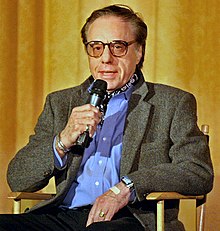
[Friends: I could write about DRUGS every day here for five years and never get tired of it, although most of you would be tired of me. The mandate I've placed on myself is to adopt the persona of a "generalist," so the drug-writing would do harm to the stated purpose of the blog...I'm not sure I've made a good case for my thesis yet anyway, although one of these days I'll arrive at the point...There are already quite a lot of good readable blogs on drugs out there anyway, and if you've seen one you'd like to give a shout-out to, go ahead and mention it in the comments section. - OG]
Lipitor and Other Statin Drugs, and Why I May Have an Excuse For Not Being As Smart As You Think I Oughtta Be...
...Which I'll get to shortly, but first: did you know that, despite our ability to synthesize new compounds as medicines/pharmaceuticals/DRUGS, we still derive most of our best-selling drugs from Nature? Can you imagine surgery before the opiate drugs like morphine? Well, where did we find out about opium? From poppy seeds. This will never cease to invoke wonder in me: a molecule produced by a flower was found to produce euphoria and a diminution of pain in humans. We didn't know why/how this worked (morphine synthesized in the lab circa 1803) until the latter half of the Roaring 20th century.
Indeed, a recent study from Singapore shows that about 25% of the best-selling medicines were derived from microorganisms first found in leeches, snails, bacteria, fungi, and other critters. To meander away from the topic for one sentence, what I found interesting in the study linked to here was that these researchers think they've punched a hole in the reigning idea that beneficial-to-humans substances can be found throughout the biosphere; they think there are hot pockets of classes of organisms where you can get much more bang for your buck when looking for the novel stuff, and this is likened to the way petroleum geologists have gone looking for where to drill most profitably. But yea: if you use aspirin, antibiotics, Procodin for coughs, Ventolin for asthma attacks, Lantus for diabetes, Beserol as a muscle relaxant, or Drovan for hypertension, you have, behind all these drugs, researchers studying the microorganisms produced by "wee beasts" - as the Father of Microbiology, Anton van Leeuwenhoek (say "LAY-ven-hook") - called them. But let me back up just a bit.
statin-discoverer Akira Endo, at 75 in 2008
Lurking around since the 1950s at least was the idea that, the reason heart attacks were such a problem was that people make cholesterols in their liver, derived from dietary constituents, and these cholesterols do all kinds of beneficial things for us, like maintain cell walls and cellular skeletal structures. The liver made an enzyme called HMG-CoA reductase (which I include in this post to try to impress you), and this stuff did lots of good, but if there was too much of it, when it tried to return to the heart, it got stuck on arterial walls and formed fatty-like plaques. Maybe these plaques built up over time, but when they got too big they caused strokes; when they came loose they caused heart attacks. Those obstructed arteries probably played havoc in many ways. Certainly cardiologists and heart surgeons believed this: they saw evidence of it with their own eyes. (I'll spare you the pics.)
But let me back up again a bit.
Anton van Leeuwenhoek, lens-grinder, curious self-
experimenter extraordinaire. Read the chapter on him
in de Kruif's The Microbe Hunters!
In 1971, a researcher at Sankyo Pharmaceuticals, Akira Endo - not to be confused with the Akira Endo who's a Japanese-American conductor - began to muck around with chemicals produced by fungi that grew on things like rice. He is credited with discovering statins, a class of drugs that definitely lower LDL cholesterol. Flash forward 35 years and Endo's receiving accolades and awards and the Japanese equivalent of the Nobel Prize for medicine. Those 35 years flash-forwarded and we also see that every Big Pharma company had their own statin drugs, but Pfizer's Lipitor (atorvastatin) was the blockbuster, the Thriller, the Titanic of all pharmaceutical drugs. It entered the market in 1997 and has made Pfizer $81 billion. It's probably the best-selling pharma-drug of all time. At least 20 million Unistatians are taking it in 2012, most of them over 45 years old. Pfizer's patent protection ran out last November, and it has been aggressively dealing with insurance companies by lowering its price in order to compete with the new generics market. Meanwhile, studies done by academic researchers and governmental bodies keep finding that statins are something like miracle-drugs, not only demonstrably lowering cholesterol and heart attacks and other cardiovascular morbidities, but they might inhibit Alzheimer's and, and, and...well, just all sorts of unforeseen wonderful things these statins do! But we consumers might want to start looking into these claims for ourselves. Chances are, we use statins ourselves or know someone who uses them. And let me just say this: make no mistake about it, Big Pharma largely funds just about every study you'll read on how great statins are.
Just one more back-up and then I'll keep it in drive from here on out?
Some Personal Stuff: About My Blood and Genes
Around 1997 I went in for a physical. I'm a lithe, ectomorphic dude. I'm omnivorous, but not a major meat-eater. I love eggs, but only have them once every two weeks or so. I exercise a lot, because I enjoy the mental states I get in when I'm hiking or riding my bike around town, and I love the endorphin buzz if I've exercised vigorously enough. But my blood tests showed too-high LDL (the "bad" cholesterol that could shorten lives). My doctor said he was surprised because of my lean body mass and asked about my parents. Well, my mom died of a massive heart attack in her sleep at age 53, but she had smoked cigarettes heavily from an early age. My dad? He's got a bit of a belly but he's in pretty good shape and yes, he's on cholesterol-lowering drugs. My doc thought I probably had a genetic predisposition to high cholesterol, and offered to write a prescription for Lipitor, which I balked at. He said I could try to lower my levels on my own through diet and exercise for six months, come back for a blood test, and if it's still high, I really ought to go on a statin. I said let's do that.
So I practically went vegan (not quite) and exercised with an added reason in mind, went back six months later: practically no change in LDL levels. So, I went on Lipitor.
Let me say this: I have never noticed any untoward effects of 10mg of Lipitor before bed. And when I went back four months later for a blood test, a few days later my doc called and said he'd never seen such a quick and dramatic lowering of cholesterol levels, especially the LDL baddies. So, as I understood it, I had moved into a mode of medical thought that was about preventing a disease before it has a chance to occur. This made sense to me, and seemed "progressive."
Did mushroom spores arrive here from space? What
are some of them trying to tell us? Are you a mycophile,
a mycophobe, or more neutral?
Among Us: Fungus
Lipitor hit the top of the charts, investors in Pfizer were euphoric. Later research showed all the other competing statins from the other companies were just as good (Crestor, et.al), but Lipitor's advertising was stellar. And all these billions from something derived from fungus from red yeast rice...something like that. In contemporary taxonomy of living things, Fungi has its own Kingdom all to itself. They reproduce via almost-invisible spores that fly through the air. Mycologists (AKA mushroom experts) are always fun to listen to; I've never heard a mycologist who was a dull speaker, and Paul Stamets (watch the gorgeous 150-second video in the lower right hand corner, "Fantastic Fungi: The Spirit of Good"!) and Terence McKenna (who was largely self-taught) are/were totally spellbinding in their own way. Every mycophile I've known was eccentric and very intelligent. There's something about fungus I can't put my finger on...I learned from both Stamets and McKenna that some people tend to be paranoid about the creepy images and powers of mushrooms and other varieties of fungus. These people are called mycophobes. The very straight east coast banker R. Gordon Wasson, an American, was a mycophobe, until his Russian wife Valentina - a mycophile - showed him how wonderful fungi were. Wasson later tracked down the mushroom that Mexican shamans said allowed humans to contact the gods. When he wrote an article about it for Life in the late 1950s, it caused a big stir among Beatniks and artists and other intellectual ne'er do-wells. As well it should've.
Yep: fungus can be tasty. It can create compounds with strong effects on humans, including alcohol, antibiotics, and hallucinogens. And it can lower cholesterol and save lives...according to the cardiologist model. But there are dissenters...Let's give 'em a hearing.
The Statin Contrarians
Largely shouted-out by the Big-Pharma-backed studies, this small but concerned group of medical researchers (possibly the most notable being Beatrice Golomb of UC San Diego) have been raising questions about what they think may be the vastly over-prescribed statin public, the manipulation of data by Big Pharma, the longterm side effects, whether statin use leads to Lou Gehrig's Disease and other neuromuscular diseases, and dementia, depression, and impulsive behavior. Furthermore, there may be a serious question that if statins have serious and more widespread side-effects, would we ever even find out, with the way the FDA tracks this stuff? Florida doctor Mark Goldstein even linked the massive use of statins to the 2008 world economic meltdown. I don't know how serious he was, but the impulsive behavior he saw in some of his patients who used statins made him think of the banking crash. In Tom Jacobs' article, "Cholesterol Contrarians Question the Cult of Statins," a 2009 piece for Pacific-Standard (then Miller-McCune), he concludes with these two rather paranoia-inducing (for me) paragraphs:
"So here's where we stand: A hugely profitable, largely self-regulated industry is aggressively promoting a line of newly developed products it assures us are safe and beneficial, when in fact they contain a significant element of risk. Much of the media takes the companies' claims at face value, leaving millions of people ignorant of the fact they are unwittingly participating in a huge, high-stakes gamble.
"Sound familiar? Statins may not have caused the financial meltdown, but the parallels between the two stories are positively heart-stopping."
In early 2012, the FDA issued new warnings for statins, mentioning possible increased risk of Type 2 Diabetes, and...I forget what the other thing was...oh yea: memory loss. (Can one monitor one's own side effects, always? With the 5% of the population that experience muscle fatigue and muscle pain with statin use, this seems easy. But note how often you or your friends blame their temporary inability to recall a name or a word in conversation. If you're over 40 and you have smart friends, they will darkly joke about early-onset dementia or Alzheimer's. The very significant segment of the over-45 population on statins that are reporting memory problems? Do we know this is caused by the drug and not that they're...aging? HERE is a horror story. But statistically, this is in fact rare, and the cost-benefit of using statins still seems to be in the statins' favor. I said "seems.")
A Gene Thing To Note
Researchers at Oxford found a "rogue" gene (SLC01B1, just to keep you thinking I'm smart) that may account for 60% of the reasons why some people experience nasty-to-life-threatening side effects from statin use, especially neuromuscular disorders. If you have one copy of the gene, you're four times more likely to experience a nasty side effect; if you have two copies? 16 times more likely! And what's really a bit disconcerting: 25% of the population carries one or two copies of this gene, a number so high I think another reporter's use of the term "rogue" was misleading. This, I confess, I found more than a tad creepy.
Thinking For Ourselves
The statin contrarians say the public has been conditioned to be "cholesterol-phobic." They say that what heart specialists see should be balanced with what neurologists and other doctors see with regards to statin use. There's a very vocal crowd that seems mycophobic; they have argued that statins are a "mycotoxin" that obstruct the mevalonite pathway and, well, let me just give you the shrill title of a book I found: How Statin Drugs Really Lower Cholesterol and Kill You One Cell At A Time, by Yoseph and Yoseph. At the risk of sounding flippant, this reminded me of the plot from the old Twilight Zone episode, "To Serve Man." My gawd! The book To Serve Man? It's...it's...a cookbook!!!
[But then again, maybe the Yosephs are Cassandras and we statin users are guinea pigs in one of the worst biomedical disasters in the entire Pan-Galactic Archives? For now, I'm still swallowing my statin after brushing my teeth. You gather your information, sift, weigh the pros and cons, call 'em as you sees 'em, take responsibility for your decisions, think for yourself. Are you sure you want to be eating that Thing you had for lunch?]
But I have studied enough statistics to not be scared off statins for now. As you can see by yet another too-long blogspew, I keep up on this stuff. But before I leave you (as if anyone is still reading by now!), I want to add something that, for some reason, has generally gone unsaid in this statin side-effects brouhaha.
The Possible Role of Co-Enzyme Q-10
My favorite Media Doctor has always been Dr. Andrew Weil. I really like his books. He was at Harvard studying medicine when Timothy Leary was experimenting with psilocybin (a fungus!), and was writing for the Harvard Crimson. He seemed to want in on the experiments, but couldn't get in. He found that other undergraduates were in on the research, a violation of Harvard's code of ethics, so Weil blew the whistle on Leary, Metzner, Alpert (Ram Dass), and eventually the psychedelic psychologists were kicked out of Harvard, or dropped out, or asked to leave. Weil had since then come to rather amiable terms with Leary (before Leary's death in 1996), but Ram Dass seems to have never forgiven him. (According to Don Lattin's The Harvard Psychedelic Club.) Anyway, I digress...because apparently I can't help myself. ("Impulsive behavior" driven by statins? No, I think I started digressing in writing around age 7...)
I went to see what Weil thought about statins, and he seemed to stress the use of the dietary supplement Co-Enzyme Q-10. (Hereafter CoQ10) So I read up on CoQ10. Very interesting. But I didn't start buying supplements of it.
Then I read a wonderful book of interviews by David Jay Brown called Mavericks of Medicine: Conversations on the Frontiers of Medical Research. Durk Pearson and Sandy Shaw got on the topic of statins, mitochondria, the politics of biomedical studies, etc. I will throw this out there for the general edification of anyone reading this: food for thought, grounds for your own research!
In the Realm of Conspiracy Theory
Pearson says (I'm reading from page 112) that statins indeed do block the synthesis of mevalonate, which is used to make cholesterol. "However, mevalonate is also used to make a substance called Co-Enyme Q-10, which is part of the the single electron transfer chain controlling chemistry in the mitochondria." Pearson suggests a supplementation of CoQ10 higher than I already use (I'm a convert!), and gives good reasons why. He also says our ability to synthesize our own CoQ10 degrades as we age, or our mitochondria age. Pearson says you won't find this info in the Physician's Desk Reference, so even doctors don't know we should be supplementing with Co-Q10, much less the massive statin-using public. The FDA has been unresponsive to researchers and other doctors who have raised this issue. Why? Here's a nice little conspiracy theory, ladies and germs:
Pearson/Shaw (they're always together and, as Brown says, finish each others' sentences) say that Merck Pharmaceuticals has a patent on any statin plus CoQ10 since around 1990. They're not making it because it's really hard and expensive to get FDA approval of a combination drug, so they're sitting on this info. Yea, but why? If statins can be so debilitating, why not go ahead and try to get FDA approval anyway? Because by the time researchers knew about the drawbacks of statins they were already approved and making boffo dinero for Big Pharma. Coming out with the drawback data would have delayed the gravy train, gravy ironically elevating cholesterol levels to the point where your aorta congeals into a hockey puck, but there I go digressing again...On with the conspiracy theory:
Rather than pull the statins, then go through the long clinical trials of statins plus CoQ10, the Industry kept mum, lest the money-flow float out the window. And if the Public knew about the liabilities, they'd sue, sue, sue. The law among Big Pharma was like the law of the Mafia: omerta. Or: keep your mouth shut! Shaw/Pearson liken this to RJ Reynolds, the tobacco company, who did develop cigarettes that were safer, but didn't release them, because doing so would be an admission you'd already been poisoning the community. The FDA wouldn't let them say their new cigarettes were "less carcinogenic."
Here's Ray Kurzweil, from Brown's book:
"Co-Enzyme Q-10 is important. It never ceases to amaze me that physicians do not tell their patients to take CoQ10 when they prescribe statin drugs. This is because it's well-known that statin drugs deplete the body of CoQ10, and a lot of the side effects such as muscle weakness that people suffer from statin drugs [...] [CoQ10] is involved in energy generation within the mitochondria of each cell. Disruption of the mitochondria is an important part of the aging process and this supplement will help slow that down. CoEnzyme Q-10 has a number of protective effects including lowering blood pressure, helping to control free radical damage, and protecting the heart." (pp.242-243)
Here's a line from Nassim Nicholas Taleb's book of aphorisms, Bed of Procrustes: "Pharmaceutical companies are better at inventing diseases that match existing drugs, rather than inventing drugs to match existing diseases."
And with that ominous observation, I take full responsibility for...what I can take responsibility for...and urge the Reader to look under rocks and see what squirms there, no matter how unpleasant. Because, whether the Truth shall set us free or not, trying to find more "truth" is bound to make our lives far more interesting than jelling out in front of the TV, no?
At any rate, if you think, after reading me, I'm sort of a dim-bulb, I have my excuse: I was only trying to save my own life!
Some Books and Articles Consulted, From Memory:
Happy Accidents: good on the discovery of statins and other drugs, very readable and delightful!
Scientists Greater Than Einstein: a modern version of the medical researcher/doctor as Hero - a chapter devoted to the heroic life-saving efforts of Akira Endo - in the mold of Paul de Kruif's classic The Microbe Hunters and Sinclair Lewis's fictional offshoot of that book, Arrowsmith, which was heavily influenced by de Kruif.
"Drug To Cut Cholesterol Tests Better Than Statin" (there may be much better drugs for controlling cholesterol coming down the pipes, but this one has to be injected.)
"American's Cholesterol Levels Shrink, Even as Their Waistlines Expand." (ties in with my obesity blogs?)
"Statins Cause Fatigue In Some People" (and yet, nothing on CoQ10)
"Lipitor Patent Ends; generic available: What Now?"
The Overweening Generalist is largely about people who like to read fat, weighty "difficult" books - or thin, profound ones - and how I/They/We stand in relation to the hyper-acceleration of digital social-media-tized culture. It is not a neo-Luddite attack on digital media; it is an attempt to negotiate with it, and to subtly make claims for the role of generalist intellectual types in the scheme of things.
Overweening Generalist
Showing posts with label David Jay Brown. Show all posts
Tuesday, June 19, 2012
The Drug Report: June, 2012: The Trouble With Cholesterol
Labels:
Akira Endo,
Andrew Weil,
Anton van Leeuwenhoek,
cholesterol,
conspiracy theories,
David Jay Brown,
drugs,
Paul Staments,
Pearson and Shaw,
Ray Kurzweil,
risk,
statins,
statistics,
Terence McKenna
Saturday, March 3, 2012
Life Extension Notes
Completing the trifecta of Leary and Wilson's SMI2LE vision of a way out of technological materialism with no goal, no telos, is Life Extension. This one's a whole ungainly ball of wax, and I will have to do multiple posts on it over the coming months in order to feel like I've said anything substantial about it.
I previously posted on Space Migration HERE.
My stab at Intelligence Increase ("I" squared) was HERE.
Cellular Level
From my current view, the most exciting and radical research on life extension is the hard slog done at the level of the cell. According to some statistics, the combination of ever-faster computers and the fact that there are more scientists doing research now than at any time in history - by far! - means that key findings about how and why we age, how we can slow it down, stop it or even reverse it, are immanent. (Let us define "immanent" as something like "in the next 15 years," just for kicks, although many in the field will say that's being conservative!)
Around 1961 cytogerontologist Leonard Hayflick and his colleague Paul Moorhead defined what is now commonly called the "Hayflick Limit": they proved that cellular DNA can only replicate about 60 times during a lifetime; with constant replications, mistakes are made, gunk gets into the next generation, and accumulates over time. I heard one theorist describe it as like when you or your friends bought a Beatles record and taped it for friends. Then they taped it from the tape they were given, then those friends taped it from the taped tape, etc: after awhile you got a copy that sounded like crap. Well, when we get to be around 75, our cells are filled with gunk, the machinery has started to break down (I've seen the carburetor used as a metaphor a lot here too), and the processes that keep our hearts, brains, livers and other good stuff...rust and break. (We probably sound as bad as a washed-out Beatles tape, too.) We die. It seems we're programmed to be like that.
There are plenty of Very Bright People who think we can defeat these programs.
So far, the only proven method of extending life is to slow metabolism, which for humans means caloric restriction, or to eat less. The less food/calories, the less to metabolize, the slower gunk and noise accumulates at the cellular level. The problem with this is that it's really not very fun. I think Woody Allen put it best when he said that - I paraphrase from memory - "If you want to live to be 100, you need to give up all those things that make you want to live to be 100."
There's gotta be a better way. And it looks like there are a few prospects. I'll cover a few.
Sidelight: The literature on life extension is so extensive, it's easy to find oneself in a rocky and sedimented terminal morain. This precariousness seems heightened if the reader is a non-specialist, and who's more non-specialist than an overweening generalist? Still, I have found a few hot rocks. They seem to shimmer brilliantly. I call each one a possible fleck from the Fountain of Youth. Let us call each item a "de Leonite clue."
Here's a possible de Leonite: ELLPs. What are they? They're Extremely Long-Lasting Proteins, and they were recently found on the surface of the nucleus of a neuron by researchers at the Salk Institute's Molecular and Cell Biology Lab, led by Martin Hetzer. What's the big deal? Well, most proteins last for a few days at most. The ELLPs that coat a cell last a lifetime, and they're part of the NPC, or Nuclear Pore Complex. Okay, look at the cross-section of the cell above and note things called "microtubules," "microfilaments," and "plasma membrane." A cell needs to both protect itself from outside bad stuff and to let in outside good stuff - to put it like a nine year old. The Salk researchers found that bad stuff can happen because these ELLPs that coat the outside of the cell walls of a neuron like marble, erode over the years, and this is probably how a lot of gunk (there's our carburetor metaphor again) gets into cells. Another way of putting it: the gate keepers of the cell break down over a lifetime and allow toxins to get in, damaging DNA, and let us not even talk about the nasty stuff that happens when your DNA is damaged.
The results from this research could lead to better ways to treat or avert neurodegenerative diseases like Alzheimer's and Parkinson's. Hetzer's team were told the research they undertook would be too bold, difficult and expensive to conduct. You probably didn't hear about this in the "news" because it didn't contain enough blood, Beiber, ballgame or Beyonce.
Seriously, this is major stuff, because no one really knew ELLPs were what they were. Read more about it HERE.
Q: What are sirtuins? And what do they have to do with me?
I'm glad you asked. They are Silent Information Regulator Two proteins that act as enzymes, and were linked to life extension around 1986. Mammals have seven types of sirtuins, and Sir1 has been linked to the reason why caloric restriction works to slow aging. It gets really dodgy from here on out, for the OG.
How cool would it be if we could find something that would activate the Sir1, without having to constantly feel hungry? When we start to starve - or we restrict our caloric intake by 30%--40% - as the theory goes, some genes kick in and protect us against the stress of being hungry, and protect our cells and vital organs. These are the sirtuins. Here's where red wine comes in: it looks like, when we drink certain red wines that contain resveratrol, that it activates a gene-complex very Sir1-like, and has the same effects as caloric restriction. Instead of caloric restriction/quasi-starvation, drink a hearty glass of red zinfandel! Sound too good to be true? (Wait for it...)
MIT professor Leonard Guarente has been at the forefront of Sir1 research, from caloric restriction to providing a theoretical platform for new anti-aging drugs based on his (and other's) sirtuin findings. Glaxo-Smith-Kline paid $720 million for a company called Sirtrus, and...here's an article from two years ago. It's not going as well as we'd/they'd hoped. In many articles, Dr. Richard Miller, a professor of Pathology at the University of Michigan and critic of the sirtuin hypothesis, has been saying that the relatively simple story of the sirtuins was too simple, that sirtuins are probably just one of very many systems in cell-signaling that influence aging. But Guarente is holding firm, recently publishing a long paper on the miraculous potentials of the sirtuins.
Meanwhile, research on the other sirtuins is hot - there's potentially gold in them thar genes! - and for the sufficiently geeky, see HERE (Sir6 linked to longer lifespan!), HERE (researchers in London seem to see a chimera in the sirtuin hunt vis a vis longevity?), and HERE, for starters. Note this last article suggests mutations that increased sirtuins were linked to anxiety and panic disorders. I think the sirtuin road led to a terminal morain for this reader. But I will still pay attention to anything that might come up. You never know what Sir5 might have in store for us, for example. The sirtuins may yet yield a dynamite de Leonite/piece of the puzzle.
I want to get into telomeres and telomerase, but first a word from an Oracle, AKA Kaku:
Stop me if you've heard this one, or just bear with me: each one of our chromosomes has a sort of "cap" of base-pairs that can be visualized like a shoelace: if you didn't have that little piece of hard plastic at the end of your laces, everything would shred and tying your shoes would be an unpleasant task. A telomere is one of these caps. It strongly appears that, with each cell division over a lifetime, the cap gets shorter. End of telomere = haywire/Hayflick Limit. Cells can't repair, eventually TAFUBAR.
Now: there are two classes of cells that don't age: your germ/sex cells (sperm/eggs, which is good, or your baby will be born looking as old as you!), and our old nemesis, the emperor of all maladies, cancer. Cancer can just go on dividing forever! It's immortal! (Not all cancer cells, just...enough. Oy. As Professor Carlin wrote in Napalm and Silly Putty, "If you live long enough, everyone you know has cancer.") Until it - cancer - kills itself by killing its host (us or our loved ones). Let's not worry about cancer's problems. It's doing just fine for now.
So what makes sex and cancer cells immortal? Telomerase. Both germ and cancer cells produce the enzyme telomerase, which keeps the telomeres intact when cells divide. Can we come up with telomerase therapy that will effectively arrest aging, or potentially reverse some of it? Dr. Michael Fossel thinks so. He thinks it's about ten years away! (Other Big Brains I've read say 50-100 years and we'll have telomerase therapy. Aubrey de Grey says about 100 years, and that guy usually seems optimistic to me. Speaking of Mr. de Grey, get a load of him if you haven't already. There are endless videos to be found if you like this one:
Axiological Level
What really interested me about what de Grey says here about those opposed to longevity research - mainstream media people who seem to regard it as faintly ridiculous or science-fiction-y and throw in the word "immortality," and gerontologists. This last I found very interesting, because de Grey seems to perceive those engaged in regenerative medicine as knowing things the gerontologists do not. Which I find totally plausible. If one reads Leonard Hayflick, one rapidly sheds any optimism for notable improvements in human lifespan soon; Hayflick is a heavyweight in the field of human lifespan studies and he's not exactly sanguine about our prospects for immortality, to put it mildly. But I wonder if de Grey is rather talking about temperaments of researchers? Just note the impression the fields have on your own disposition towards improving human lifespans: "gerontology"....""regenerative medicine"? At what point do we reconcile these two, if ever? It gets weirder.
I think it has to do with axiology, the study of our basic values. We build whole worlds of thought, political systems, ideologies, laws, and dreams on the basic building blocks of our own values. And where did we get these values that are so important to us? It's a difficult question. I've written on axiology HERE and HERE, but I have barely touched the surface of the idea.
One of the major founders of Transhumanism, Max More. Check out what he has to say between 5:26 and 8:07:
This gets to a recent book review I read in Reason magazine. I have not read The Body Politic: The Battle Over Science In America, by Jonathan D. Moreno. Not yet. Ronald Bailey's review seems to extend the values issues that Max More brought up after his famous Free Inquiry article from 1993, between "humanists" and "transhumanists," this latter group who were enthused about More's ideas probably not even self-defining themselves as "transhumanists" at the time. Coupled with Aubrey de Grey's gerontologists vs. regenerative medicine researchers (and IT professionals, libertarians, and Canadians), now we have the "biopolitics" of strange bedfellows: biocons, who object to things like embryonic stem cell research on strictly "moral" grounds; and egalitarian leftists, who see a disaster in runaway advanced new biological techniques: only for the rich, non-egalitarian, and lacking in human dignity. In this article, "biopolitics" is defined as "the nonviolent struggle for control over the actual and imagined achievements of the new biology and the world it symbolizes."
(I analyzed Rick Santorum's views on bioethics vis a vis this wider conversation and will charitably designate him as some sort of "paleobiocon." I think I'm letting him off easy, too.)
The Reader has to decide where they stand on this stuff. Where are you, bio-ethically? The more I study this stuff, the more difficult it gets. On principle I like the idea of Unistat starting out as a country that values very highly new knowledge. And the history of the 19th/early 20th century Progressive movement and eugenics is sobering. On the other hand, I see Nassim Nicholas Taleb's book The Black Swan as prophetic (ironically!): we now live less and less in the old linear, Bell Curvey "Mediocristan" and more and more in Extremistan: the rich have gotten wildly richer and almost everyone else has stayed the same or has fallen lower. And I don't see much brightness on the horizon. Just look at the overtly bought elections. Just look at the appalling decadence in the basic fact that: the banks did what they did to our lives, got bailed out, and Obama has not been able to put in place any regulations with teeth to speak of, four years later.
However, as Taleb goes to great lengths to emphasize: we can only notice where there's risk/fragility built into a system and try to minimize it. All other bets about the future are off. No one knows. Certainly not "experts"!
I tend to be with Moreno's "bioprogressives," who welcome new advances, even if I probably won't be able to afford them. Hell, I can't even afford basic health insurance now...
Speaking of Taleb: "Don't talk about 'progress' in terms of longevity, safety, or comfort before comparing zoo animals to those in the wilderness." - p.7, Bed of Procrustes
David Jay Brown's marvelous book of interviews, Mavericks of Medicine: Conversations on the Frontiers of Medical Research (2006) was an overwhelmingly stimulating read this past week - on this subject of life extension and other topics - and is largely to blame for the gap between my last post and this one. Highly recommended! (It's dedicated to Robert Anton Wilson, too.)
To end on a lighter note, Professor Carlin thought that "Dying must have a survival value. Or it wouldn't be part of the biological process."
Ray Kurzweil - no relation to Peter Bogdanovich that I know of - on aging and supplements, for a minute and 40 seconds: "We can't rely on 'being natural,' that's not good enough..."
I previously posted on Space Migration HERE.
My stab at Intelligence Increase ("I" squared) was HERE.
Cellular Level
From my current view, the most exciting and radical research on life extension is the hard slog done at the level of the cell. According to some statistics, the combination of ever-faster computers and the fact that there are more scientists doing research now than at any time in history - by far! - means that key findings about how and why we age, how we can slow it down, stop it or even reverse it, are immanent. (Let us define "immanent" as something like "in the next 15 years," just for kicks, although many in the field will say that's being conservative!)
Around 1961 cytogerontologist Leonard Hayflick and his colleague Paul Moorhead defined what is now commonly called the "Hayflick Limit": they proved that cellular DNA can only replicate about 60 times during a lifetime; with constant replications, mistakes are made, gunk gets into the next generation, and accumulates over time. I heard one theorist describe it as like when you or your friends bought a Beatles record and taped it for friends. Then they taped it from the tape they were given, then those friends taped it from the taped tape, etc: after awhile you got a copy that sounded like crap. Well, when we get to be around 75, our cells are filled with gunk, the machinery has started to break down (I've seen the carburetor used as a metaphor a lot here too), and the processes that keep our hearts, brains, livers and other good stuff...rust and break. (We probably sound as bad as a washed-out Beatles tape, too.) We die. It seems we're programmed to be like that.
There are plenty of Very Bright People who think we can defeat these programs.
So far, the only proven method of extending life is to slow metabolism, which for humans means caloric restriction, or to eat less. The less food/calories, the less to metabolize, the slower gunk and noise accumulates at the cellular level. The problem with this is that it's really not very fun. I think Woody Allen put it best when he said that - I paraphrase from memory - "If you want to live to be 100, you need to give up all those things that make you want to live to be 100."
There's gotta be a better way. And it looks like there are a few prospects. I'll cover a few.
Sidelight: The literature on life extension is so extensive, it's easy to find oneself in a rocky and sedimented terminal morain. This precariousness seems heightened if the reader is a non-specialist, and who's more non-specialist than an overweening generalist? Still, I have found a few hot rocks. They seem to shimmer brilliantly. I call each one a possible fleck from the Fountain of Youth. Let us call each item a "de Leonite clue."
Here's a possible de Leonite: ELLPs. What are they? They're Extremely Long-Lasting Proteins, and they were recently found on the surface of the nucleus of a neuron by researchers at the Salk Institute's Molecular and Cell Biology Lab, led by Martin Hetzer. What's the big deal? Well, most proteins last for a few days at most. The ELLPs that coat a cell last a lifetime, and they're part of the NPC, or Nuclear Pore Complex. Okay, look at the cross-section of the cell above and note things called "microtubules," "microfilaments," and "plasma membrane." A cell needs to both protect itself from outside bad stuff and to let in outside good stuff - to put it like a nine year old. The Salk researchers found that bad stuff can happen because these ELLPs that coat the outside of the cell walls of a neuron like marble, erode over the years, and this is probably how a lot of gunk (there's our carburetor metaphor again) gets into cells. Another way of putting it: the gate keepers of the cell break down over a lifetime and allow toxins to get in, damaging DNA, and let us not even talk about the nasty stuff that happens when your DNA is damaged.
The results from this research could lead to better ways to treat or avert neurodegenerative diseases like Alzheimer's and Parkinson's. Hetzer's team were told the research they undertook would be too bold, difficult and expensive to conduct. You probably didn't hear about this in the "news" because it didn't contain enough blood, Beiber, ballgame or Beyonce.
Seriously, this is major stuff, because no one really knew ELLPs were what they were. Read more about it HERE.
Q: What are sirtuins? And what do they have to do with me?
I'm glad you asked. They are Silent Information Regulator Two proteins that act as enzymes, and were linked to life extension around 1986. Mammals have seven types of sirtuins, and Sir1 has been linked to the reason why caloric restriction works to slow aging. It gets really dodgy from here on out, for the OG.
How cool would it be if we could find something that would activate the Sir1, without having to constantly feel hungry? When we start to starve - or we restrict our caloric intake by 30%--40% - as the theory goes, some genes kick in and protect us against the stress of being hungry, and protect our cells and vital organs. These are the sirtuins. Here's where red wine comes in: it looks like, when we drink certain red wines that contain resveratrol, that it activates a gene-complex very Sir1-like, and has the same effects as caloric restriction. Instead of caloric restriction/quasi-starvation, drink a hearty glass of red zinfandel! Sound too good to be true? (Wait for it...)
MIT professor Leonard Guarente has been at the forefront of Sir1 research, from caloric restriction to providing a theoretical platform for new anti-aging drugs based on his (and other's) sirtuin findings. Glaxo-Smith-Kline paid $720 million for a company called Sirtrus, and...here's an article from two years ago. It's not going as well as we'd/they'd hoped. In many articles, Dr. Richard Miller, a professor of Pathology at the University of Michigan and critic of the sirtuin hypothesis, has been saying that the relatively simple story of the sirtuins was too simple, that sirtuins are probably just one of very many systems in cell-signaling that influence aging. But Guarente is holding firm, recently publishing a long paper on the miraculous potentials of the sirtuins.
Meanwhile, research on the other sirtuins is hot - there's potentially gold in them thar genes! - and for the sufficiently geeky, see HERE (Sir6 linked to longer lifespan!), HERE (researchers in London seem to see a chimera in the sirtuin hunt vis a vis longevity?), and HERE, for starters. Note this last article suggests mutations that increased sirtuins were linked to anxiety and panic disorders. I think the sirtuin road led to a terminal morain for this reader. But I will still pay attention to anything that might come up. You never know what Sir5 might have in store for us, for example. The sirtuins may yet yield a dynamite de Leonite/piece of the puzzle.
I want to get into telomeres and telomerase, but first a word from an Oracle, AKA Kaku:
Stop me if you've heard this one, or just bear with me: each one of our chromosomes has a sort of "cap" of base-pairs that can be visualized like a shoelace: if you didn't have that little piece of hard plastic at the end of your laces, everything would shred and tying your shoes would be an unpleasant task. A telomere is one of these caps. It strongly appears that, with each cell division over a lifetime, the cap gets shorter. End of telomere = haywire/Hayflick Limit. Cells can't repair, eventually TAFUBAR.
Now: there are two classes of cells that don't age: your germ/sex cells (sperm/eggs, which is good, or your baby will be born looking as old as you!), and our old nemesis, the emperor of all maladies, cancer. Cancer can just go on dividing forever! It's immortal! (Not all cancer cells, just...enough. Oy. As Professor Carlin wrote in Napalm and Silly Putty, "If you live long enough, everyone you know has cancer.") Until it - cancer - kills itself by killing its host (us or our loved ones). Let's not worry about cancer's problems. It's doing just fine for now.
So what makes sex and cancer cells immortal? Telomerase. Both germ and cancer cells produce the enzyme telomerase, which keeps the telomeres intact when cells divide. Can we come up with telomerase therapy that will effectively arrest aging, or potentially reverse some of it? Dr. Michael Fossel thinks so. He thinks it's about ten years away! (Other Big Brains I've read say 50-100 years and we'll have telomerase therapy. Aubrey de Grey says about 100 years, and that guy usually seems optimistic to me. Speaking of Mr. de Grey, get a load of him if you haven't already. There are endless videos to be found if you like this one:
What really interested me about what de Grey says here about those opposed to longevity research - mainstream media people who seem to regard it as faintly ridiculous or science-fiction-y and throw in the word "immortality," and gerontologists. This last I found very interesting, because de Grey seems to perceive those engaged in regenerative medicine as knowing things the gerontologists do not. Which I find totally plausible. If one reads Leonard Hayflick, one rapidly sheds any optimism for notable improvements in human lifespan soon; Hayflick is a heavyweight in the field of human lifespan studies and he's not exactly sanguine about our prospects for immortality, to put it mildly. But I wonder if de Grey is rather talking about temperaments of researchers? Just note the impression the fields have on your own disposition towards improving human lifespans: "gerontology"....""regenerative medicine"? At what point do we reconcile these two, if ever? It gets weirder.
I think it has to do with axiology, the study of our basic values. We build whole worlds of thought, political systems, ideologies, laws, and dreams on the basic building blocks of our own values. And where did we get these values that are so important to us? It's a difficult question. I've written on axiology HERE and HERE, but I have barely touched the surface of the idea.
One of the major founders of Transhumanism, Max More. Check out what he has to say between 5:26 and 8:07:
This gets to a recent book review I read in Reason magazine. I have not read The Body Politic: The Battle Over Science In America, by Jonathan D. Moreno. Not yet. Ronald Bailey's review seems to extend the values issues that Max More brought up after his famous Free Inquiry article from 1993, between "humanists" and "transhumanists," this latter group who were enthused about More's ideas probably not even self-defining themselves as "transhumanists" at the time. Coupled with Aubrey de Grey's gerontologists vs. regenerative medicine researchers (and IT professionals, libertarians, and Canadians), now we have the "biopolitics" of strange bedfellows: biocons, who object to things like embryonic stem cell research on strictly "moral" grounds; and egalitarian leftists, who see a disaster in runaway advanced new biological techniques: only for the rich, non-egalitarian, and lacking in human dignity. In this article, "biopolitics" is defined as "the nonviolent struggle for control over the actual and imagined achievements of the new biology and the world it symbolizes."
(I analyzed Rick Santorum's views on bioethics vis a vis this wider conversation and will charitably designate him as some sort of "paleobiocon." I think I'm letting him off easy, too.)
The Reader has to decide where they stand on this stuff. Where are you, bio-ethically? The more I study this stuff, the more difficult it gets. On principle I like the idea of Unistat starting out as a country that values very highly new knowledge. And the history of the 19th/early 20th century Progressive movement and eugenics is sobering. On the other hand, I see Nassim Nicholas Taleb's book The Black Swan as prophetic (ironically!): we now live less and less in the old linear, Bell Curvey "Mediocristan" and more and more in Extremistan: the rich have gotten wildly richer and almost everyone else has stayed the same or has fallen lower. And I don't see much brightness on the horizon. Just look at the overtly bought elections. Just look at the appalling decadence in the basic fact that: the banks did what they did to our lives, got bailed out, and Obama has not been able to put in place any regulations with teeth to speak of, four years later.
However, as Taleb goes to great lengths to emphasize: we can only notice where there's risk/fragility built into a system and try to minimize it. All other bets about the future are off. No one knows. Certainly not "experts"!
I tend to be with Moreno's "bioprogressives," who welcome new advances, even if I probably won't be able to afford them. Hell, I can't even afford basic health insurance now...
Speaking of Taleb: "Don't talk about 'progress' in terms of longevity, safety, or comfort before comparing zoo animals to those in the wilderness." - p.7, Bed of Procrustes
David Jay Brown's marvelous book of interviews, Mavericks of Medicine: Conversations on the Frontiers of Medical Research (2006) was an overwhelmingly stimulating read this past week - on this subject of life extension and other topics - and is largely to blame for the gap between my last post and this one. Highly recommended! (It's dedicated to Robert Anton Wilson, too.)
To end on a lighter note, Professor Carlin thought that "Dying must have a survival value. Or it wouldn't be part of the biological process."
Ray Kurzweil - no relation to Peter Bogdanovich that I know of - on aging and supplements, for a minute and 40 seconds: "We can't rely on 'being natural,' that's not good enough..."
Subscribe to:
Posts (Atom)