Overweening Generalist

Showing posts with label George Orwell. Show all posts

Tuesday, February 11, 2014

The Day We Fight Back

This one's gonna be short, as I short-circuited trying to whittle down commentary on this situation we're in.

I counted and I have amassed 472 articles on mass surveillance in my "personal" files...since May 2013, shortly before the Snowden Era went supernova.


Yes, I apparently am some sort of maniacal hoarder of information written by others about how others are maniacally hoarding information about..."us?" (But then the NSA can tap this blog, so it's come full-circle!)

Some 20th Century Prophets: Huxley, Aldous
                                                        Orwell, George
                                                           Kafka, Franz

With our topic in mind: Here's what I consider a particularly fascinating article. It's by a George Washington U. Law Prof named Daniel J. Solove, who later published an outstanding book on the subject, Nothing To Hide: The False Tradeoff Between Privacy and Security.


His book is eminently readable, but if you don't have the time, most of his thesis is in this article, which I'll try to convince you to read:


"Why Privacy Matters Even If You Have 'Nothing To Hide'"


Solove shows how the "if you've got nothing to hide, well..." argument is not only pervasive, but frames the concept of privacy so narrowly that privacy advocates spend a lot of time fighting with one hand tied behind their backs.


Note the seven sample responses he received from commenters to the blog he contributes to, Concurring Opinions, about how to respond to "Well, I've got nothing to hide, so..."


I liked his example from Durrenmatt's play Traps: "A crime can always be found." We ought all to think about this more.


The extreme form of privacy and "Well, I've got nothing to hide, so..." cashes out to easy ones like, "Well, okay then: let me take pictures of you nude and give them to all of your neighbors." People will realize they take much of their ideas about privacy for granted.


I like how Solove extensionalizes the term "privacy" and shows that it is a complex term that's been unjustly narrowed by the "I'm not afraid of being wiretapped if it helps catch terrorists; I've got no secrets. I've done nothing wrong" types. He uses the Wittgensteinian term "family resemblances" but Korzybski would have said "extensionalization" of terms.


"Privacy" does not just mean "secrecy" or "hiding something that's wrong." What if a Peeping Tom looks at you through the window as you get out of the shower (author's admission: I actually enjoy this, but most people don't as I understand it): you haven't lost anything "secret" but your privacy seems to have been invaded, no?


If someone steals your diary and reveals your most personal secrets, this is an invasion of privacy and your own secrecy, but those secrets were not about doing anyone any harm. (Probably?) Solove says judges  and lawyers often overlook this semantic sense of "privacy" when they use to the term to defend the truncated ideas about dangerous secrets and "terror" (blood/death) that inform too many arguments about "privacy."


Blackmail and identity theft would also deserve consideration as "privacy" extensionalizations and they don't have to do with terror either.


I like how Solove sheds light on government surveillance  within the context of Orwell's 1984 and Kafka's The Trial. In the former, everyone knows they're being watched, so surveillance serves as a form of social control and inhibition. In a so-called free society, under the First Amendment (in Unistat), we have freedom of speech, assembly and the freedom of and from religion. In a surveillance state, these lawful activities can become inhibited so that the citizen's rights mean almost nothing, due to fear. In Kafka's novel, a bureaucracy with indeterminate purpose that can make decisions about your life detains you, but you can't find out why. This fosters hopelessness and powerlessness.


The stronger form of privacy argument, says Solove, is the "I'm willing to give up some of my privacy if it will save lives from a terrorist attack." I think Solove's unpacking of different types of mistaken and unjust dangers that could happen to anyone answers the "strong form" adequately. See for yourself...)


For me, the most interesting parts of Solove's argument about the damage of broad government surveillance are covered briefly in his short paragraphs about ideas all-too-often left out of the "privacy" discussion: aggregation, exclusion, "secondary use," and distortion.


Interestingly, something like the availability heuristic seems to inform our ideas about "privacy." When a horrific terrorist attack occurs, it's so vivid we can't think straight, and the enemies of individual rights and/or control freaks rush in to capitalize, as happened with the USA/Patriot Act. But Solove says the true dangers are in a "slow accretion of relatively minor acts," under confirmation bias, so we don't notice them, because they do not seem like significant emotional or legal issues to us, and he uses the analogy of environmental degradation: the oil tanker hits a glacier and ruins the ecosystem in some area of the world. That's bad, and very emotional. We notice it. We discuss it with colleagues and friends. But in actuality, most of the total damage done to the world's ecosystem is a daily, constant, mundane thing, and few of us can get worked up over it, much less "notice" it in significant way.


Finally: notice that the article was published in May of 2011, two years before the Snowden Era began. What was so striking about re-reading this article again recently - besides Solove's elegant arguments for a far more inclusive definition of "privacy" - was how utterly naive so much of it seems in light of what has been revealed by Snowden and others in just 31 months. Read the article and look at what seem to Solove as hypotheticals. It seems we now often find the reality to be far worse than even his hypotheticals. Solove seems to have thought he was positing fictional-but-possible scenarios; now we find out that while he was writing the article the reality was usually beyond/worse/more baroque than his imaginings...


Examples gratis:

"A Reason To Hang Him": How Mass Surveillance, Secret Courts, Confirmation Bias and the FBI Can Ruin Your Life."

"The NSA Has Probably Installed A Virus On Your Computer...And Everyone Else's"


NSA spied on porn habits in effort to discredit "radicalizers"


"Report Suggests NSA Engaged In Financial Manipulation, Changing Money In Bank Accounts"


"NSA's Elite Hacking Unit Intercepts Laptop Deliveries"


If you used the "secure" TOR webmail site, the FBI has your in-box


NSA Official: Mass Spying Has Foiled One (or fewer) Plots in Its Whole History


"111 Things We've Learned About the NSA"


We can be spied on via our webcams even when they're not on


"NYT: Snowden Docs Reveal NSA Has Radio Pathway Into Computers, To Spy Even When Device is Offline"


"New Algorithm Finds You, Even in Untagged Photos"


"NSA Uses Google's Tracking Cookies to Target and 'Exploit' Subjects"


"Snowden Docs: British Spies Used Sex and 'Dirty Tricks'"


"Snowden: The NSA is also Engaged in Industrial Espionage" (but there's so much of this now, Slate didn't notice this was olde news: From a few months previous:

"NSA and Canadian Spooks Illegally Spied on Diplomats at Canadian G-20 Summit"

"France's New Surveillance Law Creates a Police State"


"Spy Agencies Tap Data Streaming From Phone Apps"


"Data Broker Was Selling Lists of Rape Victims, Alcoholics and 'Erectile Dysfunction Sufferers'"


"NSA Harvested Contacts From Email Address Books"


"The Interest-Divergence Dilemma Between Tech Companies and the NSA"


"Death By Data: How Kafka's The Trial Prefigured the Nightmare of the Modern Surveillance State"


"NSA Award Winner Wants NSA Abolished"


Thursday, June 13, 2013

NSA Revelations and Edward Snowden: Some of What Froths For Me, Now

I don't know what part of me remained surprised, or even why, after Snowden outed the NSA. Because the topic has been a leitmotif in conversations with all of my friends, since at least the too-Orwellianishly-named Patriot Act passed. But I guess there were a few clusters of neural circuits that were in denial: maybe no one's really spying on me. And you know: that would be just...grand.

[But: in 2011, hadn't Dana Priest's and William Arkin's "Top Secret America" articles in the Washington Post annihilated any last vestige of that neurally stubborn naivete? Apparently not...]

Now: the more "adult" clusters of neurons, the ones that neurobiologists implicate in learning, which have been actively buzzing each others' synapses, exchanging glutamate and acetylcholine, strengthening each other's connections, building on other circuits, merging different circuits, looking for patterns...that part of me was not surprised. Because I've been following the topic of "surveillance" and "privacy" and "the corporate state" and the Panopticon ever since that summer after I graduated from high school, when, just for "fun" I read Brave New World, then immediately: 1984. As soon as Winston Smith learned to love Big Brother and that whole boot stomping on the face of humanity forever thing, I chased those two novels with Fahrenheit 451. I was naive. I was a budding conspiracy theorist. I was an adrenaline junkie. I didn't know what to make of these three books, which acted synergistically in my nervous system...and well, frankly, they fucked me up one side and down the next pretty good. And yet: I "enjoyed" them.

Since then, I like to think my thinking/feeling in those areas has become far more nuanced. I mean: that poor 18 year old gangly naif! All hair and fear and testosterone and yea, verily: idealism.

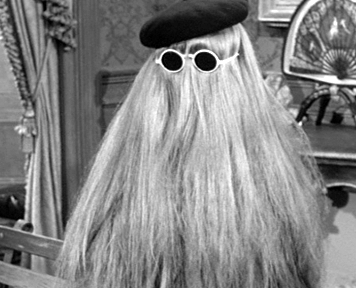
Other times I seem to have not changed much, only lost a lot of that hair. (And I was all hair, really. I played guitar in metal bands and it was sorta like Marty Friedman's, only dyed with Miss Clairol Number 52 Blue/Black...and I was 6 feet tall and weighed about 135. Yes: a freak. Like Cousin It, only with a well-used library card.)

So what to make of Snowden coming out and confirming what intellectual paranoids like myself already suspected?

Well: I was pleased to see that sales of 1984 jumped 5000%, but was equally disappointed by my fellow Unistatians that they weren't already on board with Orwell's ideas. I mean: you'd think the Patriot Act would've done it fer ya, eh? Also: I suspect only about 15% of those who ordered it from Amazon will actually read it all the way through. Also: I remembered the story of Amazon's Kindle owners having their Orwell (and other books) erased. Remotely.  Because they could. Hey, they apologized and gave your money back. And said they wouldn't do that again under "those circumstances." But they can do that. Just another reason why I love the dead-tree book.

No need to point out irony. I hope...

As far as Ray Bradbury's book: no one is burning libraries. Not yet. Oh, you have your Christian fascists getting together for a good ol' Two Minutes Hate and burning, say, Harry Potter books. And there are always classic Murrrkin a-holes harassing librarians and school boards for teaching from commies like John Steinbeck or Mark Twain. Get a load of it HERE.

I think Aldous Huxley's 1932 book cements him as a seer. Just that book alone. The ideas about an entire society made drug-dependent and infantilized, with the overwhelming assumption that some people are "naturally" better than others so there ought to be a way to keep the lessers away from the betters...all with an overarching ethic of consumption, of buying things and consuming them as a way to obtain a self-identity? Aldous was legally blind, a modern Tiresias. Aldous's World Anti-Sex League is far too...2013 Kansas for me. It's spooky.

Orwell. Let's see. For his dystopian state to meet ours we need, indefinite detention just because the State says so (check!). We need the State to be able to torture people for any reason they want and get away with it. (We have lift-off on that. Roger!) The State can decree that it can kill anyone they want, anywhere, and they're supposed to have a reason for this but they can choose to not tell anyone what those reasons are, and no one can compel them to tell why they're assassinating people. (We have this, now, under a "liberal" President in Unistat, June, 2013.)

And of course, the State can have surveillance over all communications. (Edward Snowden on Line 1.)

Hmmm...

What about..."Justice"? Presumably there's a Justice system. I mean, there's a Justice Department, just as there was a Ministry of Truth, that put out non-stop propaganda. One of my favorites from 2013 - so far, and there's a cornucopia of this crap to choose from - was the President of Unistat coming in, assuring us that his would be the most "transparent" administration we'd seen. In "reality" as I see it, his Admin has been one of the most opaque when it comes to..."extrajudicial" (Orwell!) matters. (My blogspew on "neomedievalism" might be a germane link here?) And other matters. Liberals have been taken for a ride with this guy.

Time to re-think. What? Hillary Clinton will clear it all up and make it better in 2016? If you believe that and you're reading this blog, you're in the wrong place. Hillary is set as a Neoliberal thinker...better than NeoCon, but really: she's an embodiment of the very outmoded way of thinking about economics and foreign and domestic policy that led us into this morass: a new sort of Failed State, where the government can't even get background checks on gun sales despite about 90% of the public wanting them, us Idiot Citizens thinking it's about time we take even the most trivial steps towards trying to keep from getting accidentally slaughtered by a "lone nut" when we go the goddamned mall. This new sort of Failed State spends as much on military matters as the rest of the world, combined, while the infrastructure crumbles, the actual unemployment level is closer to 20%, and there's a welter of staggering statistics that show how the 1% have run away from the 99%. This government can't even insure its citizens health care, but it can kill any one of its citizens, for any reason.

Justice? Who goes to prison? The poor. And any insider who blows the whistle on the rampant theft in banking, or the gross injustices in the military policies overseas. And let's just wait to see what happens to Snowden.

One thing that many smart writers have missed: even if the NSA can decide to hone in on a domestic citizen with potentially "subversive" ideas, they probably are really only after communications from abroad, looking for "real" terrorists: the infrastructure for a future President Brownback/Palin/Ted Cruz/Newt Gingrich is in place, and it's not going anywhere. If Wall Street or the college loan debt bubble or a combination of both plus something else (another terrorist attack?) happens, this is a real threat to make Orwell's Oceania look like Sesame Street.

We now know that young well-educated people in Unistat who became politically active in order to avert more economic or environmental disasters were heavily surveilled by the State apparatus. As Chomsky has been telling us for at least 15 years: the internal dialogue of the Military/State/Corporate complex refers to the citizenry as "enemy territory."

"The U.S. is the greatest, best country God has ever given man on the face of the Earth." - Sean Hannity, "Hannity's America," June 6th, 2008.

                                  Seth Rosenfeld, author of the stunning Subversives

Seth Rosenfeld Hasn't Had A Proper Hearing Yet:
Another thing a lot of smart, perspicacious writers are missing surrounding the NSA/Snowden clusterfuck: there seems an assumption of linearity in history: we're getting dangerously out of hand, and we need to dial it back. But it's not that simple. Look at what turned up in 30 years of Freedom of Information Act requests in Seth Rosenfeld's 734 page book about Ronald Reagan's and J. Edgar Hoover's wildly paranoid hatred of the University of Berkeley, Subversives, which came out last year. The FBI fought Rosenfeld tooth and nail, but ultimately, the 9th Circuit sided with him. What did we find? A dizzying number of new things that haven't yet filtered into our discourse. Among them:

That Reagan was a snitch for the FBI since 1947. That the FBI sent poison-pen letters (where they make up stuff about someone they don't like) to officials in order to get people fired...that the FBI helped Reagan get elected Governor or California. That the FBI broke into offices, stole and copied and planted information, falsified documents and planted false news stories, assumed both Mario Savio (a brilliant but disturbed Philosophy student and architect of the Free Speech Movement) and UC Berkeley President Clark Kerr (a Quaker and pacifist) were both "communists." The FBI did everything they could to ruin both of their lives, and they succeeded fairly well. (Kerr and Savio were, in actuality, opposed to each other politically regarding the policy of Berkeley.)

To those students of COINTELPRO: yes, it seems like you've seen this; it's not "new" to you. But the depth of Rosenfeld's research ought be considered a series of at least "major" important footnotes to "all that." To those of you who have not been students of COINTELPRO, or only have a cursory knowledge of it: Rosenfeld's book is a perfect place to start, if only because he's so wonderful at narrative using his research. It's a thick book but I found it hard to put down. (Get it from your library as some sort of ethereal shout-out to Ray Bradbury?)

Above all, for our purposes here: the FBI created massive secret lists of "subversives" who should be rounded up "in case of emergency." This included students who were interested in alternative points of view about political and social ideas. If you were an 18 year old English major who signed a petition agreeing that the HUAC should be disbanded, you got on the Hoover/Reagan shitlist. And if your friends or family members subscribed to (or especially: wrote for) publications they thought were "UnAmerican" you were suspect. The brightest young people at the best public university (where much of our actual wealth originates: in new ideas) were enemies to Hoover and Reagan.

This is a hell of a book, so far criminally overlooked. Just because it's about one university, albeit maybe the top public university in Unistat, always productive of Nobel Prize winners, in one small area of Unistat, doesn't mean it's not germane to you who live in some other part of the country...or the rest of the <cough> "free world."

So - and sorry I've gone on far too long once again here - it has already happened here. But a digital infrastructure just makes it possible to do again, but about a million times more - and here's a favorite fascist's word - efficiently. Or, as Edward Snowden put it, we have extended the "architecture of oppression."

Oh, and the "subversives" in Rosenfeld's book?: they're not Savio or the SDS or professors who ordered books on communism. Guess who they are.

Thursday, June 23, 2011

On Writing: Scattered Mind

Of the deep history of writing as a carefully guarded technique of magick: this is something you all know. But I often fall to wondering about some relatively short epoch when the entire system of writing became near-optimal, and it took off, with many writers using the implements, the total media - the bulk of it ephemeral, now long-lost, disintegrated, burnt in a raid from the hordes out of the north...there are many narratives about this, none totally persuasive. But the brain at some point met with an adequate system - whether alphabet or ideogram of hieroglyph - and found an optimal environment. It was a moment in our evolution. They probably had no idea they were Binding Time; they probably had no idea some of us in 2011 might still be reading and trying to understand them. I hope they enjoyed it. It seems certain they had, via practice, constructed neural circuitry that was novel.
-------------------------------------
It seems there's a long history of writers who reflect on what they wrote and assert that it felt like they were channeling their characters or their dialogue or their discursive take on some phenomena. It is only now that neuroscience is beginning to develop its own narrative about how this happens. And there will be writers who will cry foul and balk at this unraveling of the mysterium. But they needn't worry: no matter how robust the narrative from the brain sciences in, say, 15 years, the mystery will still be there for the writer.
-------------------------------------
The Freudian theory about the phenomenon of "transference" has always fascinated me. At first, much was theorized about the dangers of transference. Now, many theorists think it is the transference that makes any psychotherapy "work," if it works at all for you. (And I hope it does/did.) I also think this idea is easily applicable to writing: when we write about a person, it works both ways: we necessarily project ourselves "onto" them, for the most basic reason that we cannot escape our own subjectivity; we're writing from our own nervous systems (I will suspend the practice of "automatic writing" and those texts that were "dictated by the god(s)" for now). And the algebraic reciprocity holds as well: when we write about them, we appropriate something of their energies, and maybe a touch of "character" or "style." This may be a well-kept occult reason why some people write in the first place, but I will not dogmatize here...
--------------------------------------
When I was much younger I ran across Joan Didion's line about her writing to find out what she thinks; I thought it was witty. Then, when I started writing for my own purposes, I was astonished to find how relatively literal the idea was.
-------------------------------------
In the Collected Essays, Journalism and Letters of George Orwell, vol II, I ran across this line:


"'Imaginative' writing is as it were a flank attack upon positions that are impregnable from the front. A writer attempting anything that is not coldly 'intellectual' can do very little with words in their primary meanings. He gets his effect, if at all, by using words in a tricky roundabout way."


If I have been tricky and roundabout, I make no apologies. (I said "if.")
-------------------------------------
Do you wish to write something very outrageous and heretical? Consider "translating" a non-existent book from an exotic language, and have at it! You must pile up layers of fictions, though. And remember the old saw about liars? - that they must have excellent memories? - you, the "translator" will have to implement memory. But you should undertake the operation with little or no ethical qualms, for you have Poetic License. And oh by the way: congratulations on entering the Realms of the Trickster.

Will someone do the research and call you on your fraud? Of course! But at least you tried. People admire that.
-------------------------------------
On writing when you have read enough to get in and out of Chapel Perilous at least once, having internalized some portion of the Nightmare of History? Listen to these lines from Peter Dale Scott, who seems like a cross between Noam Chomsky or Howard Zinn and a zen poet:

                                       how do we live with evil
                                                    we can profit from it
                                            we can preach against it


                                       but if we write poetry
                                                    how not to misrepresent
                                             the great conspiracy


                                        of organized denial
                                                      we call civilization?
                                              From the protected mob


                                        around JFK airport
                                                      with ties to the Russian
                                              mafia at Brighton Beach


                                        and the plane which every day
                                                     flies a million dollars in cash
                                              to the drug banks of Russia


                                        at a time when Russia
                                                     owes $17 billion a year
                                           in interest to its creditors


                                         to the universities
                                                     continuously inventing new ways
                                              not to think of such things


-excerpt from Minding The Darkness (2000)
-------------------------------------
Clearly, writing itself can present some form of peril to at least one person, so let us be mindful.

Saturday, June 18, 2011

Bride of My Chomsky Problem: An Excursus

It seems to me that asking an academic like Paul Robinson about something that was probably minutiae to him - some line from 1979 that, as he remembers it, the editor(s) stuck in - was somewhat impudent; the least I could've done was say I liked his writings about sex. Anyway...

To carve out a bit more about my Chomsky Problem, which I thought was 180 degrees from Paul Robinson's, but when I did all the calculations and applied matrix algebra and Fourier Analysis, it turns out my position is only 177 degrees from Robinson, I must say that, from my end, the part where, if you look at what Chomsky has to say about semantics in his entire linguistics oeuvre and then take a big breath and step back and look at what Chomsky is trying to do about making the world a better place via criticism of the State...it's unnervingly baffling. To me it is; hence I struggle with my own Chomsky Problem. Let me elaborate on this in a less Byzantine sentence-sequence:

What has made sense to me when I study political and social problems, is when an author/thinker/speaker assumes that language hypnotizes us; being aware of words and how they are used seems quite basic to me; it seems like part of a decent education or just becoming "an adult." If you enjoy eating meat every now and then, "a thick, juicy steak" probably sounds pretty good, especially if you are hungry. "A hunk of charred flesh from a cow" probably sounds not as enticing. But both terms refer to the same "thing."

("Well, what is it really?," a kid might ask. Yes. This seems worthy of philosophizing in the kitchen; this question of "really"? and "reality" seems tailor-made for the moral, creative and intellectual imagination of any bright 13 year old. And yet the very notion of even talking about bringing up the question of "reality" seems to truly spook a certain segment of our friends and neighbors. Why?)

A famous example of this is Orwell's essay "Politics and the English Language." The General Semantics "school" of Alfred Korzybski has been of enormous impact on me in this regard. And, over the past nine or so years, the Frame Semantics of George Lakoff has been a marvelous and wonderful intellectual buzz, and I find it quite applicable. (Korzybski and Lakoff seem complementary to me, but I will kick that can down the road for now.)

I have been trained to look for the referent. If someone is trying to persuade me, I look and listen for words that are abstractions: words that have no sensory-sensual aspect in my existential-phenomenal world. If a word is being used that refers to some "thing" that I cannot smell, touch, taste, or see, I'm suspicious. Not paranoid. The context in which the word is being used modifies my response to abstractions. It's part of my own practice of mental hygiene.

Let me go further: when some politician talks about "freedom" I am very suspicious. We all have feelings about "freedom," but context modifies how I will receive the message of "freedom" and what surrounds it. Who doesn't love to be free? Aye, but language is regularly abused, and especially by - in my current way of thinking - politicians, advertisers, and religious leaders.

The tough part about making all this work is: you have to actually stay active and try to make sense of the world. You must read. When George W. Bush announced he was running for President in 1998, I thought that was a joke: I had looked into who he was and saw a complete fool of a rich kid; there's no way he could win. (He probably didn't, but let's not "go" there.)

When Bush gave speeches and talked about "freedom" I knew that the US was leading the world in locking up people, per-capita. And there was nothing in his past or his rhetoric and deeds that led me to believe he was for anyone's "freedom" except his cronies and other Fortune 500 companies.

When Noam Chomsky talks about "freedom" I think he means it in pretty much the same way I mean it.

My point is: we say "Well duh!" when I compare Bush and Chomsky. But that's retroactive. One must not only read Chomsky closely to see what he means when he says "freedom," I had to dig into Bush's background to see what he likely meant when he said "freedom."
 -------------------------------------
Here's the problem: Chomsky cannot or will not talk about semantics in social-political discourse. Not in the way you would think the Einstein of Linguistics would talk about semantics. Why this seems so is a big part of my Chomsky Problem.

Since Chomsky revamped the linguistics world with his syntax-uber-alles book Syntactic Structures in 1957, linguistics has been dominated by syntax (the order of words). The other main branches are phonology (the study of sound patterns in languages) and semantics (meaning). Prior to Chomsky, linguistics was usually found in the Anthropology Department at the university. Chomsky, at the forefront of the revolutionary multidisciplinary "cognitive science," which began in the mid-1950s, developed his views on syntax due to a very interesting confluence of strong personalities - particularly Morris Halle and Zellig Harris - with ideas that were interesting to Chomsky, and via his facility for mathematics. 


I believe Chomsky's syntactical ideas have been inordinately influential in the latter half of the 20th century in the West because it made linguists believe that now they were physical scientists, and not mere social scientists. I think linguists had "physics envy." Physics in the early part of the 20th century was so spectacularly successful that it was the envy of other disciplines. 


His syntactical work has opened up the field tremendously. I understand his work in phonology with Morris Halle, on the sound-patterns of English, was a big breakthrough. (I have not read it and fear I wouldn't understand much of it if I tried.)

Chomsky has developed discovery procedures that have been immensely valuable in linguistics.

But a large body of his best students abandoned him and his approach to linguistics by the early 1970s, because Chomsky's schemes could not account for semantics in a way that was satisfying. (For those so inclined: not to be missed: Randy Allen Harris's The Linguistics Wars, which chronicles this period in American linguistics in a incredibly well-researched work written with wry wit.)
------------------------------------------------
George Lakoff was one of those students who broke with Chomsky, and they have had some rather acrimonious exchanges since then. Chomsky has remained at M.I.T., while Lakoff has been at Berkeley since the early 1970s. 


If we look at my previous blog post, when David Barsamian asked Chomsky, "Could you discuss the relationship between politics and language?," Lakoff would have gone in a completely different direction than Chomsky did, and I highly suspect it would have been a more satisfying answer than what Noam gave Barsamian. Why? Well, basically, Lakoff's frame semantics makes much more sense to me than Chomsky's various syntactic-based schemas. Lakoff deals with a neural theory of language. But it's deeper than that.


Lakoff seems to dare to say that language works all-too-much like how advertisers, politicians and religious demagogues and "Public Relations" (the very term seems Orwellian) mystagogues have sensed it works: people have semantic structures that are instantiated in neural circuits that, via repetition in the real-world, and especially during childhood growth and development, are activated when certain words are used. 


That semantics - meaning - works in the real world like this? I shall call this Chomsky's Nightmare.
---------------------------------------- 
I hope I have not lost too many of you with this excursus. Back to the heart of the matter soon/sooner...sooniest? The OG is bogged down in his Noam, using figurative machetes to hack at the deep structural underbrush, through the trecherous alimentary canal armed only with gun and camera, wondering who will swallow my eventual solution.

I'd like to leave us with a recent short clip of Chomsky on the subject of love: