"RAW" to his legion of readers and fans, and "Bob" to almost all who knew him (although Wilson said his friend Timothy Leary called him "Robert"), would've turned 80 this past January 18th. He died a week short of his 75th birthday, in 2007. Recently Boing Boing made the week of Jan. 11-18 "Robert Anton Wilson Week," which largely prompts this blogpost. I think RAW was a major ingredient in the spiked-with-something mind-manifesting cream of the relatively free-floating unattached generalist intellectuals in Unistat in the second half of the 20th century.
I was still living in San Pedro, on the Los Angeles harbor's edge, when I wrote RAW and asked, if I drove up (a good five hour's drive from LA to Capitola/Santa Cruz, where he lived), could I interview him? He'd read some of my stuff about his writing at alt.fan.rawilson, and the writer Eric Wagner told him I was cool, so RAW said yes. We made a date. I was nervous, and in the two weeks before driving towards the Bay Area, filled maybe eighteen pages of a spiral notebook with questions, being careful not to ask anything anyone had previously asked in the fifty or so interviews I'd read with him. I had emailed him only some of the topics I wanted to discuss, and he wrote back, saying "I can't wait to talk about this stuff with you."
We - my wife and I - buzzed his number at the gate and he let us in, and one of the crew members of what would be the documentary film Maybe Logic: The Lives and Ideas of Robert Anton Wilson, greeted us at the door and led us down a short hall (I remember seeing a room to my left completely filled from floor to ceiling with books, and regret I didn't get to peruse his collection) and there were cameras and microphones, and The Man himself, seated at his couch. I'm pretty sure at that moment I went into an altered state. I'm resolutely not a celebrity worshipper. There are only a few people in the world who, if I met them in public, I'd have to try and tell them how their work changed my life, and would you please sign this piece of paper? There are/were maybe five people for me like that, and he was one.
I was very nervous but he put me at ease quickly. I met the crew for the film: young very hip intellectual types who were interested in, besides RAW: jazz and progressive ideas. Because what I said was being recorded for possible use in the film, I signed a waiver. RAW was making the filmmakers laugh, and he turned to me and apologized that he'd fallen recently and had broken a tooth and was going to get it fixed, but he would sound sort of funny when he spoke. All around the living room, on every surface, were gifts that friends and fans had given him, mostly books.
I don't know who took this photo, but this is pretty close to how
he looked when I interviewed him. He died at 4:50AM on January
11th, 2007, in his home, among family and friends.
There was a brief lull, so I spoke up and asked him, "Are you ready?" He said let's go! I started my microcassette recorder, and here's the transcript from how the interview started, and as the goddess and the Green Horned Man are my witnesses, I'm typing it out exactly as he answered it:
Me: I gave you a list of some of the things I wanted to talk about, but didn't mention humor. I wanted to ask you a couple of questions about humor first.
RAW: That's a great theme.
Me: It seems to me that humor, humorists, comedians, and satirists aren't given enough credit for their intelligence in our culture. It reminds me of the popular discourse about, say, Beethoven, Picasso, or Orson Welles: "Oh sure they're artistic, but I don't consider them intellectuals like Einstein or Chomsky." Do you see this too? And if so, why?
RAW: Well, that's an interesting question. The first thing I think of is the Academy Award has never been given to a comedy as far as I know. If they did it was only once. Comedies never even get nominated! The idea is that to be serious you've got to be grim. And I think some of the greatest writing in - I'm talking about my own field - some of the greatest writing in the world is comic writing: Jonathan Swift, Voltaire, Rabelais, James Joyce, Ezra Pound...Ezra Pound is much funnier than he's given credit for...
I think the thing is that comedy arouses some of the same joyous feelings as orgone or pot. And these are the feelings our society most dreads. They're literally ashamed of them. A lot of comedians say when they're successful, "I killed them!" They mean they broke down our resistance to having a good time. There's a critical mass...I've known some professional comedians. The critical mass beyond which when the audience has reached that point of laughter, they'll laugh at almost anything. You can stop telling jokes and start reading the phone book and they'll laugh at that, too. It's a contagious thing, but that's because it's so repressed and you need a lot of pressure to unleash it. I think that's why people get drunk: it's to unleash their laughter. Unfortunately, it unleashes their violence, too. You get the laughing drunk followed by the fighting drunk. Followed by another homicide case. It's a Dionysian thing. And our society is very anti-Dionysian. What's the main association with Dionysus? Drugs and orgies. That's what our society is most terrified of. You can kill as many people as you want, but for god's sake don't look like you're having a good time! About anything.
That's why Hannibal Lecter is the greatest villain ever. It's like he has a magnetic field around him. Everyone either hates him or loves him. Most of them hate him. The ones that hate him the most - I think - are the ones that secretly love him the most. I once admitted I love him because he's so shameless. Without his bad habits, of course...That's the thing about Hannibal: he's fascinating because he's not only a villain but he's not a pathetic villain. The villains that people love all have a touch of pathos about them, like the Frankenstein monster, the Wolfman who doesn't want to turn into a werewolf but has to because he's under a curse. They've all got something sympathetic about them. Hannibal Lecter has nothing sympathetic about him whatsoever. There's no excuse for him. And he knows it and he doesn't give a damn. (Laughs) There's this polarity. He's incarnate evil. And enjoying himself thoroughly! He eats the best food, dines at the best restaurants, wears the best clothes, knows everything. He's a walking encyclopedia of music, art, science...How can you help hating him? I mean if you're a normal, well-adjusted citizen. And Anthony Hopkins plays him with so much charm that they can't help feeling, even while they're hating him they're strangely attracted, which scares the hell out of them.
----------------------------
Yes, that's RAW: give him a question and he can really take off, almost like a Coltrane solo: take a theme and just riff madly off it, linking ideas, following harmonies and ideas suggested by previous ones, trying to stay interesting by making the improvisation informationally dense, and landing on your feet by the end of the solo. He did this with me for four hours, with many breaks to sit on his balcony and look at the wine-dark Pacific, smoke.
And he was stoned the whole time, because his post-polio syndrome had really began to take its toll by then: an awful proportion of the nerves in his legs had died, he'd feel 20 degrees colder than what the thermometer read, he felt pain constantly, and he mostly used a wheelchair to get around.
The movie crew left after I'd been there for a couple of hours. Gradually, the interview turned into a discussion, and we riffed back and forth with each other about the sociology of science, avant garde classical music, how delighted he was that Lily Tomlin and George Carlin had been subscribers to his futurist newsletter Trajectories, the influence of J. W. Dunne, pragmatism in using intellectual models, ethnomethodology, Vico, film and Jungian archetypes, James Joyce, Freud, reading tabloids like they're cultural anthropology, and Pound. Among other things. I think he appreciated that I'd actually read Pound and had prepared some good questions for him. By the third hour he made me feel like his equal, and seemed to genuinely like listening to me riff on ideas about authors he said he hadn't read.
The only unpleasant moment during my whole time with him was my question, "How well do you think you've been understood?" He seemed to darken, then stared at me for what seemed like ten minutes but was probably only 20 seconds, and said, "Next question!" I almost panicked. Had I brought up the one sorest of sore spots? Had I ruined the entire afternoon? I had discussed aspects of this question with other Wilson scholars, and indeed, we wondered why this genius was not a bigger deal in the sociology of intellectuals.
I nervously laughed a bit, and asked my next prepared question, and he brightened immediately and it was as if I had never asked that Offending Question.
Since then, I have come to understand that the apparent lack of understanding of his work by the literati was indeed a very hurtful thing for him. I had asked the question in all innocence and earnestness, never intending to be snarky or provocative. I felt painfully naive later.
After four or so hours, I'd exhausted my questions and felt like I'd taken up too much of his time. It was agreed we'd go for two hours, and we'd been there at least four. But he still wanted to talk, so we chatted about stuff, my recorder off. I wish I had recorded everything, including the stuff he said on breaks on the balcony, because he was ALWAYS fascinating! He had an uncanny gift for combining elegant intellectual thought with human feelings, history and the hidden aspects of culture, all with a tinge of humor - from whacky to ironic - all at once.
Before we left, he asked us if we'd be so kind as to open a can of soup and heat it up for him, and my wife gladly did. As we were leaving I thanked him for making me feel so at ease in my nervousness, and he asked, plaintively, "What's there to be nervous about?"
He insisted on getting in his wheelchair and leading us to the door as we left, and he said something in what I took to be Hindi. I didn't understand any of it, and he explained it was a Buddhist saying about taking things as they come, as I recall. It all struck me as incredibly kind.
My wife and I went to a pub and discussed our day in the presence of the smartest, most interesting, and most alien-like sage we'd ever met or were likely to meet. I think I really had the orgone flowing at that point, and it lasted for hours.
The Overweening Generalist is largely about people who like to read fat, weighty "difficult" books - or thin, profound ones - and how I/They/We stand in relation to the hyper-acceleration of digital social-media-tized culture. It is not a neo-Luddite attack on digital media; it is an attempt to negotiate with it, and to subtly make claims for the role of generalist intellectual types in the scheme of things.
Overweening Generalist
Friday, January 20, 2012
Monday, January 16, 2012
Newt Gingrich Quiz
Friends of Newt have made which of the following statements about him?
a.) "I don't know whether the ambitious bastard came before the visionary, or whether he's a visionary, but he realizes you have to be tough to get where you need to be."
b.) "Newt uses people and then discards them as useless. He's like a leech. He really is a man with no conscience. He just doesn't seem to care who he hurts or why."
c.) "You can't imagine how quickly power went to his head."
d.) "The important thing you have to realize about Newt Gingrich is that he is amoral. There isn't any right or wrong, there isn't any conservative or liberal. There's only what will work best for Newt Gingrich."
e.) "He's probably one of the most dangerous people for the future of the country that you can possibly imagine. He's Richard Nixon, glib. It doesn't matter how much good I do the rest of my life, I can't ever outweigh the evil I've caused by helping him be elected to Congress."
f.) "Newt's like a bully. Remember when you're kids and there's always some tough-talking little kid, and when somebody stands up to him he caves in? Newt's never had anybody stand up to him. Newt's scenario is always, 'We're talking the truth and you're playing dirty.'"
g.) "Newt has problems with interpersonal relations. I tell him that every day."
ANSWER BELOW...
ANSWER: All of the above. Sorry! Trick question! Statement (a) was made by Chip Kahn, who ran two of Newt's campaigns, and has known him since 1968. Statement (b) was made by Newt's then-wife, Mary. Statements (c), (d), and (e) were made by L.H. Carter, who was one of Newt's closest friends and advisors until they had a falling out in 1979. Statement (f) was made by Lee Howell, Newt's first press aide. Statement (g) was made by Vin Weber, who was a Republican congressman from Minnesota.
-I ripped off this whole post from a 1995 book by Ted Rueter titled The Newt Gingrich Quiz Book. It's brimming with data on this colossal sociopathic asshole. Note you can get a used copy of it for a penny via Amazon. I guess after Newt was thrown out of Congress for massive ethics violations no one thought he'd ever come back because he'd been shown to be such a fascistic blowhard and loudmouth second-rate pseudo-intellectual. Well, that's my nightmare, folks: no one remembers anything! This book is 17 years old. Almost old enough to vote.
Apologies to regular OG readers who expected something interesting. I just had to blow off some steam over this piece of shit, who played the race card in a massive way in front of a bunch of sheetless KKKers in South Carolina tonight. I really can't stand any of the Republicans running, but the idea of President Gingrich is horrifying, and I remember saying the same thing when W said he was running in 1997-98. No one thought such an obvious moronic rich kid-loser-alcoholic could possibly win. At that time I had no blog. Well...Ya does what ya cans.
"Is it any wonder this country is leaderless when we are literally governed by criminals?"
-Gingrich, October 14, 1976, gleaned from John K. Wilson's 1996 book Newt Gingrich: Capitol Crimes and Misdemeanors Get it from your local public library, if they have it, and you can stomach reading about this vile, marshmallowy d-bag-racist.
Newt Gingrich, Cry-Baby. More history.
"History is a nightmare from which I am trying to awake." - Stephen Dedalus in Ulysses
a.) "I don't know whether the ambitious bastard came before the visionary, or whether he's a visionary, but he realizes you have to be tough to get where you need to be."
b.) "Newt uses people and then discards them as useless. He's like a leech. He really is a man with no conscience. He just doesn't seem to care who he hurts or why."
c.) "You can't imagine how quickly power went to his head."
d.) "The important thing you have to realize about Newt Gingrich is that he is amoral. There isn't any right or wrong, there isn't any conservative or liberal. There's only what will work best for Newt Gingrich."
e.) "He's probably one of the most dangerous people for the future of the country that you can possibly imagine. He's Richard Nixon, glib. It doesn't matter how much good I do the rest of my life, I can't ever outweigh the evil I've caused by helping him be elected to Congress."
f.) "Newt's like a bully. Remember when you're kids and there's always some tough-talking little kid, and when somebody stands up to him he caves in? Newt's never had anybody stand up to him. Newt's scenario is always, 'We're talking the truth and you're playing dirty.'"
g.) "Newt has problems with interpersonal relations. I tell him that every day."
ANSWER BELOW...
ANSWER: All of the above. Sorry! Trick question! Statement (a) was made by Chip Kahn, who ran two of Newt's campaigns, and has known him since 1968. Statement (b) was made by Newt's then-wife, Mary. Statements (c), (d), and (e) were made by L.H. Carter, who was one of Newt's closest friends and advisors until they had a falling out in 1979. Statement (f) was made by Lee Howell, Newt's first press aide. Statement (g) was made by Vin Weber, who was a Republican congressman from Minnesota.
-I ripped off this whole post from a 1995 book by Ted Rueter titled The Newt Gingrich Quiz Book. It's brimming with data on this colossal sociopathic asshole. Note you can get a used copy of it for a penny via Amazon. I guess after Newt was thrown out of Congress for massive ethics violations no one thought he'd ever come back because he'd been shown to be such a fascistic blowhard and loudmouth second-rate pseudo-intellectual. Well, that's my nightmare, folks: no one remembers anything! This book is 17 years old. Almost old enough to vote.
Apologies to regular OG readers who expected something interesting. I just had to blow off some steam over this piece of shit, who played the race card in a massive way in front of a bunch of sheetless KKKers in South Carolina tonight. I really can't stand any of the Republicans running, but the idea of President Gingrich is horrifying, and I remember saying the same thing when W said he was running in 1997-98. No one thought such an obvious moronic rich kid-loser-alcoholic could possibly win. At that time I had no blog. Well...Ya does what ya cans.
"Is it any wonder this country is leaderless when we are literally governed by criminals?"
-Gingrich, October 14, 1976, gleaned from John K. Wilson's 1996 book Newt Gingrich: Capitol Crimes and Misdemeanors Get it from your local public library, if they have it, and you can stomach reading about this vile, marshmallowy d-bag-racist.
Newt Gingrich, Cry-Baby. More history.
"History is a nightmare from which I am trying to awake." - Stephen Dedalus in Ulysses
Of the Quantification of Beauty, Part 1
What an odd road beauty has taken since Plato and other Greeks decided that all values seemed to reduce to the tripartite and triumvirate truth/goodness/beauty. In the ensuing 2500 years, goodness seems irreparably relative and mired in its own high level of abstraction. "That which is the good is that which is true blah blah..." palaver seems to elicit yawns from all but the most semantically confused. Truth was doing fairly well until the 20th century hit, then the means for ascertaining capital tee Truth bogged down and seems to have crashed; no one can find the Body of Truth, although, like Elvis and Bigfoot spottings, almost everyone seems to have caught a glimpse, or is laughing at those who say they've seen It. (Or maybe the Truth is more like Amelia Earhart?) Relativity, quantum mechanics, neuroscience and human perception, cultural relativity in Anthropology, Wittgenstein and Korzybski with language, and even Godel's Theorem in math seem to have killed off that big swath of axiology that truth had made up. We mostly speak of truth in pragmatic ways these days, or if one is deducing from necessary elements. 3 + 3 = 6, we say. And most everyone nods their head in agreement: what she said about threes is True, lo and verily, aye. The guy who wants to dispute 3+3=6 is just a pain in the ass, and I think we will all agree what I just wrote was a True statement, although it seems not to partake much in the Good, and if you get some Beauty out of it, hey, good for you, you weirdo.
Truth largely got derailed because it seemed inextricably related to perception and thought, although I simplify the story wildly here. The Good was caught up in desire and action, and it turns out we all desire different things and take some really bizarre and unwise actions in our forays towards the "good." (And who among us says "Good riddance!" to the Good?)
On to Beauty.
Beauty has taken an odd, twisty-turny course over that same 2500 year period. While Plato, influenced by the Pythagoreans, thought beauty (or should I write Beauty?) followed from the Ideal forms, and that human beauty (which is most of what these posts will be about) actually contained pure geometrical ideas that underwrote it - although today we might say they were "wingin' it good" - it was a "pretty" (Ha!) good wing, viz: Plato's complete works are chock-full of ideas about proportions and beauty...and symmetry. Regarding art, regarding consumption of food and wine, how much one should exercise in proportion to engaging in intellectual dialogue, how much this in relation to how much that...this notion of just proportion and idealism feeds his ideas about politics and the ideal state, which, in The Republic, is brilliant, very engaging, and, I think, fascistic.
In the Phaedrus Plato, still transfixed on his vision of a More Real, Perfect World in some other Reality of Being, says it's the "privilege of beauty" to offer us the easiest access to the world of Pure Forms, and that beauty allows the soul "to grow wings." I think he's basically right ; but it's because we evolved as sexy beings and biology drives this stuff, not some Eternal Ideal Realm.
So this is what it's come to, eh?
This notion of proportion and symmetry, in a sort of Eternal Return or akin to Odysseus's long road out to Troy and his very interesting ten-year adventure getting back home to Ithaca, harmonizes with computer-modeled attempts in the last 30 years to measure, quantify, and mathematize the idea of a beautiful face. How odd that beauty turned out to be the one of the Big Three axiological ideas to actually cash itself out and become amenable to our efforts to mathematize and quantize almost everything.
Of course, along the way, guys like Spinoza and John Stuart Mill saw pleasure and utility as the criteria for both beauty and goodness, and one could easily argue that utility and pleasure were more important values for both men. There are many values to go around. More than five, I daresay.
Spinoza (b.1632) thought goodness and beauty, as values, were subjective, but that truth was objective, and we've seen that that project largely fell apart in the 20th century. I surmise that a rationalistic bend of mind, particularly one enamored of mathematics, tends to think along the lines of Spinoza.
Earlier, Montaigne, who I in many ways see as more Modern than Spinoza, talked of the relativity of beauty, and in a memorable passage from his (by far) longest essay, "Apology For Raimon de Sebonde," turned to the most recent proto-anthropological data of his time, which was filled with wild tales from missionaries and other disreputable folk, but Montaigne nevertheless makes his point, saying that if there was truly one True idea of beauty, we'd know it by now and, furthermore, of faces:
"Indians paint it black and tawny, with great swollen lips, big flat noses, and load the cartilage betwixt the nostrils with great rings of gold to make it hang down to the mouth; as also the nether lip with great hoops, enriched with jewels, that weigh them down to fall upon the chin, it being with them a special grace to show their teeth even below the roots. In Peru, the greatest ears are the most beautiful, and they stretch them out as far as they can by art..." Montaigne, born in 1533, goes on and on in this passage, which must have been the most wonderous for the local folk in southern France to read!
Later 19th and early 20th century geniuses Darwin and Freud made no bones about Beauty, asserting frankly that it had to do with the instinct for nookie.
Enough of Great Men in the Western Tradition and their ideas about Beauty, I've buried the lead! What of this "quantification"? Okay, probably a lot of you are way ahead of me: the notion of measuring beauty has been pretty hot in academia the past few decades. A lot of it hinges on using Photoshopped images of faces, tweaked into different ratios of eyes to mouth, length and width of face, and asking study respondents which photos they found most attractive. And the degree of uniformity of agreement is both astonishing and sorta creepy, methinks.
HERE's a pretty good overview of recent books that discuss these beauty measurements and many other findings about the sociobiology/evolutionary psychology/economics/sociology/phenomenology of beauty and attractiveness in out world, today, as gleaned from all sorts of studies.
Here's a short article on Measuring Beauty in Women, jointly conducted by U. of California at San Diego, and the U. of Toronto. This article elaborates on the previous one, and note that Shania Twain "is" more beautiful than both Elizabeth Hurley and Angelina Jolie. THIS article shows that women fantasize about symmetrical men, especially at certain times of the month, and why. German students seem very much caught up in this stuff, as shown at this website, that offers self-tests, etc. You may have seen John Cleese hosting a public broadcasting series on this topic, and it's all on You Tube; a key short episode is HERE, and if you want to watch more they're easy to find. NB: how the 1:1.618 ratio plays out with faces.
As an overweening generalist, I first became acquainted with these ideas by reading Helen Fisher's early books The Sex Contract and The Anatomy of Love.
Truth largely got derailed because it seemed inextricably related to perception and thought, although I simplify the story wildly here. The Good was caught up in desire and action, and it turns out we all desire different things and take some really bizarre and unwise actions in our forays towards the "good." (And who among us says "Good riddance!" to the Good?)
On to Beauty.
Beauty has taken an odd, twisty-turny course over that same 2500 year period. While Plato, influenced by the Pythagoreans, thought beauty (or should I write Beauty?) followed from the Ideal forms, and that human beauty (which is most of what these posts will be about) actually contained pure geometrical ideas that underwrote it - although today we might say they were "wingin' it good" - it was a "pretty" (Ha!) good wing, viz: Plato's complete works are chock-full of ideas about proportions and beauty...and symmetry. Regarding art, regarding consumption of food and wine, how much one should exercise in proportion to engaging in intellectual dialogue, how much this in relation to how much that...this notion of just proportion and idealism feeds his ideas about politics and the ideal state, which, in The Republic, is brilliant, very engaging, and, I think, fascistic.
In the Phaedrus Plato, still transfixed on his vision of a More Real, Perfect World in some other Reality of Being, says it's the "privilege of beauty" to offer us the easiest access to the world of Pure Forms, and that beauty allows the soul "to grow wings." I think he's basically right ; but it's because we evolved as sexy beings and biology drives this stuff, not some Eternal Ideal Realm.
So this is what it's come to, eh?
This notion of proportion and symmetry, in a sort of Eternal Return or akin to Odysseus's long road out to Troy and his very interesting ten-year adventure getting back home to Ithaca, harmonizes with computer-modeled attempts in the last 30 years to measure, quantify, and mathematize the idea of a beautiful face. How odd that beauty turned out to be the one of the Big Three axiological ideas to actually cash itself out and become amenable to our efforts to mathematize and quantize almost everything.
Of course, along the way, guys like Spinoza and John Stuart Mill saw pleasure and utility as the criteria for both beauty and goodness, and one could easily argue that utility and pleasure were more important values for both men. There are many values to go around. More than five, I daresay.
Spinoza (b.1632) thought goodness and beauty, as values, were subjective, but that truth was objective, and we've seen that that project largely fell apart in the 20th century. I surmise that a rationalistic bend of mind, particularly one enamored of mathematics, tends to think along the lines of Spinoza.
Earlier, Montaigne, who I in many ways see as more Modern than Spinoza, talked of the relativity of beauty, and in a memorable passage from his (by far) longest essay, "Apology For Raimon de Sebonde," turned to the most recent proto-anthropological data of his time, which was filled with wild tales from missionaries and other disreputable folk, but Montaigne nevertheless makes his point, saying that if there was truly one True idea of beauty, we'd know it by now and, furthermore, of faces:
"Indians paint it black and tawny, with great swollen lips, big flat noses, and load the cartilage betwixt the nostrils with great rings of gold to make it hang down to the mouth; as also the nether lip with great hoops, enriched with jewels, that weigh them down to fall upon the chin, it being with them a special grace to show their teeth even below the roots. In Peru, the greatest ears are the most beautiful, and they stretch them out as far as they can by art..." Montaigne, born in 1533, goes on and on in this passage, which must have been the most wonderous for the local folk in southern France to read!
Later 19th and early 20th century geniuses Darwin and Freud made no bones about Beauty, asserting frankly that it had to do with the instinct for nookie.
Enough of Great Men in the Western Tradition and their ideas about Beauty, I've buried the lead! What of this "quantification"? Okay, probably a lot of you are way ahead of me: the notion of measuring beauty has been pretty hot in academia the past few decades. A lot of it hinges on using Photoshopped images of faces, tweaked into different ratios of eyes to mouth, length and width of face, and asking study respondents which photos they found most attractive. And the degree of uniformity of agreement is both astonishing and sorta creepy, methinks.
HERE's a pretty good overview of recent books that discuss these beauty measurements and many other findings about the sociobiology/evolutionary psychology/economics/sociology/phenomenology of beauty and attractiveness in out world, today, as gleaned from all sorts of studies.
Here's a short article on Measuring Beauty in Women, jointly conducted by U. of California at San Diego, and the U. of Toronto. This article elaborates on the previous one, and note that Shania Twain "is" more beautiful than both Elizabeth Hurley and Angelina Jolie. THIS article shows that women fantasize about symmetrical men, especially at certain times of the month, and why. German students seem very much caught up in this stuff, as shown at this website, that offers self-tests, etc. You may have seen John Cleese hosting a public broadcasting series on this topic, and it's all on You Tube; a key short episode is HERE, and if you want to watch more they're easy to find. NB: how the 1:1.618 ratio plays out with faces.
As an overweening generalist, I first became acquainted with these ideas by reading Helen Fisher's early books The Sex Contract and The Anatomy of Love.
Wednesday, January 11, 2012
Media and Sanity (Formerly "Mental Hygiene")
Whatever device or gadget or medium in which you read this post shapes your apprehension and understanding of it, according to McLuhan. Please tell me more about McLuhan, if you have the time.
A number of you have asked for some more takes on our digitized media landscape (actually, the number is zero...is zero even a number?), given my inveterate bookishness, so I'll download the following into the blogosphere and see if anyone salutes, comments, clicks, vomits.
Irony
The OG does not have a Twitter account, has not tweeted a damned thing, as of the date above. The OG has read practical reasons for doing so, but is not sure the practicalities outweigh the investment of time (<----O! that omnipresent "time is money" metaphor again!). The OG was on Facebook for one day, then closed his account. He has no Droid or iPad. Not even an iPod, which may be illegal - not owning one - but I'll have to look that up later. He's not on Google +. He hasn't made any videos to be seen on You Tube or Vimeo or some of those other ones. He is not Linked In, so presumably not many are Stumbling Upon him.
OG likes that you like it and use it and enjoy it, or that, or some of it. He's wired differently. A friend who is the opposite: he's sending Drop Box music to a friend while he's carrying on a conversation about web browsers and Tweeting what someone just said that was funny; his Droid is a permanent attachment to his nervous system and may as well be a prosthetic. When it's possible to get some nano-implant in the brain that accesses the Net only by thinking and speaking out loud to the Cloud, he will be the first in line.
Meanwhile, I sit with my books. I take long walks in the forest, alone. I meditate. I love the MacBook I write this on, so I'm not completely neo-Luddite, nor do I think - and this is my main point - that "my way" is right, and everyone else is crazy. Only most of you are crazy. You know who you are. Or maybe not... Besides books, I love the medium of actually being in the space of another human, and conversing freely. It's analog, but cut me some slack, okay?
Hands at Ten and Two?
I don't know if they still say this, but when I first got my driver's license, the Authorities tried to inculcate the dogma that keeping your hands at the ten o'clock and two o'clock positions on the steering wheel was a big part of safety. That was before Internet and cell phones, but the whole Department of Motor Vehicles system seems antiquated and pretentious and reactionary, so there's probably some 16 year old being told this by a driving examiner as I type this. Anyway, use your turn signal, be aware of the vehicles, pedestrians, bicyclists, drones, and other moving and not-so moving vehicles and signs around you. Is it necessary to emphasize you ought not be TEXTING while driving? (The quick dopamine or serotonin or oxytocin buzz from making yet another connection with another Being seems a legacy from the Paleozoic, so I consider it an almost intractable problem.)
Farhad Manjoo tries to solve the texting while driving issue HERE; the rise of Siri and the current melange of laws state-by-state in Unistat shows the lawmakers are pretty clueless, although I do like Maine's ban on "distracted driving."
(Wait a minute, hold on: only 70% of "connected consumers" said they'd prefer speech commands over touchscreens while driving? WTF?)
Other states' current laws just seem arbitrary and narrow, and probably unenforceable, for the most part. Voice-texting seems to make a basic break with the old touchscreen texting and reading. (I have sent a touchscreen text maybe five times in my life and do not have a disembodied friend named Siri, and don't tell me you're surprised to hear this.) While it seems difficult to tell how much injury, death and general mayhem has been added by distracted, cell-phone using, texting, even newspaper-reading drivers, and some say it's difficult after an accident to tell if a driver was distracted unless they say they were, or there was a witness, I know I feel distracted even when I'm talking to a friend in the passenger seat, or trying to change the CD (I still listen to CDs in the car!), so I perhaps am not entitled to an opinion.
Some studies I've seen have shown that texting while driving is as dangerous as driving while over the legal alcohol limit. Other studies I've seen (ask me for citations if you really care) show that driving while sleep-deprived is as dangerous as drunk driving.
Let's not even think about texting while drunk, in heavy traffic, on two hour's sleep, but I'm sure it's done.
The comedian Marc Maron nails it for me. He tells about the time he was minding his own business, driving down the road, texting, when he had to slam on the brakes because someone suddenly appeared in the road in front of him, and it angered him they were there. He realized that texting while driving was worse than drunk driving because, as he says, "When you're drunk driving, at least SOMEONE is driving the car." Maron goes on to cover an angle I hadn't thought of before: dying in a car crash because you were texting, and that portion of the text is still there for the emergency crew, cops, medical personnel, etc, to see. Maron "guarantees" what's on your device will be absurd. "Soy milk is so fu..." So fu what? "What a lameass LO..." Laugh out loud at WHAT? And then the worst: did you hear how Dave died? He was texting while driving and his last words were, "That bitch can suc..." (Polite mourners will all agree he was trying to say, emphatically, that his ex-wife can succeed in anything she tries to do!) Ask yourself, driving-texters, do you want your last words to be something like that? (Catch Maron's full act with This Has To Be Funny - the bit about his visit to the Creationist Museum alone is worth the price - and his podcasts are pretty cool, too.)
We've come a long way, baby! The UNIVAC, 1951
Dithering over Twitter
Some of my smartest friends don't understand why I don't at least set up an account and Tweet to..."followers" (as a minor scholar of the Manson Family, the word bugs me a bit) that I've just written an article for so-and-so, or blogged on blah-blah-blah. So I admit it: I'm thinking about jumping into the twitterverse. But no plunge yet. I worry about its own imperatives, specifically how much time it'll steal from me when there are so many things I know I enjoy and find fulfilling already. I doubt yet another way to "connect" in some disembodied way with fellow humans will finally make me feel like I've arrived. And when I look at the top Twitterholics and their number of followers, I'm amazed to see that Barack Obama is #7 in the world. He's hip, he's smarter than me. Maybe there's something to this stuff?
But then I see the Barackstar is just ahead of Rihanna and Taylor Swift, but below, in descending order to Numero Uno: Britney Spears (she's still alive?), Kim Kardashian, Shakira, Katy Perry, Bieber, and Numero Uno Gaga. I'm a snob. I know it.
Twitter seems to have revolutionary applications; we've seen that with reports from the Arab Spring (not going too well in Syria, so far, and Egypt? Oy!), and Occupy stuff. And it can get your house robbed, too. If you've committed some crimes such as bank fraud and others, it can get you arrested. If you Tweet the wrong joke in the wrong place, you can find yourself arrested and banned for life from, say the airport. Twitter also adds a whole new dimension to the art of creepily stalking someone else, even if, for this writer, it was Dear Ol' Dad. On the other hand, you can continue to update your friends on the latest even after you're dead, so there's that enigmatic mindfuck of a thrill to foist on friends. You may have heard it here first! (And Blogger allows you to complete a blogpost, then set a timer for it to go live, so you cannot be 100% sure you're not reading this from a dude who's already dead! WOW! Talk about receiving messages from the Great Beyond!? <cue: theremin music>)
It seems there's an ethical quandary among tweeters about "Tweeting you own horn." How much is acceptable? In a writer's forum I read recently there seems a basic assumption that one of the primary purposes for Tweeting is to let followers know you've produced yet another masterpiece. Other early Tweet-theorists tell us we ought break our Tweet-actions into - I've seen two models, each with variations - 33/33/33 or 25/25/25/25: with the 33s, you spend a third of your tweets telling people about your work/projects/business; another third is spent on pushing your friend's work/projects, etc; and the last 33 just "shooting the breeze," apparently in attempt to bond phatically. The 25 model is the same as the 33, but with an extra category shoved in: social and political ideas, responsibilities to your fellow humans, I'm going to the Occupy/Tea Party/Meat Is Murder/Save The Plankton rally at the Union Square, who's with me? Etc.
I could relate articles I've read about why Twitter is more popular per capita with African Americans than "whites" (although the gap seems to be lessening), the use of Twitter by Somali terrorists, the implications of a bazillionaire Saudi Prince's investment in Twitter, and the project of trying to predict the future by monitoring the twitterverse, but call me a twit or a taxi, it'll have to wait.
A French Idea
The French have decided it's not fair to mention Twitter, Facebook, etc by name in their mainstream media because it seems to be free publicity for those giants, and there are always smaller companies that do social media who are trying to gain a sliver of the pie. After a few hours of thinking about it, this makes sense to me. However, when one of these megacorps have been found to be violating the law, or a prominent, independent citizen watchdog group says one of these monstrosities wants to do something that will infringe on what we so laffingly call "privacy" or something else having to do with fundamental fairness, I think you have to be able to mention them. Imagine your bubble-headed bleached-blond babbling on the 11 o'clock news that, "A very powerful search engine company announced today that it intends to corner the market on tasers, personal drones, and automatic weapons and in a separate statement says it's going to independently explore Mars for the future recreational colonization of its own CEOs and some of its most loyal employees..."
I don't know about you, but I'd want the name of that company blurted out by the mouthpiece. Oh hell, I'll probably read about it on Twitter. And who are we fooling? We all know it's Google. And the French aren't banning naming search engines, only "social networking" sites. But aren't Google's tentacles in every pie by now? Anyway...
FREE Course in How to Code!
In Douglas Rushkoff's book, Program or Be Programmed: Ten Commands For A Digital Age, he says if you know how to program, that's great, but he extends the semantics for "programming" to how you interact with your gadgets. (One of the things I like best about Rushkoff's semantics of "programs" is his extension of it to BS [belief systems], social institutions, and language itself.) The gadgets are programmed by their makers to have, seemingly, their own imperatives. You must program yourself and your interaction with your gadgets for what YOU want, not what the gadget wants you do with your time. To you philosophy geeks, we're in the realm of subjective intentionality here.
But would you like to learn how to code, the hardcore way? Two young hotshots, Zach Sims and Ryan Bubinski, started Codeacademy, and you can learn to code throughout 2012 for free. This article covers it, and makes a point I found salient: how many people who have lost or will lose their jobs to robots have/had no clue how easily this was done. This coding dealio seems empowering, and I'm going to try to find the time to learn some of this stuff, being a blithering idiot when it comes to these modalities, right now.
So, if all goes well, I will be coding like a madman by the end of the year, just in time for the Apocalypse, when that damned Mayan calendar claims us all.
Rushkoff talking for 5 minutes about Program or Be Programmed:
A number of you have asked for some more takes on our digitized media landscape (actually, the number is zero...is zero even a number?), given my inveterate bookishness, so I'll download the following into the blogosphere and see if anyone salutes, comments, clicks, vomits.
Irony
The OG does not have a Twitter account, has not tweeted a damned thing, as of the date above. The OG has read practical reasons for doing so, but is not sure the practicalities outweigh the investment of time (<----O! that omnipresent "time is money" metaphor again!). The OG was on Facebook for one day, then closed his account. He has no Droid or iPad. Not even an iPod, which may be illegal - not owning one - but I'll have to look that up later. He's not on Google +. He hasn't made any videos to be seen on You Tube or Vimeo or some of those other ones. He is not Linked In, so presumably not many are Stumbling Upon him.
OG likes that you like it and use it and enjoy it, or that, or some of it. He's wired differently. A friend who is the opposite: he's sending Drop Box music to a friend while he's carrying on a conversation about web browsers and Tweeting what someone just said that was funny; his Droid is a permanent attachment to his nervous system and may as well be a prosthetic. When it's possible to get some nano-implant in the brain that accesses the Net only by thinking and speaking out loud to the Cloud, he will be the first in line.
Meanwhile, I sit with my books. I take long walks in the forest, alone. I meditate. I love the MacBook I write this on, so I'm not completely neo-Luddite, nor do I think - and this is my main point - that "my way" is right, and everyone else is crazy. Only most of you are crazy. You know who you are. Or maybe not... Besides books, I love the medium of actually being in the space of another human, and conversing freely. It's analog, but cut me some slack, okay?
Hands at Ten and Two?
I don't know if they still say this, but when I first got my driver's license, the Authorities tried to inculcate the dogma that keeping your hands at the ten o'clock and two o'clock positions on the steering wheel was a big part of safety. That was before Internet and cell phones, but the whole Department of Motor Vehicles system seems antiquated and pretentious and reactionary, so there's probably some 16 year old being told this by a driving examiner as I type this. Anyway, use your turn signal, be aware of the vehicles, pedestrians, bicyclists, drones, and other moving and not-so moving vehicles and signs around you. Is it necessary to emphasize you ought not be TEXTING while driving? (The quick dopamine or serotonin or oxytocin buzz from making yet another connection with another Being seems a legacy from the Paleozoic, so I consider it an almost intractable problem.)
Farhad Manjoo tries to solve the texting while driving issue HERE; the rise of Siri and the current melange of laws state-by-state in Unistat shows the lawmakers are pretty clueless, although I do like Maine's ban on "distracted driving."
(Wait a minute, hold on: only 70% of "connected consumers" said they'd prefer speech commands over touchscreens while driving? WTF?)
Other states' current laws just seem arbitrary and narrow, and probably unenforceable, for the most part. Voice-texting seems to make a basic break with the old touchscreen texting and reading. (I have sent a touchscreen text maybe five times in my life and do not have a disembodied friend named Siri, and don't tell me you're surprised to hear this.) While it seems difficult to tell how much injury, death and general mayhem has been added by distracted, cell-phone using, texting, even newspaper-reading drivers, and some say it's difficult after an accident to tell if a driver was distracted unless they say they were, or there was a witness, I know I feel distracted even when I'm talking to a friend in the passenger seat, or trying to change the CD (I still listen to CDs in the car!), so I perhaps am not entitled to an opinion.
Some studies I've seen have shown that texting while driving is as dangerous as driving while over the legal alcohol limit. Other studies I've seen (ask me for citations if you really care) show that driving while sleep-deprived is as dangerous as drunk driving.
Let's not even think about texting while drunk, in heavy traffic, on two hour's sleep, but I'm sure it's done.
The comedian Marc Maron nails it for me. He tells about the time he was minding his own business, driving down the road, texting, when he had to slam on the brakes because someone suddenly appeared in the road in front of him, and it angered him they were there. He realized that texting while driving was worse than drunk driving because, as he says, "When you're drunk driving, at least SOMEONE is driving the car." Maron goes on to cover an angle I hadn't thought of before: dying in a car crash because you were texting, and that portion of the text is still there for the emergency crew, cops, medical personnel, etc, to see. Maron "guarantees" what's on your device will be absurd. "Soy milk is so fu..." So fu what? "What a lameass LO..." Laugh out loud at WHAT? And then the worst: did you hear how Dave died? He was texting while driving and his last words were, "That bitch can suc..." (Polite mourners will all agree he was trying to say, emphatically, that his ex-wife can succeed in anything she tries to do!) Ask yourself, driving-texters, do you want your last words to be something like that? (Catch Maron's full act with This Has To Be Funny - the bit about his visit to the Creationist Museum alone is worth the price - and his podcasts are pretty cool, too.)
We've come a long way, baby! The UNIVAC, 1951
Dithering over Twitter
Some of my smartest friends don't understand why I don't at least set up an account and Tweet to..."followers" (as a minor scholar of the Manson Family, the word bugs me a bit) that I've just written an article for so-and-so, or blogged on blah-blah-blah. So I admit it: I'm thinking about jumping into the twitterverse. But no plunge yet. I worry about its own imperatives, specifically how much time it'll steal from me when there are so many things I know I enjoy and find fulfilling already. I doubt yet another way to "connect" in some disembodied way with fellow humans will finally make me feel like I've arrived. And when I look at the top Twitterholics and their number of followers, I'm amazed to see that Barack Obama is #7 in the world. He's hip, he's smarter than me. Maybe there's something to this stuff?
But then I see the Barackstar is just ahead of Rihanna and Taylor Swift, but below, in descending order to Numero Uno: Britney Spears (she's still alive?), Kim Kardashian, Shakira, Katy Perry, Bieber, and Numero Uno Gaga. I'm a snob. I know it.
Twitter seems to have revolutionary applications; we've seen that with reports from the Arab Spring (not going too well in Syria, so far, and Egypt? Oy!), and Occupy stuff. And it can get your house robbed, too. If you've committed some crimes such as bank fraud and others, it can get you arrested. If you Tweet the wrong joke in the wrong place, you can find yourself arrested and banned for life from, say the airport. Twitter also adds a whole new dimension to the art of creepily stalking someone else, even if, for this writer, it was Dear Ol' Dad. On the other hand, you can continue to update your friends on the latest even after you're dead, so there's that enigmatic mindfuck of a thrill to foist on friends. You may have heard it here first! (And Blogger allows you to complete a blogpost, then set a timer for it to go live, so you cannot be 100% sure you're not reading this from a dude who's already dead! WOW! Talk about receiving messages from the Great Beyond!? <cue: theremin music>)
It seems there's an ethical quandary among tweeters about "Tweeting you own horn." How much is acceptable? In a writer's forum I read recently there seems a basic assumption that one of the primary purposes for Tweeting is to let followers know you've produced yet another masterpiece. Other early Tweet-theorists tell us we ought break our Tweet-actions into - I've seen two models, each with variations - 33/33/33 or 25/25/25/25: with the 33s, you spend a third of your tweets telling people about your work/projects/business; another third is spent on pushing your friend's work/projects, etc; and the last 33 just "shooting the breeze," apparently in attempt to bond phatically. The 25 model is the same as the 33, but with an extra category shoved in: social and political ideas, responsibilities to your fellow humans, I'm going to the Occupy/Tea Party/Meat Is Murder/Save The Plankton rally at the Union Square, who's with me? Etc.
I could relate articles I've read about why Twitter is more popular per capita with African Americans than "whites" (although the gap seems to be lessening), the use of Twitter by Somali terrorists, the implications of a bazillionaire Saudi Prince's investment in Twitter, and the project of trying to predict the future by monitoring the twitterverse, but call me a twit or a taxi, it'll have to wait.
A French Idea
The French have decided it's not fair to mention Twitter, Facebook, etc by name in their mainstream media because it seems to be free publicity for those giants, and there are always smaller companies that do social media who are trying to gain a sliver of the pie. After a few hours of thinking about it, this makes sense to me. However, when one of these megacorps have been found to be violating the law, or a prominent, independent citizen watchdog group says one of these monstrosities wants to do something that will infringe on what we so laffingly call "privacy" or something else having to do with fundamental fairness, I think you have to be able to mention them. Imagine your bubble-headed bleached-blond babbling on the 11 o'clock news that, "A very powerful search engine company announced today that it intends to corner the market on tasers, personal drones, and automatic weapons and in a separate statement says it's going to independently explore Mars for the future recreational colonization of its own CEOs and some of its most loyal employees..."
I don't know about you, but I'd want the name of that company blurted out by the mouthpiece. Oh hell, I'll probably read about it on Twitter. And who are we fooling? We all know it's Google. And the French aren't banning naming search engines, only "social networking" sites. But aren't Google's tentacles in every pie by now? Anyway...
FREE Course in How to Code!
In Douglas Rushkoff's book, Program or Be Programmed: Ten Commands For A Digital Age, he says if you know how to program, that's great, but he extends the semantics for "programming" to how you interact with your gadgets. (One of the things I like best about Rushkoff's semantics of "programs" is his extension of it to BS [belief systems], social institutions, and language itself.) The gadgets are programmed by their makers to have, seemingly, their own imperatives. You must program yourself and your interaction with your gadgets for what YOU want, not what the gadget wants you do with your time. To you philosophy geeks, we're in the realm of subjective intentionality here.
But would you like to learn how to code, the hardcore way? Two young hotshots, Zach Sims and Ryan Bubinski, started Codeacademy, and you can learn to code throughout 2012 for free. This article covers it, and makes a point I found salient: how many people who have lost or will lose their jobs to robots have/had no clue how easily this was done. This coding dealio seems empowering, and I'm going to try to find the time to learn some of this stuff, being a blithering idiot when it comes to these modalities, right now.
So, if all goes well, I will be coding like a madman by the end of the year, just in time for the Apocalypse, when that damned Mayan calendar claims us all.
Rushkoff talking for 5 minutes about Program or Be Programmed:
Sunday, January 8, 2012
Sunday God-Stuff From a Mystical Agnostic
The OG is a "mystical agnostic"? Yep. Or at least that's my answer these days when someone asks me about my religion (which, truth be told, hardly ever happens these days; my apparent agnostic hedonistic heathen rep tends to precede me); I like a line from Professor Carlin: "I'm not an atheist and I'm not an agnostic. I'm an acrostic. The whole thing puzzles me." (found in Sullivan's excellent book on Professor Carlin, 7 Dirty Words: The Life and Crimes of George Carlin, pp.221-222)
In the thirty or so-odd years I've been reading the Holy Books, the interpretations of such, studying various branches of what Robert Anton Wilson called "atheology," delving joyously in meta-satirical religions like the Church of the Subgenius and the Discordian Society (I can't get enough of that Old Time Irreverence, often invoking a Gee Oh Dee I don't believe in), reading evolutionary psychological views on religion, on and on...I remain a happy sorta-atheist/agnostic who's pagan-gnostic-ish "spiritual," and who sees the gods and goddesses of all religions and myths as METAPHORS for internal human states.
If The Reader wants to know largely where I'm coming from in these matters, I heartily recommend reading an essay by Robert Sapolsky titled "Circling The Blankets For God," collected in his book The Trouble With Testosterone. (If you have the time, here's 80 minutes of Sapolsky lecturing at Stanford on the neurobiological basis for a lot of weirdness in religious practice.)
I'm also (obvious to many of you) heavily influenced by Robert Anton Wilson's various nuanced takes on religion; radical intellectuals and artists who were brought up in the Catholic faith seem to attract me strongly and I don't yet have it nailed why, for I was not brought up in any faith and remain a default happy pagan of some sort. Buckminster Fuller once told RAW in an interview that "'God' seems like a rather small concept to contain the exquisitely interaccomodative coherencies of universe," and I also resonate with that.
(Others who have greatly influenced my thinking on religion: Aleister Crowley, Alan Watts, Aldous Huxley, Terence McKenna, Joseph Campbell, Nietzsche, Chuang Tzu, Rumi, Timothy Leary, Elaine Pagels, Ezra Pound...)
So why am I interested in Christianity and other established and organized religions? Because so many of my brothers and sisters on this planet take this stuff VERY seriously. As the theologian Harvey Cox (who I admire) often says, there are people who will die for the faith and there are people who will kill for the faith. I'm necessarily interconnected with all of you; what you - in the widest possible sense of "you" - think and feel and believe about your religion fascinates me (often in a somber way). In the end, because organized religion is such a Big Deal I must, almost by definition, as an overweening generalist, be interested. And so: on with it...
The "Emergent Church"
I have a brother who has a degree in Theology, and he's turned me on to this term. He's thrown names and book titles and ideas from this movement at me, and I've been trying to keep up. As someone who thinks Falwell/Robertson-level xtianity is a plague on the Unistatian body-politic, the emergent church is something to be happy about. As I read some of the authors my dear brother tells me about, I find an assumed language (less so with people like Harvey Cox and Peter Berger and Philip Jenkins, not that they're hard-core denizens of the emergent church, but my brother has spoken highly of them as theological writers, or more accurately, sociologists of Christianity and other religions) that strongly suggests I (pagan) am not thought of when the books were written; that is, when I read Marcus Borg, Tim Keel, and Brian McLaren (this last my brother's favorite, along with Erwin McManus...my biggest clue that the emergent people are on to something good: the mainstream moronic Christians are feeling heavily persecuted by these relatively small postmodern religious thinkers; Google "emergent church" and see how scary it is to the mainstream. Here's one about McManus), I realize how much is assumed by these writers towards their assumed readers: fairly radical Christians who have sussed and ruminated far far more on the meaning of scripture and the history of scriptural hermeneutics than I would ever be expected to, as an Outsider. And it really feels like I'm not..."in the club." And often, I don't read these books all the way through. They're too geeky and for Insiders. Perhaps this will progress so that these writers will realize there are people like me trying to understand the programs better, but I suspect, given what they're up against, that these guys have more pressing issues. The funniest of these emergent guys - that I've seen, so far - is Dan Kimball. If this is the future of Christianity, then we non-Christians have something to look forward to, I must say. "God" "bless" them!
Montaigne on Prophecy
In Book I of his Essays, there's one called "Of Prognostications." It's instructive that Montaigne could write about prophecy in such a Skeptical Enquirer-ish manner in 16th c. Catholic France, but we must notice that every time he makes fun of prophecy, it's pagan-based stuff. He notes people who rave on about how their almanac turned out to be right about some such thing, their readers somehow not noticing all the instances in which it was wrong. This selective attention, this oh-too-human psychological bias is well known to us today. (Jeez, just read Daniel Kahneman's astonishingly erudite new book, Thinking Fast and Slow!)
Montaigne tells us of Diogenes the Atheist, who saw a painting of the survivors of a disastrous shipwreck, and a Believer chastised him saying, "Look, you who think the gods have no care of human things, what do you say to so many preserved from death by their especial favour?" To which Diogenes - one of the guys on my team - responds, "Why...that their pictures are not here who were cast away, who are by much the greater number." Montaigne in that same essay talks of Joachim the Calabrian abbot, "who foretold all the future Popes," and the Emperor Leo, "who prophesied all the emperors and patriarchs of Greece." This stuff cracks up Montaigne; he reminds me of Aldous Huxley who, when he moved to Hollywood to get away from warring Europe, ironically consulted astrologers and palm-readers, trying to keep a straight face. Montaigne's take on astrologers and diviners who seem to have some sort of unworldly power is, in my Cotton translation, worth repeating. He's ultra-modern here and would probably laff himself silly at the latest Pat Robertson schtick of "God Told Me To Tell You" chicanery:
This I have been an eyewitness of, that in public confusions, men astonished at their fortune, have abandoned their own reason, superstitiously to seek out in the stars the ancient causes and menaces of their present mishaps, and in my time have been so strangely successful in it, as to make me believe that this being an amusement of sharp and volatile wits, those who have been versed in the knack of unfolding and untying riddles, are capable, in any sort of writing, to find out what they desire. But above all, that which gives them the greatest room to play in, is the obscure, ambiguous, and fantastic gibberish of their prophetic canting, where their authors deliver nothing of clear sense, but shroud all in riddle, to the end that posterity may interpret and apply it according to its own fancy.
Nostradamus, anyone?
Why Stick With It?
When prophecy fails - which is a famous sociological book, highly recommended - why do people stick it out? How do they explain the failure of the inerrant? To go back to sociology, there's tremendous cognitive dissonance. I've been mouthing off about this stuff, I've invested emotional energy in this all coming to pass, and now it doesn't. Someone heard the the voices in their head and mistook them, or the devil made 'em do it. Or someone is a weak shaman/prophet/wiz and forgot to carry the two or they read the entrails wrongly. Or, the leaders have done something abhorrent. (Think: Catholic priests and child abuse, for example.) Do I gather my wits, cut my losses and convert to Scientology or just join the Marines? Do I become a Rationalist? What?
No, we know that people do not (usually) do any of those things when the system - religious or not - that they have vested interests in being "right," fails them. A recent study suggests that "system justification" is at work. The more you have invested, emotionally and otherwise, and the more enmeshed you feel within the system, the more you must adapt and see the system for what it still can be. To outsiders, the system you're in is corrupt, inept, unjust, evil, stupid. The insider adapts, excuses the latest crime by the leaders as a rather small thing, and figures this is yet another test of faith and fidelity.
This seems to apply to political thought and other Belief Systems (which I will abrev. as BS, after David Jay Brown) as well. This seems like a worthy study to keep in mind for those who are active for progressive change. One thing the article doesn't address is that a small minority do quit, and militate against the system they formerly adhered to. I see this as a rare form of courage, and quietly applaud anyone who's jumped outside of the system in order to make Things better.
Now, because my sponsor has been so supportive, here's another commercial from the good people at Grady's Oats:
God's Approval Rating
As of last July, God's approval rating was at a dismal 52%. Or at least that's according to this report on a poll. It's certainly much higher than Congress's approval rating, which, last I saw, was around 7%. So when we look at it that way, God is kicking Congress's ass (or is it asses?). If it was a prizefight, the refs would stop it: too much blood all over Congress. (I've heard God has a good right arm jab, but an even better left hand uppercut.) I have no data on how well God is doing now, just after Christmas, Hanukkah, Kwanza, and other solstice-hovering "holy" days. Maybe if the economy improves, God can push it to 60% by Easter, and his Kid can take it from there.
(One really has to make a Miracle work to challenge "oral sex," which consistently polls at around 98%, worldwide, and that's only for the givers!)
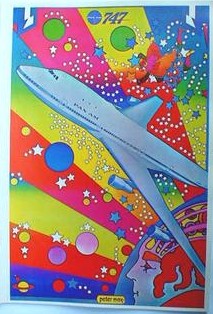
The question is: how can God work his image? I know some PR firms that are pretty damned audacious and mendacious at getting you to believe that the sky is not blue, but really: a fuschia with Peter Max stripes. Or that raising taxes on billionaires will further wreck the economy. Or that global warming, even if "real" and man-made, is a good thing. Or that Newt Gingrich would make Unistat great again. But are they up to taking on God as a client? How would you make God look a lot better to Joe and Josephine Q. Sixpack? Because, personally, I don't know. I'm with Woody Allen, who thinks God has failed miserably, and wonders why everyone doesn't get together to file a class-action lawsuit against Him.
All right, once again I've typed far too much. I apologize for wasting your time, fellow non-believers and the one or two Believers who might read this blog. Shalom! (Or is it Aloha?)
Here's Harvey Cox, for my dough one of the best of the sane theologians. It's 10 minutes:
In the thirty or so-odd years I've been reading the Holy Books, the interpretations of such, studying various branches of what Robert Anton Wilson called "atheology," delving joyously in meta-satirical religions like the Church of the Subgenius and the Discordian Society (I can't get enough of that Old Time Irreverence, often invoking a Gee Oh Dee I don't believe in), reading evolutionary psychological views on religion, on and on...I remain a happy sorta-atheist/agnostic who's pagan-gnostic-ish "spiritual," and who sees the gods and goddesses of all religions and myths as METAPHORS for internal human states.
If The Reader wants to know largely where I'm coming from in these matters, I heartily recommend reading an essay by Robert Sapolsky titled "Circling The Blankets For God," collected in his book The Trouble With Testosterone. (If you have the time, here's 80 minutes of Sapolsky lecturing at Stanford on the neurobiological basis for a lot of weirdness in religious practice.)
I'm also (obvious to many of you) heavily influenced by Robert Anton Wilson's various nuanced takes on religion; radical intellectuals and artists who were brought up in the Catholic faith seem to attract me strongly and I don't yet have it nailed why, for I was not brought up in any faith and remain a default happy pagan of some sort. Buckminster Fuller once told RAW in an interview that "'God' seems like a rather small concept to contain the exquisitely interaccomodative coherencies of universe," and I also resonate with that.
(Others who have greatly influenced my thinking on religion: Aleister Crowley, Alan Watts, Aldous Huxley, Terence McKenna, Joseph Campbell, Nietzsche, Chuang Tzu, Rumi, Timothy Leary, Elaine Pagels, Ezra Pound...)
So why am I interested in Christianity and other established and organized religions? Because so many of my brothers and sisters on this planet take this stuff VERY seriously. As the theologian Harvey Cox (who I admire) often says, there are people who will die for the faith and there are people who will kill for the faith. I'm necessarily interconnected with all of you; what you - in the widest possible sense of "you" - think and feel and believe about your religion fascinates me (often in a somber way). In the end, because organized religion is such a Big Deal I must, almost by definition, as an overweening generalist, be interested. And so: on with it...
The "Emergent Church"
I have a brother who has a degree in Theology, and he's turned me on to this term. He's thrown names and book titles and ideas from this movement at me, and I've been trying to keep up. As someone who thinks Falwell/Robertson-level xtianity is a plague on the Unistatian body-politic, the emergent church is something to be happy about. As I read some of the authors my dear brother tells me about, I find an assumed language (less so with people like Harvey Cox and Peter Berger and Philip Jenkins, not that they're hard-core denizens of the emergent church, but my brother has spoken highly of them as theological writers, or more accurately, sociologists of Christianity and other religions) that strongly suggests I (pagan) am not thought of when the books were written; that is, when I read Marcus Borg, Tim Keel, and Brian McLaren (this last my brother's favorite, along with Erwin McManus...my biggest clue that the emergent people are on to something good: the mainstream moronic Christians are feeling heavily persecuted by these relatively small postmodern religious thinkers; Google "emergent church" and see how scary it is to the mainstream. Here's one about McManus), I realize how much is assumed by these writers towards their assumed readers: fairly radical Christians who have sussed and ruminated far far more on the meaning of scripture and the history of scriptural hermeneutics than I would ever be expected to, as an Outsider. And it really feels like I'm not..."in the club." And often, I don't read these books all the way through. They're too geeky and for Insiders. Perhaps this will progress so that these writers will realize there are people like me trying to understand the programs better, but I suspect, given what they're up against, that these guys have more pressing issues. The funniest of these emergent guys - that I've seen, so far - is Dan Kimball. If this is the future of Christianity, then we non-Christians have something to look forward to, I must say. "God" "bless" them!
Montaigne on Prophecy
In Book I of his Essays, there's one called "Of Prognostications." It's instructive that Montaigne could write about prophecy in such a Skeptical Enquirer-ish manner in 16th c. Catholic France, but we must notice that every time he makes fun of prophecy, it's pagan-based stuff. He notes people who rave on about how their almanac turned out to be right about some such thing, their readers somehow not noticing all the instances in which it was wrong. This selective attention, this oh-too-human psychological bias is well known to us today. (Jeez, just read Daniel Kahneman's astonishingly erudite new book, Thinking Fast and Slow!)
Montaigne tells us of Diogenes the Atheist, who saw a painting of the survivors of a disastrous shipwreck, and a Believer chastised him saying, "Look, you who think the gods have no care of human things, what do you say to so many preserved from death by their especial favour?" To which Diogenes - one of the guys on my team - responds, "Why...that their pictures are not here who were cast away, who are by much the greater number." Montaigne in that same essay talks of Joachim the Calabrian abbot, "who foretold all the future Popes," and the Emperor Leo, "who prophesied all the emperors and patriarchs of Greece." This stuff cracks up Montaigne; he reminds me of Aldous Huxley who, when he moved to Hollywood to get away from warring Europe, ironically consulted astrologers and palm-readers, trying to keep a straight face. Montaigne's take on astrologers and diviners who seem to have some sort of unworldly power is, in my Cotton translation, worth repeating. He's ultra-modern here and would probably laff himself silly at the latest Pat Robertson schtick of "God Told Me To Tell You" chicanery:
This I have been an eyewitness of, that in public confusions, men astonished at their fortune, have abandoned their own reason, superstitiously to seek out in the stars the ancient causes and menaces of their present mishaps, and in my time have been so strangely successful in it, as to make me believe that this being an amusement of sharp and volatile wits, those who have been versed in the knack of unfolding and untying riddles, are capable, in any sort of writing, to find out what they desire. But above all, that which gives them the greatest room to play in, is the obscure, ambiguous, and fantastic gibberish of their prophetic canting, where their authors deliver nothing of clear sense, but shroud all in riddle, to the end that posterity may interpret and apply it according to its own fancy.
Nostradamus, anyone?
Why Stick With It?
When prophecy fails - which is a famous sociological book, highly recommended - why do people stick it out? How do they explain the failure of the inerrant? To go back to sociology, there's tremendous cognitive dissonance. I've been mouthing off about this stuff, I've invested emotional energy in this all coming to pass, and now it doesn't. Someone heard the the voices in their head and mistook them, or the devil made 'em do it. Or someone is a weak shaman/prophet/wiz and forgot to carry the two or they read the entrails wrongly. Or, the leaders have done something abhorrent. (Think: Catholic priests and child abuse, for example.) Do I gather my wits, cut my losses and convert to Scientology or just join the Marines? Do I become a Rationalist? What?
No, we know that people do not (usually) do any of those things when the system - religious or not - that they have vested interests in being "right," fails them. A recent study suggests that "system justification" is at work. The more you have invested, emotionally and otherwise, and the more enmeshed you feel within the system, the more you must adapt and see the system for what it still can be. To outsiders, the system you're in is corrupt, inept, unjust, evil, stupid. The insider adapts, excuses the latest crime by the leaders as a rather small thing, and figures this is yet another test of faith and fidelity.
This seems to apply to political thought and other Belief Systems (which I will abrev. as BS, after David Jay Brown) as well. This seems like a worthy study to keep in mind for those who are active for progressive change. One thing the article doesn't address is that a small minority do quit, and militate against the system they formerly adhered to. I see this as a rare form of courage, and quietly applaud anyone who's jumped outside of the system in order to make Things better.
Now, because my sponsor has been so supportive, here's another commercial from the good people at Grady's Oats:
God's Approval Rating
As of last July, God's approval rating was at a dismal 52%. Or at least that's according to this report on a poll. It's certainly much higher than Congress's approval rating, which, last I saw, was around 7%. So when we look at it that way, God is kicking Congress's ass (or is it asses?). If it was a prizefight, the refs would stop it: too much blood all over Congress. (I've heard God has a good right arm jab, but an even better left hand uppercut.) I have no data on how well God is doing now, just after Christmas, Hanukkah, Kwanza, and other solstice-hovering "holy" days. Maybe if the economy improves, God can push it to 60% by Easter, and his Kid can take it from there.
(One really has to make a Miracle work to challenge "oral sex," which consistently polls at around 98%, worldwide, and that's only for the givers!)
The question is: how can God work his image? I know some PR firms that are pretty damned audacious and mendacious at getting you to believe that the sky is not blue, but really: a fuschia with Peter Max stripes. Or that raising taxes on billionaires will further wreck the economy. Or that global warming, even if "real" and man-made, is a good thing. Or that Newt Gingrich would make Unistat great again. But are they up to taking on God as a client? How would you make God look a lot better to Joe and Josephine Q. Sixpack? Because, personally, I don't know. I'm with Woody Allen, who thinks God has failed miserably, and wonders why everyone doesn't get together to file a class-action lawsuit against Him.
All right, once again I've typed far too much. I apologize for wasting your time, fellow non-believers and the one or two Believers who might read this blog. Shalom! (Or is it Aloha?)
Here's Harvey Cox, for my dough one of the best of the sane theologians. It's 10 minutes:
Thursday, January 5, 2012
Book Kulchur: A Few Word-Blobs
John Keats, writing - using a sort of "pen" and ink medium on a form of "paper" which was called a "letter," in 1819 - to his betrothed, Fanny Brawne:
"Give me books, fruit, french wine and fine weather and a little music out of doors, played by somebody I do not know."
Romantic? I think so. But I need to turn off the music in order to fully read a book; I find music too attention-grabbing, and I fancy myself an anti-multitasker. Perhaps Keats wanted all those things serially, against the backdrop of fine weather. I find I wonder about the musician he doesn't know.
At any rate, on with books!
A Few Odd Items, First Up: North Korea
"Imagine a world in which no one has written a literary novel in sixty years," writes Adam Johnson, the author of The Orphan Master's Son, set in North Korea, a country he visited in 2007, and which he writes about HERE. North Korea really has zero, zilch, nada for book culture. What an astounding monstrosity! The stories I've read about North Korea, both before Lil' Kim's demise and after, make even this peacenik think martial thoughts having to do with freeing those robotic humans. The entire idea of totalitarianism that..."total" almost leaves me speechless. No books, no expression of personal thought, no creativity, no...personalities. All because some little dipshit's family line got away with the Control Game long enough to, effectively set up an alternative "reality" in each citizen's mind. Every time I contemplate North Korea, I find myself mired in a mixture of fear, strong loathing, and sadness. The very idea that the corporate news media and political parties have been hard at work equating North Korea with Iran! Iran is a youthful country that loves Western ideas, is quite literate, and they're kept down by ayatollahs and a military authority. But their people are worldly, and I am duly nervous that their leaders are going to force some military showdown over Israel. Or maybe Israel will start it. Hey! I was supposed to talk about books, but I went off about who got to read and write books, and loudmouth worthless authoritarian monsters in North Korean and Iran. Sorry!
But let me get this in before I move on: Christopher Hitchens's article, "A Nation of Racist Dwarfs." RIP, Hitch.
451 Fahrenheit Familiar
Need more proof in a lack of God? Compare and consider North Korea's poverty and booklessness with this incredibly depressing story by S. Peter Davis. It's absurd, painful, ironic, and devastates a dead-tree bibliomane like myself. But damn! I envy Davis's mordant humor. The story is about 6 Reasons We're In Another Book-Burning Period in History and it's explained well, and I can't believe it, but it's hilarious. Darkly so. Davis also writes a wonderful blog/website, Three Minute Philosophy, and if you hadn't read it - or watched it, rather - before, you can thank me later.
Yep: tens of thousands of often old, irreplaceable books are being surreptitiously yanked from the shelves - mostly from university libraries, as I gather from the context of the article - and warehoused, then burnt. And Davis tells us all the good reasons why. If you're in a hurry, at least look at the pics and the captions. This piece reads like gonzo investigative journalism by a writer-comedian reporting from the sewage treatment plant, where you didn't know things had been going wrong for a long time, but they have...and writing it in a sort of True Confessions tone. The title of the article could've been, "I Burn Books For A Living Because Somebody Has To." Oy!
The #1 reason - E-books - is something I'll write about in the future. (Spoiler alert: I hate the goddamned things.) But anyone who's had to do a rotten job has to feel at least some sympathy with others in similar circumstances. When Davis writes:
"When your entire local library can be replaced by a USB drive the size of your fingernail, the only thing keeping those books out of an industrial-sized furnace is people who have some innate fondness for books. And there isn't much room in this economy for innate fondness." ...you have to sorta shut up and take it. I have the innate fondness. It's a good bet you do, too. But after reading his other five reasons...Having worked in public libraries, I was aware of the counterintuitive reasons why burning books is cheaper than giving them away, and have tried to explain to a few people, always to meet with incredulity and outrage.
John-Reading
Turning towards the more local world, in an article in The Guardian from this past October, Ian Sample tackles the thorny problem of the safety of reading while "going to the loo," to put it Brit-delicately. Reading while taking a crap, to put it bluntly. It turns out to be pretty safe, as long as you wash your hands afterwards. Sample can't help but pun as much as he can about feces and us, even in an article ostensibly about health, and I can't say I wouldn't have treated the matter the same way were I being paid to write the piece.
Reading material in the bathroom, that multiple people might pick up and read? If it's absorbent paper, probably no worries. If it's a glossy magazine cover, make sure you wash well. If you're one of those abhorrent people who use your Kindle, iPhone or iPad while snapping one off, that bacteria can stay on there longer than you think. Serves you right. Oh, and plastic book covers probably need a bit of Purell every now and then, too.
Val Curtis is mentioned in the article. Curtis is writing a book on disgust, and says that we've evolved our disgust to avoid infectious risk, especially of other people's...bodily wastes. Which reminded me of my friend Mark Williams, an English teacher in Wilmington, California. We were sitting around one night drinking wine and he suddenly observed that if you use "throw-up" as a verb, it's not disgusting: "I think I'm going to throw-up." But, oddly, if you use it as a noun, "Look at that throw-up over there near the windowsill," it's pretty disgusting.
Mr. Williams is in charge of educating our high school students.
Men of the Stacks
A bunch of male librarians got together and did a beefcake calendar, with the proceeds going to support anti-bullying campaigns and the "It Gets Better" movement and in general, LGBT causes.
Two articles on it HERE and HERE.
Mr. January, Zack. The male librarians wanted to combat a
prevalent stereotype about themselves. I include this pic here
partially to make up for the pic of Winona Ryder, recently.
On the Minority of Long-Form Readers
It appears that the percentage of the population who make a lifetime of long-form reading, for pleasure, with several hours devoted to a "deep attention" to a single text, has always been small. In THIS excerpt from Wheaton College English Professor Alan Jacobs's book, The Pleasures of Reading in an Age of Distraction, I learned that there was a brief blip of a relatively large percentage of the population in Unistat who were practicing deep attention long-form reading, from roughly 1945 to 2000 (the first G.I. Bill users and their children making up a lot of this), but now the reading practice has returned to what it probably always was: a well-practiced skimming for information. Prof. Jacobs mentions three sociologists from Northwestern and their study on long-form reading: it seems people who like to read long, weighty, dense books of literature are born and/or born and a bit made. It seems an inevitable small minority. There are people who will do long-form reading but not enjoy it much, and even they seem a minority. It seems likely that, during the statistical blip of Cold War Unistat higher education, a lot of students were doing forced deep attention, and that probably was not enjoyable.
There's a quote from Steven Pinker in the article that made sense to me: "Children are wired for sound, but print is an optional accessory that must be bolted on." And the bolting is difficult, and many don't like being bolted. Even most of the ones who appreciate the attempt at the bolting don't entirely take to long-form reading. It seems there has always been a "reading class," and it's found in all social strata, from rich to poor, from the academically attained to dropouts.
At the beginning of the 20th century, about two percent of the population went to college; it's now 70%, and kinda disastrous, for many reasons. I go into some of it HERE. Professor Jacobs seems to have made his peace with the 21st century reading culture that needs to, as one M.I.T. grad student put it, "skim well."
Jacobs makes the point that the non -"reading class" folk can be brilliant and very intelligent. Of course! We simply can't seem to force students into loving long-form reading. Perhaps it's a spandrel or a culturally-acceptable form of a-social behavior...
The sections from the excerpt about information overload versus "filter failure," the contrasting modes of "deep attention" and "hyper attention," and the quotes and anecdotes from the 17th century French scholar, Erasmus, Augustine, and Sir Francis Bacon were interesting to me. But what really got me going was the brief discussion of a book I have not read, Jonathan Rose's The Intellectual Life of the British Working Classes, mainly because it sounds so similar to Lawrence Levine's Highbrow/Lowbrow: The Emergence of Cultural Hierarchy in America, which really knocked me out when I read it in the late 1990s. The idea that the workers took their autodidacticism very seriously and read the classics closely, for knowledge was power...these people are close to my heart. Levine writes about the construction of High Culture and the appropriation of Shakespeare and Bach by the wealthy elites. Apparently something similar happened in England, and around the same time it happened in Unistat.
Jacobs relates Roses' findings and mentions that the working-class autodidacts were more dynamic and passionate about reading classics before the general curriculum change of teaching English Lit with the Education Act of 1870. You can hear someone echoing down the halls of history, "But we were only trying to help!" If you read Jacobs's article or Rose's book you ought to note well the distrust among the working class readers and writers found in this line from Rose, quoted by Jacobs: "The only true education is self-education, and they often regarded the expansion of formal educational opportunities with suspicion."
Finally, I am forced to acknowledge that, near the end of the excerpt, Professor Jacobs tells how he was becoming increasingly distracted from deep-attention long-form reading for pleasure until his Kindle rekindled it for him.
"Give me books, fruit, french wine and fine weather and a little music out of doors, played by somebody I do not know."
Romantic? I think so. But I need to turn off the music in order to fully read a book; I find music too attention-grabbing, and I fancy myself an anti-multitasker. Perhaps Keats wanted all those things serially, against the backdrop of fine weather. I find I wonder about the musician he doesn't know.
At any rate, on with books!
A Few Odd Items, First Up: North Korea
"Imagine a world in which no one has written a literary novel in sixty years," writes Adam Johnson, the author of The Orphan Master's Son, set in North Korea, a country he visited in 2007, and which he writes about HERE. North Korea really has zero, zilch, nada for book culture. What an astounding monstrosity! The stories I've read about North Korea, both before Lil' Kim's demise and after, make even this peacenik think martial thoughts having to do with freeing those robotic humans. The entire idea of totalitarianism that..."total" almost leaves me speechless. No books, no expression of personal thought, no creativity, no...personalities. All because some little dipshit's family line got away with the Control Game long enough to, effectively set up an alternative "reality" in each citizen's mind. Every time I contemplate North Korea, I find myself mired in a mixture of fear, strong loathing, and sadness. The very idea that the corporate news media and political parties have been hard at work equating North Korea with Iran! Iran is a youthful country that loves Western ideas, is quite literate, and they're kept down by ayatollahs and a military authority. But their people are worldly, and I am duly nervous that their leaders are going to force some military showdown over Israel. Or maybe Israel will start it. Hey! I was supposed to talk about books, but I went off about who got to read and write books, and loudmouth worthless authoritarian monsters in North Korean and Iran. Sorry!
But let me get this in before I move on: Christopher Hitchens's article, "A Nation of Racist Dwarfs." RIP, Hitch.
451 Fahrenheit Familiar
Need more proof in a lack of God? Compare and consider North Korea's poverty and booklessness with this incredibly depressing story by S. Peter Davis. It's absurd, painful, ironic, and devastates a dead-tree bibliomane like myself. But damn! I envy Davis's mordant humor. The story is about 6 Reasons We're In Another Book-Burning Period in History and it's explained well, and I can't believe it, but it's hilarious. Darkly so. Davis also writes a wonderful blog/website, Three Minute Philosophy, and if you hadn't read it - or watched it, rather - before, you can thank me later.
Yep: tens of thousands of often old, irreplaceable books are being surreptitiously yanked from the shelves - mostly from university libraries, as I gather from the context of the article - and warehoused, then burnt. And Davis tells us all the good reasons why. If you're in a hurry, at least look at the pics and the captions. This piece reads like gonzo investigative journalism by a writer-comedian reporting from the sewage treatment plant, where you didn't know things had been going wrong for a long time, but they have...and writing it in a sort of True Confessions tone. The title of the article could've been, "I Burn Books For A Living Because Somebody Has To." Oy!
The #1 reason - E-books - is something I'll write about in the future. (Spoiler alert: I hate the goddamned things.) But anyone who's had to do a rotten job has to feel at least some sympathy with others in similar circumstances. When Davis writes:
"When your entire local library can be replaced by a USB drive the size of your fingernail, the only thing keeping those books out of an industrial-sized furnace is people who have some innate fondness for books. And there isn't much room in this economy for innate fondness." ...you have to sorta shut up and take it. I have the innate fondness. It's a good bet you do, too. But after reading his other five reasons...Having worked in public libraries, I was aware of the counterintuitive reasons why burning books is cheaper than giving them away, and have tried to explain to a few people, always to meet with incredulity and outrage.
John-Reading
Turning towards the more local world, in an article in The Guardian from this past October, Ian Sample tackles the thorny problem of the safety of reading while "going to the loo," to put it Brit-delicately. Reading while taking a crap, to put it bluntly. It turns out to be pretty safe, as long as you wash your hands afterwards. Sample can't help but pun as much as he can about feces and us, even in an article ostensibly about health, and I can't say I wouldn't have treated the matter the same way were I being paid to write the piece.
Reading material in the bathroom, that multiple people might pick up and read? If it's absorbent paper, probably no worries. If it's a glossy magazine cover, make sure you wash well. If you're one of those abhorrent people who use your Kindle, iPhone or iPad while snapping one off, that bacteria can stay on there longer than you think. Serves you right. Oh, and plastic book covers probably need a bit of Purell every now and then, too.
Val Curtis is mentioned in the article. Curtis is writing a book on disgust, and says that we've evolved our disgust to avoid infectious risk, especially of other people's...bodily wastes. Which reminded me of my friend Mark Williams, an English teacher in Wilmington, California. We were sitting around one night drinking wine and he suddenly observed that if you use "throw-up" as a verb, it's not disgusting: "I think I'm going to throw-up." But, oddly, if you use it as a noun, "Look at that throw-up over there near the windowsill," it's pretty disgusting.
Mr. Williams is in charge of educating our high school students.
Men of the Stacks
A bunch of male librarians got together and did a beefcake calendar, with the proceeds going to support anti-bullying campaigns and the "It Gets Better" movement and in general, LGBT causes.
Two articles on it HERE and HERE.
Mr. January, Zack. The male librarians wanted to combat a
prevalent stereotype about themselves. I include this pic here
partially to make up for the pic of Winona Ryder, recently.
On the Minority of Long-Form Readers
It appears that the percentage of the population who make a lifetime of long-form reading, for pleasure, with several hours devoted to a "deep attention" to a single text, has always been small. In THIS excerpt from Wheaton College English Professor Alan Jacobs's book, The Pleasures of Reading in an Age of Distraction, I learned that there was a brief blip of a relatively large percentage of the population in Unistat who were practicing deep attention long-form reading, from roughly 1945 to 2000 (the first G.I. Bill users and their children making up a lot of this), but now the reading practice has returned to what it probably always was: a well-practiced skimming for information. Prof. Jacobs mentions three sociologists from Northwestern and their study on long-form reading: it seems people who like to read long, weighty, dense books of literature are born and/or born and a bit made. It seems an inevitable small minority. There are people who will do long-form reading but not enjoy it much, and even they seem a minority. It seems likely that, during the statistical blip of Cold War Unistat higher education, a lot of students were doing forced deep attention, and that probably was not enjoyable.
There's a quote from Steven Pinker in the article that made sense to me: "Children are wired for sound, but print is an optional accessory that must be bolted on." And the bolting is difficult, and many don't like being bolted. Even most of the ones who appreciate the attempt at the bolting don't entirely take to long-form reading. It seems there has always been a "reading class," and it's found in all social strata, from rich to poor, from the academically attained to dropouts.
At the beginning of the 20th century, about two percent of the population went to college; it's now 70%, and kinda disastrous, for many reasons. I go into some of it HERE. Professor Jacobs seems to have made his peace with the 21st century reading culture that needs to, as one M.I.T. grad student put it, "skim well."
Jacobs makes the point that the non -"reading class" folk can be brilliant and very intelligent. Of course! We simply can't seem to force students into loving long-form reading. Perhaps it's a spandrel or a culturally-acceptable form of a-social behavior...
The sections from the excerpt about information overload versus "filter failure," the contrasting modes of "deep attention" and "hyper attention," and the quotes and anecdotes from the 17th century French scholar, Erasmus, Augustine, and Sir Francis Bacon were interesting to me. But what really got me going was the brief discussion of a book I have not read, Jonathan Rose's The Intellectual Life of the British Working Classes, mainly because it sounds so similar to Lawrence Levine's Highbrow/Lowbrow: The Emergence of Cultural Hierarchy in America, which really knocked me out when I read it in the late 1990s. The idea that the workers took their autodidacticism very seriously and read the classics closely, for knowledge was power...these people are close to my heart. Levine writes about the construction of High Culture and the appropriation of Shakespeare and Bach by the wealthy elites. Apparently something similar happened in England, and around the same time it happened in Unistat.
Jacobs relates Roses' findings and mentions that the working-class autodidacts were more dynamic and passionate about reading classics before the general curriculum change of teaching English Lit with the Education Act of 1870. You can hear someone echoing down the halls of history, "But we were only trying to help!" If you read Jacobs's article or Rose's book you ought to note well the distrust among the working class readers and writers found in this line from Rose, quoted by Jacobs: "The only true education is self-education, and they often regarded the expansion of formal educational opportunities with suspicion."
Finally, I am forced to acknowledge that, near the end of the excerpt, Professor Jacobs tells how he was becoming increasingly distracted from deep-attention long-form reading for pleasure until his Kindle rekindled it for him.
Monday, January 2, 2012
Structuralism: Passing Notes and Basic Explication
Since today is January 2nd, 2012, or as sombunall of us write it in Unistat, 1-2-12 - which looks like the representation for the code of binary, even though binary is usually represented by zeros and ones, not ones and twos, I figure...what the hell.
And what does binary and the date have to do with structuralism? And isn't structuralism passe? I mean, we've all heard of "post-structuralists," and Derrida, Lyotard, et.al.
The date has nothing to do with structuralism; 'tis a mere coincidence and analogical thought on my part. But structuralism - which motored along finely from Ferdinard de Saussure's Course in General Linguistics (1913), to, I'll say Derrida's first "tour" of Unistat in the mid-1970s - had a good long fecund run on the world historical intellectual stage, but fell apart for some reasons I'll get to later.
The structuralist project, wonderfully intellectualized as it was, goes even further back to proto-structuralists Marx and Freud, if ya wanna count them.
One of the most interesting structuralists, Roland Barthes
What Was Structuralism?
It was a very interdisciplinary approach to knowledge that rejected the tradition of Western ontology and Plato's eternal essences of ideas that transcended all time and space. In this, structuralism largely did away with metaphysics. (Or structuralists thought they did. More on this later.) When Karl Marx said that religion, art, philosophy, etc were not products of Platonic timeless entities but were based in deep underlying economic structures, this is what we mean by doing away with traditional Western metaphysics and ontology.
Plato said that, via speech and dialectic we can get closer to the Ideal Forms, the things behind True Being, this had formed the basis for Western epistemology - the branch of philosophy concerned with knowledge and how we know, what constitutes knowledge, etc. Structuralism did away with that too. Prior to Freud, Kant had replaced Plato's ideal forms, which resided somewhere in the Perfect space, with transcendent ideas that were located in the human mind. God equipped us to handle this heavy metaphysical stuff: our subjective minds. Freud comes along and says, nope: our subjective selves are the material worlds we inhabit. Instead and more importantly, deep hidden structures in our material minds form the "self."
So, proto-structuralists Marx and Freud argued, very persuasively, that our basis for meaning in truth is hidden, not "from above," as Plato had it, but from "below," (economic forces and unconscious motivations) in hidden, deep structures that are pervasive throughout the world. Everything is structure, and it's made up ultimately of tiny bits that, by themselves don't mean anything unless they are combined with other bits in a system of differences. Four basic examples:
-DNA is made up of chemical bases that form pairs. Adenine, thymine, guanine, and cytosine by themselves are nothing, but when they pair up, they give rise to the all binary units that make up DNA, and the template for every living thing.
-Your compact disc just reads ones and zeroes. The ones and zeroes, or we represent them that way, don't have any meaning by themselves. When they are coded in a very complex, elaborate way, voila! you have Balinese Monkey Music, Beatles, Beethoven, or The Bends.
-The words you're reading now don't mean anything except for that aspect that makes them different from something else. Take the word "rat." It's made up of phonemes (r, a, t). Notice it's not (b,a,t). A bat is also an animal, but it's also a wooden stick and this seems coincidental and arbitrary anyway, because (m,a,t), in English, is something we put before our doorstep. It's all arbitrary, because the sound of one letter changes the system of difference in the words, and the meaning is totally different. The individual letters have no meaning by themselves; they must be part of a system of differences, like the DNA example. And each language is (mostly) arbitary. The word for mountain in Hungarian, Chinese, Spanish, and Swahili is different. There is no "Adamic" system of language, in which God told Adam to name everything according to their true essence.
-The musical notes (c,e,g) form a C major chord. We have agreed to call it thus. It's a convention. When a "c" note vibrates at a certain number of cycles per second, moving molecules of air so that they impact structures in our ear, we think, "a note." (If we are one of roughly 100 people, we have perfect pitch and can say, "that's a c-note.") But that note doesn't have any meaning by itself. When we combine it in systems of scales or arpeggios, with rhythm, or maybe other instruments, we have a sonata, a mazurka, a symphony, a Brian May guitar solo on an old Queen record.
Structures are pervasive and dynamic. They are logical, complete, and could theoretically be plotted as Cartesian coordinates on a graph. Furthermore, everything could be studied structurally: linguistics, anthropology, biology, literature, economics, psychology, even mathematics...How did this all fall apart?
The Dwindling of Structuralism
I can't think of structuralism without thinking about the French academic mind. By no means were the founders of structuralism all French, but structuralism really took off in the French academies. I think basically the French intellectual milieu had been overly rationalistic. It's the way they are trained. I blame Descartes and the Port-Royal logicians, but that's really neither here not there. I see the structuralist project as an incredibly, bewilderingly impressive display of intellectualization of the world. I see it as a sort of work of Art. But what happened?
Quickly, structuralists fervently sought to displace human desire and its agency with deep, hidden structure. Remember: you don't desire that object or person or attainment for reasons of your "ego;" there were unconscious energies that led to the desire, and your ego wants to claim it's in charge. But when the structuralists sought to place the entire world in a structural order, they seemed to evince a metaphysical desire for rational order in the world of blooming, buzzing confusion. That's ironic.
One can say, "Well, deeper structures took hold of the structuralists and caused them to construct structuralism." And you would have a funny, meta-ironic thought there, bright sophomore!
Also, as Jacques Derrida pointed out in his de-constructing of structuralism, when the structuralists sought to get rid of Western metaphysics and traditional ontology and epistemology, they ironically replaced both with yet another metaphysical system - which they claimed was scientific and rational, but it never quite worked out so that it was apparent to everyone exposed to it - and thereby undermined their core claims.
Structuralism had a fairly profound influence on the way universities categorized knowledge, and personally, as someone heavily influenced by Vico, I think, for example, "history" seems better described and thought of as a Humanities subject, but due (mostly) to structuralism, it's considered a "social science." Let us put humans back into the center of history, for we make it; to call it a "science" seems to me physics envy. I digress...
But what an intellectual gambit structuralism was! What group-ingeniousness! I think it was quite an impressive run. I think the body of structuralist thought advanced knowledge by creating its own versions of discovery procedures. And now, thinking like a structuralist can be seen as a heuristic mode in which to invent/uncover new ideas. As a totalizing meta-narrative? Not so much.
Some prominent structuralists are named in this article, and this one.
A good background book: The Age of Structuralism: From Levi-Strauss to Foucault, by Edith Kurzweil.
Here's a 5 min lecture by an unnamed Professor, on structuralism. Well, the lecture is really only about 2 minutes - but it's good - followed by a 3 minute montage of pics of Claude Levi-Strauss to the theme from Chariots of Fire. Still, the people who made this video seem to want you to revere structuralism, and especially Levi-Strauss:
And what does binary and the date have to do with structuralism? And isn't structuralism passe? I mean, we've all heard of "post-structuralists," and Derrida, Lyotard, et.al.
The date has nothing to do with structuralism; 'tis a mere coincidence and analogical thought on my part. But structuralism - which motored along finely from Ferdinard de Saussure's Course in General Linguistics (1913), to, I'll say Derrida's first "tour" of Unistat in the mid-1970s - had a good long fecund run on the world historical intellectual stage, but fell apart for some reasons I'll get to later.
The structuralist project, wonderfully intellectualized as it was, goes even further back to proto-structuralists Marx and Freud, if ya wanna count them.
One of the most interesting structuralists, Roland Barthes
What Was Structuralism?
It was a very interdisciplinary approach to knowledge that rejected the tradition of Western ontology and Plato's eternal essences of ideas that transcended all time and space. In this, structuralism largely did away with metaphysics. (Or structuralists thought they did. More on this later.) When Karl Marx said that religion, art, philosophy, etc were not products of Platonic timeless entities but were based in deep underlying economic structures, this is what we mean by doing away with traditional Western metaphysics and ontology.
Plato said that, via speech and dialectic we can get closer to the Ideal Forms, the things behind True Being, this had formed the basis for Western epistemology - the branch of philosophy concerned with knowledge and how we know, what constitutes knowledge, etc. Structuralism did away with that too. Prior to Freud, Kant had replaced Plato's ideal forms, which resided somewhere in the Perfect space, with transcendent ideas that were located in the human mind. God equipped us to handle this heavy metaphysical stuff: our subjective minds. Freud comes along and says, nope: our subjective selves are the material worlds we inhabit. Instead and more importantly, deep hidden structures in our material minds form the "self."
So, proto-structuralists Marx and Freud argued, very persuasively, that our basis for meaning in truth is hidden, not "from above," as Plato had it, but from "below," (economic forces and unconscious motivations) in hidden, deep structures that are pervasive throughout the world. Everything is structure, and it's made up ultimately of tiny bits that, by themselves don't mean anything unless they are combined with other bits in a system of differences. Four basic examples:
-DNA is made up of chemical bases that form pairs. Adenine, thymine, guanine, and cytosine by themselves are nothing, but when they pair up, they give rise to the all binary units that make up DNA, and the template for every living thing.
-Your compact disc just reads ones and zeroes. The ones and zeroes, or we represent them that way, don't have any meaning by themselves. When they are coded in a very complex, elaborate way, voila! you have Balinese Monkey Music, Beatles, Beethoven, or The Bends.
-The words you're reading now don't mean anything except for that aspect that makes them different from something else. Take the word "rat." It's made up of phonemes (r, a, t). Notice it's not (b,a,t). A bat is also an animal, but it's also a wooden stick and this seems coincidental and arbitrary anyway, because (m,a,t), in English, is something we put before our doorstep. It's all arbitrary, because the sound of one letter changes the system of difference in the words, and the meaning is totally different. The individual letters have no meaning by themselves; they must be part of a system of differences, like the DNA example. And each language is (mostly) arbitary. The word for mountain in Hungarian, Chinese, Spanish, and Swahili is different. There is no "Adamic" system of language, in which God told Adam to name everything according to their true essence.
-The musical notes (c,e,g) form a C major chord. We have agreed to call it thus. It's a convention. When a "c" note vibrates at a certain number of cycles per second, moving molecules of air so that they impact structures in our ear, we think, "a note." (If we are one of roughly 100 people, we have perfect pitch and can say, "that's a c-note.") But that note doesn't have any meaning by itself. When we combine it in systems of scales or arpeggios, with rhythm, or maybe other instruments, we have a sonata, a mazurka, a symphony, a Brian May guitar solo on an old Queen record.
Structures are pervasive and dynamic. They are logical, complete, and could theoretically be plotted as Cartesian coordinates on a graph. Furthermore, everything could be studied structurally: linguistics, anthropology, biology, literature, economics, psychology, even mathematics...How did this all fall apart?
The Dwindling of Structuralism
I can't think of structuralism without thinking about the French academic mind. By no means were the founders of structuralism all French, but structuralism really took off in the French academies. I think basically the French intellectual milieu had been overly rationalistic. It's the way they are trained. I blame Descartes and the Port-Royal logicians, but that's really neither here not there. I see the structuralist project as an incredibly, bewilderingly impressive display of intellectualization of the world. I see it as a sort of work of Art. But what happened?
Quickly, structuralists fervently sought to displace human desire and its agency with deep, hidden structure. Remember: you don't desire that object or person or attainment for reasons of your "ego;" there were unconscious energies that led to the desire, and your ego wants to claim it's in charge. But when the structuralists sought to place the entire world in a structural order, they seemed to evince a metaphysical desire for rational order in the world of blooming, buzzing confusion. That's ironic.
One can say, "Well, deeper structures took hold of the structuralists and caused them to construct structuralism." And you would have a funny, meta-ironic thought there, bright sophomore!
Also, as Jacques Derrida pointed out in his de-constructing of structuralism, when the structuralists sought to get rid of Western metaphysics and traditional ontology and epistemology, they ironically replaced both with yet another metaphysical system - which they claimed was scientific and rational, but it never quite worked out so that it was apparent to everyone exposed to it - and thereby undermined their core claims.
Structuralism had a fairly profound influence on the way universities categorized knowledge, and personally, as someone heavily influenced by Vico, I think, for example, "history" seems better described and thought of as a Humanities subject, but due (mostly) to structuralism, it's considered a "social science." Let us put humans back into the center of history, for we make it; to call it a "science" seems to me physics envy. I digress...
But what an intellectual gambit structuralism was! What group-ingeniousness! I think it was quite an impressive run. I think the body of structuralist thought advanced knowledge by creating its own versions of discovery procedures. And now, thinking like a structuralist can be seen as a heuristic mode in which to invent/uncover new ideas. As a totalizing meta-narrative? Not so much.
Some prominent structuralists are named in this article, and this one.
A good background book: The Age of Structuralism: From Levi-Strauss to Foucault, by Edith Kurzweil.
Here's a 5 min lecture by an unnamed Professor, on structuralism. Well, the lecture is really only about 2 minutes - but it's good - followed by a 3 minute montage of pics of Claude Levi-Strauss to the theme from Chariots of Fire. Still, the people who made this video seem to want you to revere structuralism, and especially Levi-Strauss:
Subscribe to:
Posts (Atom)